Beschreibung
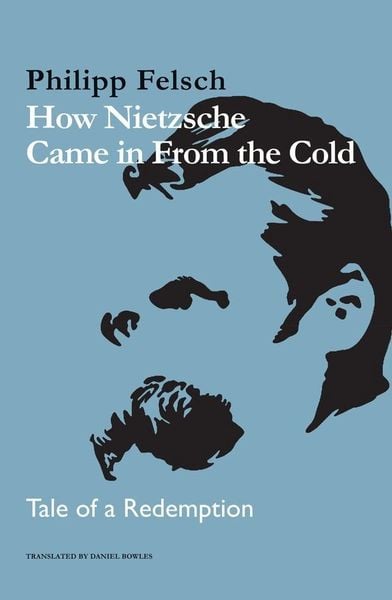
Nietzsche's reputation, like much of Europe, lay in ruins in 1945. Giving a platform to a philosopher venerated by the Nazis was not an attractive prospect for Germans eager to cast off Hitler's shadow. It was only when two ambitious antifascist Italians, Giorgio Colli and Mazzino Montinari, began to comb through the archives that anyone warmed to the idea of rehabilitating Nietzsche as a major European philosopher.
Their goal was to interpret Nietzsche's writings in a new way and free them from the posthumous falsification of his work. The problem was that 10,000 barely legible pages were housed behind the Iron Curtain in the German Democratic Republic, where Nietzsche had been officially designated an enemy of the state. In 1961, Montinari moved from Tuscany to the home of actually existing socialism to decode the "real" Nietzsche under the watchful eyes of the Stasi. But he and Colli would soon realize that the French philosophers making use of their edition were questioning the idea of the authentic text and of truth itself.
Felsch retraces the journey of the two Italian editors and their edition, telling a gripping and unlikely story of how one of Europe's most controversial philosophers was resurrected from the baleful clutch of the Nazis and transformed into an icon of postmodern thought.
Rezension
"With erudition and great literary verve, Philipp Felsch tells a fascinating story that would seem too implausible to be true, except it is. This book is based on extensive and absolutely solid scholarship, which is deployed in an attractive and easily comprehensible way. It is full of unexpected historical information, telling observations, and intriguing suggestions, and it is a genuine pleasure to read. Given the general cultural importance of Nietzsche during the past sixty years, it should be of interest not only to philosophers, but more widely to anyone concerned with cultural studies, intellectual history or, indeed, the history and politics of the second half of the twentieth century."
Raymond Geuss, Professor Emeritus, University of Cambridge
"Most accounts of Friedrich Nietzsche cut off in 1890, at the fateful moment when he descended into what many think was madness. But of course one's life as a writer usually only really begins well after one has passed away, in the way that a legacy is shaped by future generations. This is especially the case with Nietzsche. In this insightful and ground-breaking study, Felsch helps us understand how Nietzsche became who he is today: a recuperated thinker, a philosophical inspiration to countless readers in the twenty-first century. This is intellectual history at its very best."
John Kaag, author of Hiking with Nietzsche: On Becoming Who You Are
"Nietzsche proclaimed himself 'the unfashionable one'. But few philosophers have suffered (or enjoyed) such dramatic changes of reputation, plunging in the aftermath of the Second World War because of the taint of Nazism and then rising again after rediscovery by Paris postmodernists. Focusing on two Italians who spent decades doggedly producing a comprehensive edition of Nietzsche's writing, Felsch has produced a quirky tour de force of reception history."
Sheila Fitzpatrick, Professor, Australian Catholic University, author of The Shortest History of the Soviet Union
"I became completely immersed in the lively and provocative panoramic tour of the widely diverse creative responses to Nietzsche radiating out from the circle round Colli and Montinari. 'Perhaps,' the author notes, 'because he himself acted out the antagonistic tendencies of the age, Nietzsche played the role of a canvas onto which the entire spectrum of twentieth century ideas could be projected.' Given that sentence, I would strike out the word 'perhaps.'"
Sue Prideaux, author of I Am Dynamite! A Life of Friedrich Nietzsche
"an accessible and interesting overview and survey of the 'redemption' of Nietzsche and his thought in the second half of the twentieth century."
Complete Review
"Philipp Felsch has produced an enjoyable peek behind the scenes of one of the most important philological projects of the postwar era... stimulating and valuable."
Times Literary Supplement
"A delight ... Erudite but not stuffily academic, crammed with fresh critical insights and much ironic humor, Felsch has the rare writing capacity to render the reading crackle with excitement."
Steven Aschheim, Marginalia Review of Books
"a terrific story"
The Spectator