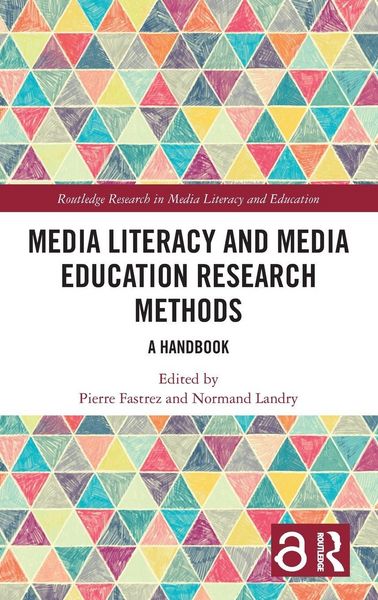

Media Literacy and Media Education Research Methods A Handbook
-
- Hardcover ausgewählt
- Taschenbuch
- eBook
-
Sprache:Englisch
249,99 €
inkl. gesetzl. MwSt.,
Beschreibung
Produktdetails
Einband
Gebundene Ausgabe
Erscheinungsdatum
27.11.2023
Abbildungen
4 SW-Abb., 2 SW-Fotos, 2 SW-Zeichn., 16 Tabellen
Herausgeber
Pierre Fastrez + weitereVerlag
Taylor & FrancisSeitenzahl
344
Maße (L/B/H)
24/16,1/2,3 cm
Gewicht
681 g
Sprache
Englisch
ISBN
978-0-367-49264-9
This handbook interrogates the foundations of media literacy and media education research from a methodological standpoint. It provides a detailed, illustrated overview of key methods used in the study of media literacy and media education. Further, it reveals the diversity of this research field and organizes this diversity by using three categories of investigation: media practices, educational initiatives, and prescriptive discourses.
The book offers valuable reference points and tools for exploring the range of research methods used to study media literacy and media education and how these methods connect to epistemological stances, theoretical frameworks, and research questions. It serves as a guide for researchers who wish to position themselves, reflect on the methods they use or are considering using, and compare and contrast them against alternative or complementary approaches. After reading this book, readers will be better able to identify and define the objects of study in media literacy and media education research, the preferred ways of conducting investigations, the phenomena, issues, and dimensions that these are likely to bring to light, and the knowledge that they generate.
This comprehensive and up-to-date overview of the field of media literacy education research methods will be of great interest to scholars and students of education studies, media studies, media literacy, cognitive science, and communication studies.
Noch keine Bewertungen vorhanden
Verfassen Sie die erste Bewertung zu diesem Artikel
Helfen Sie anderen Kundinnen und Kunden durch Ihre Meinung.
Kurze Frage zu unserer Seite
Vielen Dank für dein Feedback
Wir nutzen dein Feedback, um unsere Produktseiten zu verbessern. Bitte habe Verständnis, dass wir dir keine Rückmeldung geben können. Falls du Kontakt mit uns aufnehmen möchtest, kannst du dich aber gerne an unseren Kund*innenservice wenden.
zum Kundenservice