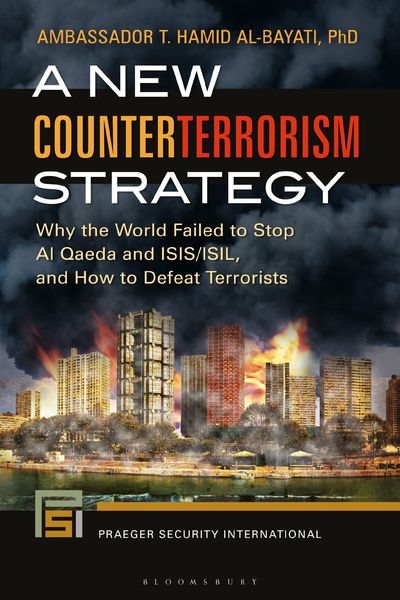
A New Counterterrorism Strategy Why the World Failed to Stop Al Qaeda and ISIS/ISIL, and How to Defeat Terrorists
-
Form:Einzelkauf Download
-
Sprache:Englisch
-
eBook Format:PDF
- PDF 33,49 € ausgewählt
- ePUB 33,49 €
33,49 €
inkl. gesetzl. MwSt.Beschreibung
Produktdetails
Format
Kopierschutz
Ja
Family Sharing
Nein
Text-to-Speech
Nein
Altersempfehlung
ab 7 Jahr(e)
Erscheinungsdatum
21.09.2017
Verlag
Bloomsbury eBooks USSeitenzahl
296 (Printausgabe)
Auflage
1. Auflage
Sprache
Englisch
EAN
9781440847158
Why is the problem of terrorism-and the emergence of more extreme and more brutal terrorist groups-one that cannot be solved, even after decades of trying?
The world has up to now failed to stop Al Qaeda terrorist attacks and also failed to stop the emergence of more extreme and more brutal terrorist groups than Al Qaeda, such as ISIS/ISIL, as well as newer lone wolf terrorists. Current strategies of counterterrorism have many shortcomings that allow terrorists to continue their operations. A New Counterterrorism Strategy: Why the World Failed to Stop Al Qaeda and ISIS/ISIL, and How to Defeat Terrorists identifies the shortcomings of present approaches and presents a comprehensive and sustainable strategy to combat terrorism.
Ambassador T. Hamid Al-Bayati, an Iraqi politician, offers a unique insider's perspective about the war on terrorism. As a leader of the opposition against the terrorist regime of Saddam Hussein, he was arrested and tortured, until he fled Iraq. From the UK, he continued involvement in unfolding political events, until returning to Iraq and assuming high political appointments. These special insights are interwoven with accounts of detailed interactions and policies that provide the background for his explanation of the failures of counterterrorism strategies to date, and lessons learned from those mistakes. Al-Bayati spotlights the problems of terrorist cells, lone wolves, and foreign fighters developing in all parts of the world, where members work from safe havens to plan attacks, acquire weapons, and gain fighting experience. His proposed strategy further emphasizes issues neglected in current counterterrorism strategies, such as undermining the ideology of terrorists, interrupting their use of the Internet to promote evil, understanding the motivations and psychology of terrorists, deterring youth from joining ISIS, creating effective media campaigns against terrorism, and shutting off the flow of funding that currently buoys the financial resources of terrorist organizations.
The world has up to now failed to stop Al Qaeda terrorist attacks and also failed to stop the emergence of more extreme and more brutal terrorist groups than Al Qaeda, such as ISIS/ISIL, as well as newer lone wolf terrorists. Current strategies of counterterrorism have many shortcomings that allow terrorists to continue their operations. A New Counterterrorism Strategy: Why the World Failed to Stop Al Qaeda and ISIS/ISIL, and How to Defeat Terrorists identifies the shortcomings of present approaches and presents a comprehensive and sustainable strategy to combat terrorism.
Ambassador T. Hamid Al-Bayati, an Iraqi politician, offers a unique insider's perspective about the war on terrorism. As a leader of the opposition against the terrorist regime of Saddam Hussein, he was arrested and tortured, until he fled Iraq. From the UK, he continued involvement in unfolding political events, until returning to Iraq and assuming high political appointments. These special insights are interwoven with accounts of detailed interactions and policies that provide the background for his explanation of the failures of counterterrorism strategies to date, and lessons learned from those mistakes. Al-Bayati spotlights the problems of terrorist cells, lone wolves, and foreign fighters developing in all parts of the world, where members work from safe havens to plan attacks, acquire weapons, and gain fighting experience. His proposed strategy further emphasizes issues neglected in current counterterrorism strategies, such as undermining the ideology of terrorists, interrupting their use of the Internet to promote evil, understanding the motivations and psychology of terrorists, deterring youth from joining ISIS, creating effective media campaigns against terrorism, and shutting off the flow of funding that currently buoys the financial resources of terrorist organizations.
Kundinnen und Kunden meinen
Verfassen Sie die erste Bewertung zu diesem Artikel
Helfen Sie anderen Kund*innen durch Ihre Meinung
Kurze Frage zu unserer Seite
Vielen Dank für dein Feedback
Wir nutzen dein Feedback, um unsere Produktseiten zu verbessern. Bitte habe Verständnis, dass wir dir keine Rückmeldung geben können. Falls du Kontakt mit uns aufnehmen möchtest, kannst du dich aber gerne an unseren Kund*innenservice wenden.
zum Kundenservice