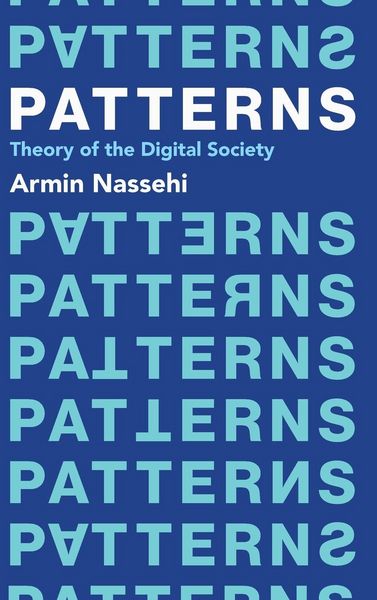
Produktbild: Patterns

Patterns Theory of the Digital Society

69,99 €

inkl. gesetzl. MwSt., Versandkostenfrei

Lieferung nach Hause

Beschreibung

Produktdetails

Einband

Gebundene Ausgabe

Erscheinungsdatum

17.06.2024

Verlag

John Wiley & Sons

Seitenzahl

268

Maße (L/B/H)

23,2/15,6/2,5 cm

Gewicht

526 g

Auflage

1. Auflage

Übersetzt von

Mirko Wittwar

Sprache

Englisch

ISBN

978-1-5095-5821-6

Beschreibung

Rezension

"Nassehi's theory is neither dystopic nor utopic, but asks what digital technology is for. Here the ultimate simplicity of zeros and ones describes an infinite complexity, itself structured into patterns. These patterns are the data that pervade, indeed are constitutive of, the entire social life as we know it. A mind-numbingly simple thesis that indeed works. Read this book."
Scott Lash, Oxford University
"The pandemic showed how much we depend on digital technologies for our connections to others, and at the same time many areas of the world and disadvantaged social groups continue to experience digital social inequities. Armin Nassehi offers a fresh perspective on digital societies through the lens of European sociological theories that have, until now, been little adopted in this area of inquiry."
Deborah Lupton, UNSW Sydney

Produktdetails

Einband

Gebundene Ausgabe

Erscheinungsdatum

17.06.2024

Verlag

John Wiley & Sons

Seitenzahl

268

Maße (L/B/H)

23,2/15,6/2,5 cm

Gewicht

526 g

Auflage

1. Auflage

Übersetzt von

Mirko Wittwar

Sprache

Englisch

ISBN

978-1-5095-5821-6

EU-Ansprechpartner

Zeitfracht Medien GmbH
Ferdinand-Jühlke-Straße 7
99095 Erfurt
DE
[email protected]

Herstelleradresse

Wiley & Sons
1 Oldlands Way
PO22 9NQ Bognor Regis
GB
[email protected]

Kundinnen und Kunden meinen

0 Bewertungen

Informationen zu Bewertungen

Zur Abgabe einer Bewertung ist eine Anmeldung im Konto notwendig. Die Authentizität der Bewertungen wird von uns nicht überprüft. Wir behalten uns vor, Bewertungstexte, die unseren Richtlinien widersprechen, entsprechend zu kürzen oder zu löschen.

Die Bewertungen sind nach Format, Anzahl Sterne und Datum sortiert.

Verfassen Sie die erste Bewertung zu diesem Artikel

Helfen Sie anderen Kund*innen durch Ihre Meinung

Kundinnen und Kunden meinen

0 Bewertungen filtern

Die Leseprobe wird geladen.
  • Produktbild: Patterns
  • Preface to the English Edition
     
    Preface
     
    Introduction
     
    How to think about digitalisation?
     
    A technological-sociological kind of intuition
     
    Early technology pushes
     
    Original and copy
     
    Productive wrong and predetermined breaking point
     
    1 The Reference Problem of Digitalisation
     
    Functionalist questions
    Connecting data - offline
     
    What is the problem?
     
    The uneasiness with the digital culture
     
    The digital discovery of `society´
     
    Empirical social research as the identification of patterns
     
    `Society´ as digitalisation material
     
    The cyborg as a means of overcoming society?
     
    2 The Idiosyncracy of the Digital
     
    The inexact exactness of the world
     
    The particular idiosyncracy of data
     
    Cybernetics and the feedback of information
     
    The digitalisation of communication
     
    The dynamic of closure
     
    The self-referentiality of the world of data
     
    3 Multiple Duplications of the World
     
    Data as observers
     
    Duplications
     
    Disturbances
     
    Transverse data-like duplications
     
    The trace of the trace and discrete duplications
     
    Traces, Patterns, Networks
     
    4 Simplicity and Multiplicity
     
    Medium and form
     
    Coding and programming
    The digital simplicity of society
     
    Increased options
     
    Sapere aude as it is reflected in digitalisation
     
    Excursus: Digital Metabolism
     
    5 Functioning Technology
     
    The function of the technological
     
    Digital technology
     
    Communicating technology
    The function of functioning
     
    Low-level technology
     
    Demonised technology
     
    Invisible technology and the Turing test
     
    The privilege of making mistakes
     
    6 Learning Technology
     
    Decisions
     
    Abductive machines?
     
    Distributed intelligence?
     
    Anthropological and technological questions
     
    Experiencing and acting machines
     
    Incompleteness, temporariness, systemic paradoxes
     
    Artificial, bodily, incomplete intelligence
     
    7 The Internet as a Mass Media
     
    Surplus of meaning deals
     
    Synchronisation function
     
    Synchronisation and socialisation
    Selectivity, mediality and voice in the Internet
     
    Watching the watching
     
    Complexity and overheating
     
    The Internet as an archive of all kinds of statements
     
    Intelligence in the mode of Future perfect
     
    8 Endangered Privacy
     
    The improbability of informational self-determination
     
    A new structural change of the public?
     
    Hazards
     
    Privacy 10
     
    Privacy 10 as a result of Big Data?
     
    Big Data and privacy 20
     
    Rescuing privacy?
     
    9 Debug: Sociology Reborn from the Spirit of Digitalisation
     
    Digital dynamic and social complexity
     
    An opportunity for sociology
     
    Notes
     
    Index