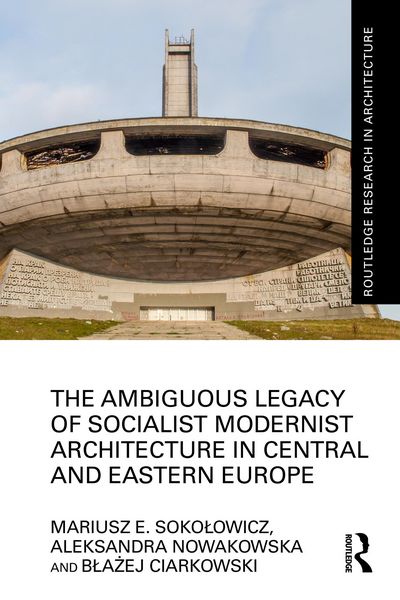
The Ambiguous Legacy of Socialist Modernist Architecture in Central and Eastern Europe
-
- Taschenbuch
- eBook ausgewählt
-
Form:Einzelkauf Download
-
Sprache:Englisch
-
eBook Format:PDF
- ePUB 3 55,49 €
- PDF 55,49 € ausgewählt
55,49 €
inkl. gesetzl. MwSt.Beschreibung
Produktdetails
Format
Kopierschutz
Ja
Family Sharing
Nein
Text-to-Speech
Nein
Erscheinungsdatum
28.04.2023
Verlag
Taylor & Francis eBooksSeitenzahl
254 (Printausgabe)
Auflage
1. Auflage
Sprache
Englisch
EAN
9781000875492
This book examines the unique socialist-modernist architecture built in the twentieth century in Central and Eastern Europe as a source of heritage and of existing and potential value for the present and future generations. Due to the historical context in which it was created, such architecture remains ambiguous. On the one hand, the wider public associates it with the legacy of the unpleasant period of the real socialist economic regime. Yet, on the other hand, it is also a manifestation of social modernization and the promotion of a significant proportion of the population.
This book focuses particularly on concrete heritage, a legacy of modernist architecture in Central and Eastern Europe, and it was this material that enabled their rebuilding after World War II and modernization during the following decades. The authors search for the value of modernist architecture and using case studies from Poland, Bulgaria, Northern Macedonia, Lithuania and Slovenia verify to what extent this heritage is embedded in the local socio-economic milieu and becomes a basis for creating new values. They argue that the challenge is to change the ways we think about heritage, from looking at it from the point of view of a single monument to thinking in terms of a place with its own character and identity that builds its relation to history and its embeddedness in the local space. Furthermore, they propose that the preservation of existing concrete structures and adapting them to modern needs is of great importance for sustainability.
With increasing awareness of the issue of preserving post-war architectural heritage and the strategies of dissonant heritage management, this multidisciplinary study will be of interest to architecture historians, conservators, heritage economists, urban planners and architects.
Kundinnen und Kunden meinen
Verfassen Sie die erste Bewertung zu diesem Artikel
Helfen Sie anderen Kund*innen durch Ihre Meinung
Kurze Frage zu unserer Seite
Vielen Dank für dein Feedback
Wir nutzen dein Feedback, um unsere Produktseiten zu verbessern. Bitte habe Verständnis, dass wir dir keine Rückmeldung geben können. Falls du Kontakt mit uns aufnehmen möchtest, kannst du dich aber gerne an unseren Kund*innenservice wenden.
zum Kundenservice