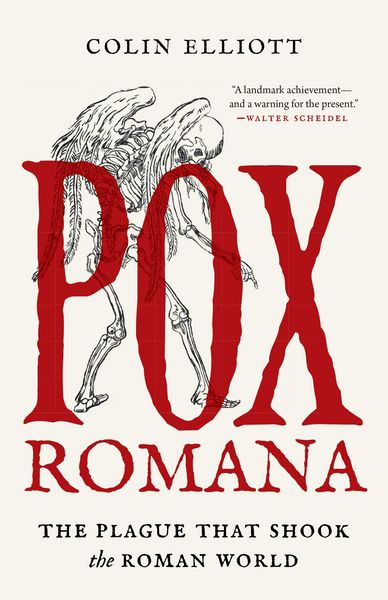
Pox Romana The Plague That Shook the Roman World
-
- Hardcover
- Taschenbuch
- eBook ausgewählt
- Hörbuch
-
Form:Einzelkauf Download
-
Sprache:Englisch
19,99 €
inkl. gesetzl. MwSt.Beschreibung
Produktdetails
Format
ePUB
Kopierschutz
Nein
Family Sharing
Nein
Text-to-Speech
Ja
Erscheinungsdatum
06.02.2024
Verlag
University of Pennsylvania Press, Inc.Seitenzahl
328 (Printausgabe)
Dateigröße
14361 KB
Sprache
Englisch
EAN
9780691220697
A wide-ranging and dramatic account of the Antonine plague, the mysterious disease that struck the Roman Empire at its pinnacle In the middle of the second century AD, Rome was at its prosperous and powerful apex. The emperor Marcus Aurelius reigned over a vast territory that stretched from Britain to Egypt. The Roman-made peace, or Pax Romana, seemed to be permanent. Then, apparently out of nowhere, a sudden sickness struck the legions and laid waste to cities, including Rome itself. This fast-spreading disease, now known as the Antonine plague, may have been history's first pandemic. Soon after its arrival, the Empire began its downward trajectory toward decline and fall. In Pox Romana, historian Colin Elliott offers a comprehensive, wide-ranging account of this pivotal moment in Roman history. Did a single disease-its origins and diagnosis still a mystery-bring Rome to its knees? Carefully examining all the available evidence, Elliott shows that Rome's problems were more insidious. Years before the pandemic, the thin veneer of Roman peace and prosperity had begun to crack: the economy was sluggish, the military found itself bogged down in the Balkans and the Middle East, food insecurity led to riots and mass migration, and persecution of Christians intensified. The pandemic exposed the crumbling foundations of a doomed Empire. Arguing that the disease was both cause and effect of Rome's fall, Elliott describes the plague's "preexisting conditions" (Rome's multiple economic, social, and environmental susceptibilities); recounts the history of the outbreak itself through the experiences of physician, victim, and political operator; and explores postpandemic crises. The pandemic's most transformative power, Elliott suggests, may have been its lingering presence as a threat both real and perceived.
Noch keine Bewertungen vorhanden
Verfassen Sie die erste Bewertung zu diesem Artikel
Helfen Sie anderen Kundinnen und Kunden durch Ihre Meinung.
Kurze Frage zu unserer Seite
Vielen Dank für dein Feedback
Wir nutzen dein Feedback, um unsere Produktseiten zu verbessern. Bitte habe Verständnis, dass wir dir keine Rückmeldung geben können. Falls du Kontakt mit uns aufnehmen möchtest, kannst du dich aber gerne an unseren Kund*innenservice wenden.
zum Kundenservice