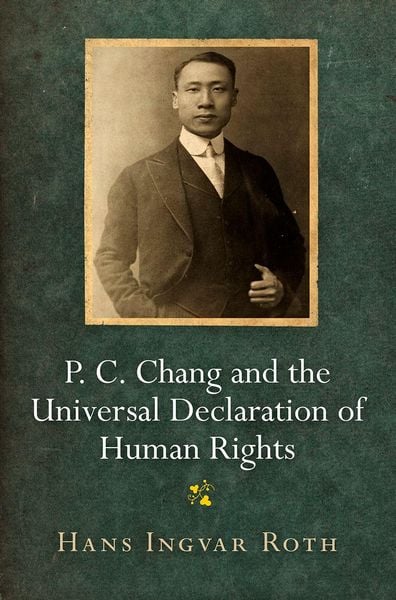
P. C. Chang and the Universal Declaration of Human Rights
-
- Hardcover
- Taschenbuch ausgewählt
- eBook
-
Sprache:Englisch
34,99 €
inkl. gesetzl. MwSt.,
Lieferung nach Hause
Beschreibung
Produktdetails
Einband
Taschenbuch
Erscheinungsdatum
08.08.2023
Verlag
University Of Pennsylvania PressSeitenzahl
320
Maße (L/B/H)
22,5/15,1/2,1 cm
Gewicht
458 g
Sprache
Englisch
ISBN
978-1-5128-2554-1
The Universal Declaration of Human Rights is one of the world's best-known and most translated documents. When it was presented to the United Nations General Assembly in December in 1948, Eleanor Roosevelt, chair of the writing group, called it a new "Magna Carta for all mankind." The passage of time has shown Roosevelt to have been largely correct in her prediction as to the declaration's importance. No other document in the world today can claim a comparable standing in the international community.
Roosevelt and French legal expert René Cassin have often been represented as the principal authors of the declaration. But in fact, it resulted from a collaborative effort involving a number of individuals in different capacities. One of the declaration's most important authors was the vice chairman of the Human Rights Commission, Peng Chun Chang (1892-1957), a Chinese diplomat and philosopher whose contribution has been the focus of growing attention in recent years. Indeed, it is Chang who deserves the credit for the universality and religious ecumenism that are now regarded as the declaration's defining features. Despite this, Chang's extraordinary contribution has been overlooked by historians.
Peng Chun Chang was a modern-day Renaissance man—teacher, scholar, university chancellor, playwright, diplomat, and politician. A true cosmopolitan, he was deeply involved in the cultural exchange between East and West, and the dramatic events of his life left a profound mark on his intellectual and political work. P. C. Chang and the Universal Declaration of Human Rights is the first biography of this extraordinary actor on the world stage, who belonged to the same generation as Mao Zedong and Chiang Kai-shek. Drawing on previously unknown sources, it casts new light on Chang's multifaceted life and involvement with one of modern history's most important documents.
Kundinnen und Kunden meinen
Verfassen Sie die erste Bewertung zu diesem Artikel
Helfen Sie anderen Kund*innen durch Ihre Meinung
Kurze Frage zu unserer Seite
Vielen Dank für dein Feedback
Wir nutzen dein Feedback, um unsere Produktseiten zu verbessern. Bitte habe Verständnis, dass wir dir keine Rückmeldung geben können. Falls du Kontakt mit uns aufnehmen möchtest, kannst du dich aber gerne an unseren Kund*innenservice wenden.
zum Kundenservice