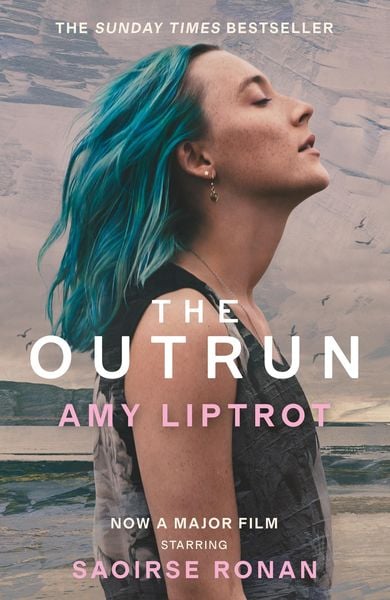
Nominiert: Wellcome Book Prize, 2016. Ausgezeichnet: Wainwright Prize for Nature Writing, 2016. Nominiert: Gordon Burn Prize, 2016. Nominiert: Saltire Society Non-Fiction Book of the Year, 2016. Ausgezeichnet: PEN/Ackerley Prize, 2017.
Turning over endless stones looking for a safe place
After reading Charlotte McConaghy’s “Migrations”, I felt the need to return to “The Outrun”, a piece of unkempt pasture that lies between land and sea in the far, far North. This book is a memoir about growing up on the Orkney Islands, remote and in conditions that must have been harsh in almost every respect. Immediately, a vague vision of wilderness and of pure untouched nature comes to mind: “My life was rough and windy and tangled.”
It’s not surprising that a young person would want to escape to the City to get a “real” taste of life, even if it means carrying a part of that home with her always. “Although I’d left, and had wanted to leave, Orkney and the cliffs held me, and when I was away I always had, somewhere inside, a quietly vibrating sense of loss and disturbance. I carried within myself the furious seas, limitless skies and confidence with heights.”
The contrast, however, could not be more crass. Her London life and excessive partying turn into severe addiction, and loss is piled upon loss before the author seeks help. Her struggles, her shame and her downfall are narrated with brutal honesty. Defeated, having completed a withdrawal program, she returns to the islands, where the real fight begins, fought in the face of rough but beautiful nature which is described by Liptrot with equal utter beauty. “I’ve swapped disco lights for celestial lights but I’m still surrounded by dancers.” The idyll, however, is thwarted.
It means learning to be lonely in extreme remoteness, which must be even more difficult to bear as an addict; one can hardly imagine that it could be done without some degree of being online, also serving as a link to the old life: “I’m keeping in spectral communication with the ghosts of my past.” Learning to cope with all sorts of extremes brings some recovery.
“The Outrun” is a real life version of “Migrations”: “The terns that swooped above my head as a child no longer return to the outrun.” “Life is getting sadder but more interesting –all the injuries and hurts, like scars in the coastline, continually worn away.” The Orkney Isles are not “untouched”, as multi-million pounds’ worth of debris from all the failed attempts to win energy from its surrounding natural forces lie smashed up on their shores: "The things we put into the sea come back to us" is a metaphor that works on several levels.
Kurze Frage zu unserer Seite
Vielen Dank für dein Feedback
Wir nutzen dein Feedback, um unsere Produktseiten zu verbessern. Bitte habe Verständnis, dass wir dir keine Rückmeldung geben können. Falls du Kontakt mit uns aufnehmen möchtest, kannst du dich aber gerne an unseren Kund*innenservice wenden.