
• Produktbild: Place-Based Scientific Inquiry
  • Produktbild: Place-Based Scientific Inquiry

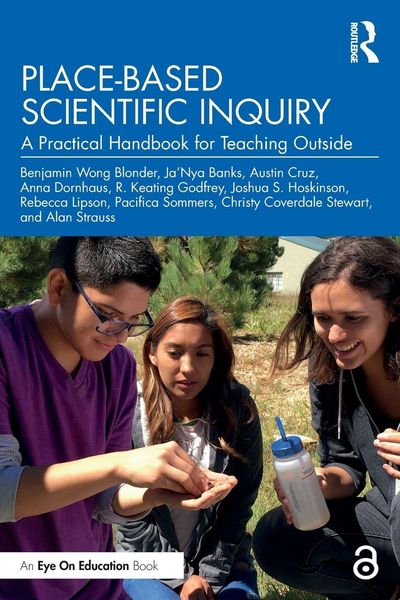
Place-Based Scientific Inquiry A Practical Handbook for Teaching Outside

56,99 €

inkl. gesetzl. MwSt., Versandkostenfrei

Lieferung nach Hause

Beschreibung

Produktdetails

Einband

Taschenbuch

Erscheinungsdatum

12.03.2023

Abbildungen

schwarz-weiss Illustrationen, Raster, schwarz-weiss, Zeichnungen, schwarz-weiss, Tabellen, schwarz-weiss

Verlag

Taylor & Francis

Seitenzahl

294

Maße (L/B/H)

22,9/15,2/1,7 cm

Gewicht

429 g

Sprache

Englisch

ISBN

978-1-03-243415-5

Beschreibung

Produktdetails

Einband

Taschenbuch

Erscheinungsdatum

12.03.2023

Abbildungen

schwarz-weiss Illustrationen, Raster, schwarz-weiss, Zeichnungen, schwarz-weiss, Tabellen, schwarz-weiss

Verlag

Taylor & Francis

Seitenzahl

294

Maße (L/B/H)

22,9/15,2/1,7 cm

Gewicht

429 g

Sprache

Englisch

ISBN

978-1-03-243415-5

Herstelleradresse

Libri GmbH
Europaallee 1
36244 Bad Hersfeld
DE

Email: [email protected]

Kundinnen und Kunden meinen

0 Bewertungen

Informationen zu Bewertungen

Zur Abgabe einer Bewertung ist eine Anmeldung im Konto notwendig. Die Authentizität der Bewertungen wird von uns nicht überprüft. Wir behalten uns vor, Bewertungstexte, die unseren Richtlinien widersprechen, entsprechend zu kürzen oder zu löschen.

Die Bewertungen sind nach Format, Anzahl Sterne und Datum sortiert.

Verfassen Sie die erste Bewertung zu diesem Artikel

Helfen Sie anderen Kund*innen durch Ihre Meinung

Kundinnen und Kunden meinen

0 Bewertungen filtern

Die Leseprobe wird geladen.
  • Produktbild: Place-Based Scientific Inquiry
  • Produktbild: Place-Based Scientific Inquiry
  • 1. Introduction

    1.1. A desert story

    1.2. How to use the book

    2. Guiding concepts

    2.1. Justice-first science teaching

    2.2. Place-based teaching

    2.3. Inquiry-based teaching

    2.4. Outdoor teaching

    2.5. Centering student identity

    2.6. Meeting the Next Generation Science Standards (NGSS)

    2.7. Learning beyond the NGSS

    2.8. Decolonizing teaching

    2.9. Linking to Indigenous science

    3. Setting scope and expectations

    3.1. Your role as teacher

    3.2. Choosing a topic

    3.3. Scheduling and time considerations

    3.4. Scaffolding projects into your curriculum

    3.5. Cost considerations

    3.6. Place considerations

    3.7. Student identity considerations

    3.8. Universal design, special needs, and disability

    4. Acquiring resources and planning safe logistics

    4.1. Partnering with volunteers

    4.2. Acquiring equipment and collecting data at low cost

    4.3. Safety and logistical preparation

    5. Getting started via exploration and team building

    5.1. Dividing students into groups

    5.2. Using notebooks

    5.3. Exploration, observation, and sense of place

    5.4. Acquiring background information

    5.5. Recognizing relationships and responsibility to place

    6. Facilitating teams and resolving conflict

    6.1. Small group facilitation

    6.2. Setting behavioral expectations

    6.3. Encouraging positive behavior from individuals

    6.4. Encouraging positive behavior from groups

    6.5. Team building

    6.6. Team contracts and check-ins

    6.7. Handling multiple groups

    6.8. Getting groups back on track

    7. Developing a question and study design

    7.1. Facilitating question development

    7.2. Building a strong question

    7.3. Designing a study and using an anchor chart

    7.4. Identifying multiple hypotheses and predictions, or not

    8. Planning data collection

    8.1. Choosing how much to measure

    8.2. Choosing what to do (protocols, checklists, and datasheets)

    8.3. Choosing roles

    9. Collecting data outdoors

    9.1. Practicing collecting data

    9.2. Collecting data

    9.3. Securing data

    10. Analyzing and sense-making

    10.1. Drawing conclusions from data

    10.2. Visually interpreting results

    10.3. Statistical tests

    11. Reflecting and recognizing success

    11.1. Reflection

    11.2. Recognition

    12. Sharing outcomes

    12.1. How and why to share projects

    12.2. Supporting presentation development

    12.3. Holding a community event

    13. Assessing learning

    13.1. Why (or why not) to assess

    13.2. Student-centered reflection and feedback

    14. Conclusion

    14.1. What students and teachers say

    14.2. Overcoming common fears

    14.3. Starting small and dreaming big

    References