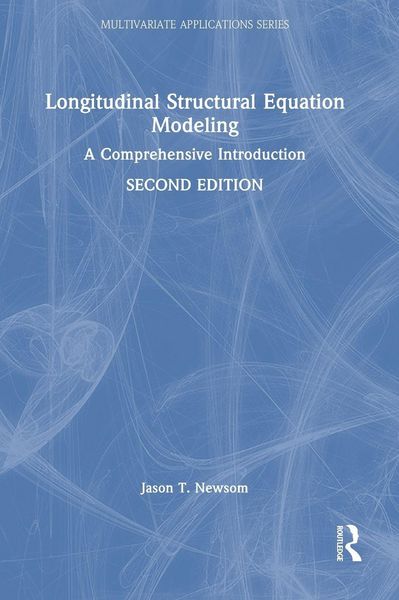

Longitudinal Structural Equation Modeling A Comprehensive Introduction
-
- Hardcover ausgewählt
- Taschenbuch
- eBook
-
Sprache:Englisch
195,99 €
inkl. gesetzl. MwSt.,
Lieferung nach Hause
Beschreibung
Produktdetails
Einband
Gebundene Ausgabe
Erscheinungsdatum
31.10.2023
Abbildungen
115 schwarzweisse Abbildungen, 115 schwarzweisse Zeichnungen
Verlag
Taylor & FrancisSeitenzahl
522
Maße (L/B/H)
26/18,3/3,2 cm
Gewicht
1166 g
Auflage
2. Auflage
Sprache
Englisch
ISBN
978-1-03-220283-9
Longitudinal Structural Equation Modeling is a comprehensive resource that reviews structural equation modeling (SEM) strategies for longitudinal data to help readers determine which modeling options are available for which hypotheses.
This accessibly written book explores a range of models, from basic to sophisticated, including the statistical and conceptual underpinnings that are the building blocks of the analyses. By exploring connections between models, it demonstrates how SEM is related to other longitudinal data techniques and shows when to choose one analysis over another. Newsom emphasizes concepts and practical guidance for applied research rather than focusing on mathematical proofs, and new terms are highlighted and defined in the glossary. Figures are included for every model along with detailed discussions of model specification and implementation issues and each chapter also includes examples of each model type, descriptions of model extensions, comment sections that provide practical guidance, and recommended readings.
Expanded with new and updated material, this edition includes many recent developments, a new chapter on growth mixture modeling, and new examples. Ideal for graduate courses on longitudinal (data) analysis, advanced SEM, longitudinal SEM, and/or advanced data (quantitative) analysis taught in the behavioral, social, and health sciences, this new edition will continue to appeal to researchers in these fields.
Kundinnen und Kunden meinen
Verfassen Sie die erste Bewertung zu diesem Artikel
Helfen Sie anderen Kund*innen durch Ihre Meinung
Kurze Frage zu unserer Seite
Vielen Dank für dein Feedback
Wir nutzen dein Feedback, um unsere Produktseiten zu verbessern. Bitte habe Verständnis, dass wir dir keine Rückmeldung geben können. Falls du Kontakt mit uns aufnehmen möchtest, kannst du dich aber gerne an unseren Kund*innenservice wenden.
zum Kundenservice