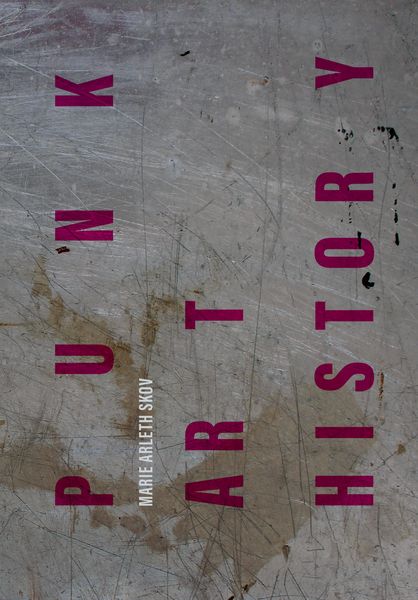
Punk Art History Artworks from the European No Future Generation
-
- Hardcover
- Taschenbuch
- eBook ausgewählt
-
Form:Einzelkauf Download
-
Sprache:Englisch
34,99 €
inkl. gesetzl. MwSt.Beschreibung
Produktdetails
Format
ePUB
Kopierschutz
Nein
Family Sharing
Nein
Text-to-Speech
Ja
Erscheinungsdatum
22.03.2023
Verlag
Intellect BooksSeitenzahl
(Printausgabe)
Sprache
Englisch
EAN
9781789387025
The punk movement of the 1970s to early 1980s is examined as an art movement through archive research, interviews, and art historical analysis. It is about pop, pain, poetry, presence, and about a 'no future' generation refusing to be the next artworld avant-garde, instead choosing to be the 'rear-guard'.
Skov draws on personal interviews with punk art protagonists from London, New York, Amsterdam, Copenhagen, and Berlin, among others the members Die Tödliche Doris (The Deadly Doris), members of Værkstedet Værst (The Workshop Called Worst), Nina Sten-Knudsen, Marc Miller, Diana Ozon, Hugo Kaagman, as well as email correspondence with Jon Savage, Anna Banana, and Genesis Breyer P-Orridge.
A large portion of the discussed materials stem from the protagonists' private archives, while some very public-scandalous and spectacular-events are discussed, too, such as the Prostitution exhibition at the ICA in London in 1976 and Die Große Untergangsshow (The Grand Downfall Show) in West-Berlin in 1981. The examined materials cover almost all media: paintings, drawings, bricolages, collages, booklets, posters, zines, installations, sculptures, Super 8 films, documentation of performances and happenings, body art, street art.
What emerges is how crucial the concept of history was in punk at that point in time. The punk movement's rejection of the tale of progress and prosperity, as it was being propagated on both sides of the iron curtain, evidently manifested itself in punk visual art too. Central to the book is the thesis that punks placed themselves as the rear-guards, not the avant-gardes, a statement which was in made by Danish punks in 1981, when they called themselves "bagtropperne". Behind the rear-guard watchword was the rejection of the inherent notion of progress that the avant-garde name brings with it; how could a "no future" movement want to lead the way?
Although aimed at students and scholars of art, design, music and performance history, the subject as well as the author's accessible, occasionally playful style will no doubt draw readers with an interest in punk, music, and urban histories.
Noch keine Bewertungen vorhanden
Verfassen Sie die erste Bewertung zu diesem Artikel
Helfen Sie anderen Kundinnen und Kunden durch Ihre Meinung.
Kurze Frage zu unserer Seite
Vielen Dank für dein Feedback
Wir nutzen dein Feedback, um unsere Produktseiten zu verbessern. Bitte habe Verständnis, dass wir dir keine Rückmeldung geben können. Falls du Kontakt mit uns aufnehmen möchtest, kannst du dich aber gerne an unseren Kund*innenservice wenden.
zum Kundenservice