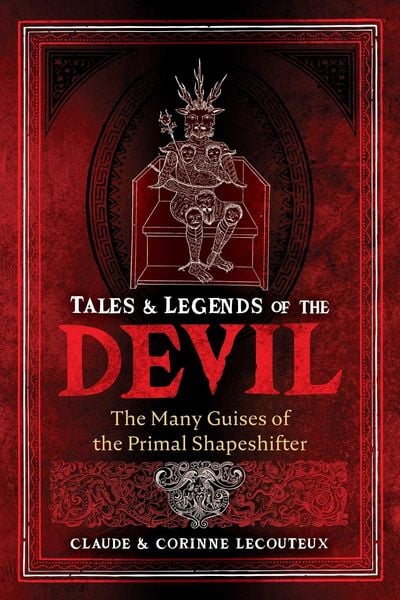
Tales and Legends of the Devil The Many Guises of the Primal Shapeshifter
31,99 €
inkl. gesetzl. MwSt.,
Beschreibung
Produktdetails
Einband
Gebundene Ausgabe
Erscheinungsdatum
28.09.2023
Abbildungen
5 b&w illustrations
Verlag
Simon & Schuster UkSeitenzahl
240
Maße (L/B/H)
16/23,7/2,3 cm
Gewicht
530 g
Sprache
Englisch
ISBN
978-1-64411-685-2
Explores the many forms and abilities of the devil in stories from around the world
• Draws on folk traditions from all over Europe, including Transylvanian Romania, Bulgaria, Albania, Switzerland, Italy, France, Scandinavia, and the Baltic countries
• Traces the devil’s shapeshifting powers back to their Vedic origins in ancient India and looks at his connections with witches and storm magic
• Reveals how many of the qualities and magical powers attributed to the devil were once those belonging to pagan gods
The devil has many more guises than the cliché red boogeyman named Lucifer or Satan who haunts Christianity. In some traditions the devil is sinister and cunning, while others portray him as an oaf who can easily be conned and evaded by anyone with an ounce of cleverness. In other tales and legends, he is the primal shapeshifter, and the Roma, also known as the gypsies, claimed his talents of metamorphosis were so strong he could even assume the appearance of a priest.
Drawing on folk traditions from all over Europe, including Transylvanian Romania, Bulgaria, Albania, Switzerland, Italy, France, Scandinavia, Moravia, Bohemia, Lapland, and the Baltic countries, Claude and Corinne Lecouteux explore the many forms and abilities of the devil in stories, tales, and legends throughout the ages. They trace the devil’s shapeshifting powers back to their Vedic origins in ancient India and look at his connections with witches, storm magic, and other magical events. They examine the symbolic implications of the appearance of the devil in these tales, such as how he is often either limping or disfigured with the legs or feet of a goat or other animals traditionally linked to the lower powers or passions. They explain how the devil’s limp or his goat-like feet reflect the prevalence in world mythology of the sacred nature of crippling injuries.
Peeling back the Christian veneer embedded in many tales and legends about the so-called Evil One, the authors ultimately reveal how many of the qualities and magical powers attributed to the devil were once those belonging to pagan gods, like the Lithuanian thunder god Perkūnas or the Titan Chronos, as well as to playful woodland spirits and the sometimes helpful, sometimes fearful fauns and satyrs of Greco-Roman mythology.
Noch keine Bewertungen vorhanden
Verfassen Sie die erste Bewertung zu diesem Artikel
Helfen Sie anderen Kundinnen und Kunden durch Ihre Meinung.
Kurze Frage zu unserer Seite
Vielen Dank für dein Feedback
Wir nutzen dein Feedback, um unsere Produktseiten zu verbessern. Bitte habe Verständnis, dass wir dir keine Rückmeldung geben können. Falls du Kontakt mit uns aufnehmen möchtest, kannst du dich aber gerne an unseren Kund*innenservice wenden.
zum Kundenservice