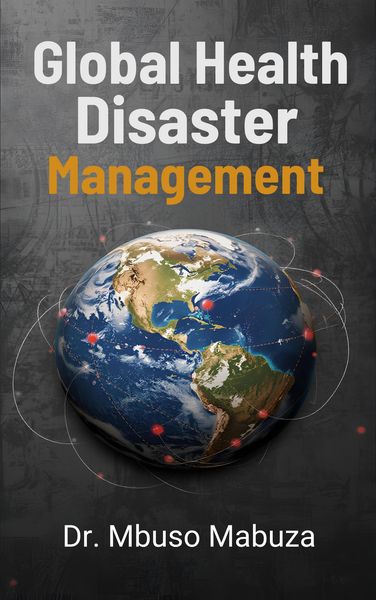
Global Health Disaster Management
-
- Einzelkauf Download ausgewählt
-
Sprache:Englisch
7,49 €
8,49 €
*
*befristete Preissenkung des Verlages.
Beschreibung
Produktdetails
Format
ePUB
Kopierschutz
Ja
Family Sharing
Ja
Text-to-Speech
Ja
Erscheinungsdatum
07.10.2022
Verlag
Mbuso MabuzaSeitenzahl
(Printausgabe)
Dateigröße
1164 KB
Sprache
Englisch
EAN
9798201926540
The aim of this book is to give you a thorough grounding in, and comprehensive overview of the role of public health in the management of disasters, including the requisite preparedness, mitigation, response, and recovery relating to these situations.
The first principle of the health care profession is to protect life. Disasters threaten both life and health, and the predicament of people impacted by disaster is irreconcilable with the World Health Organization's definition of health. For health professionals, the objective of disaster management is to decrease the avoidable mortality, morbidity, and disability resulting from disaster, as well as any damage to health facilities and systems. It is broadly acknowledged that expertise in health and nutrition has been making a significant contribution to disaster management for the last three decades.
Devastating pandemics such as the COVID-19 have taught us the critical importance of effective pandemic preparedness, the strengthening, resilience and sustainability of health systems. The COVID-19 pandemic left not only patients and the general public with unanswered questions, but also healthcare practitioners and political decision-makers.
This book will give you a theoretical awareness of the effects of natural and man-made disasters on society, as well as a detailed foundation in the requirements of public health prior to, during, and after occurrence. Specifically, the following topics are covered in this book: introduction to disasters; mitigation, preparedness, response, and recovery; disaster risk management and humanitarian assistance; sudden onset natural disasters; biological hazards epidemics, epizootics and pests; technological and socioeconomic hazards; food shortages and slow onset natural crises; and food relief.
A holistic and critical approach to the disaster cycle/disaster-development continuum may provide a better opportunity to address the root cause of vulnerability, but an uncritical strategy may do more harm than good. The concept of vulnerability or vulnerable groups should not inadvertently create the risk of group discrimination but paying attention to the root causes of the dynamism and vulnerability of certain groups could provide us with lasting solutions for disaster management. Recovery, mitigation and preparedness are essential, but planning, leadership and coordination are crucial to ensure that there is effective and sustainable disaster reduction.
Climate change has an influence in extreme weather events resulting in disasters, and this needs urgent interventions in the context of disaster management, while also bearing in mind that there are constraints and challenges with regard to addressing the issue of climate change and its influence on disasters.
There needs to be prioritisation of psychological consequences for disaster preparedness and response, while at the same time we also need to be cautious of instrumentalising decisions because managing disaster may be complex, multidimensional and individually unique. The health sector can best contribute to mitigation against and preparation for possible future food shortage crises by influencing political decision-making and facilitating multi-stakeholder partnerships to ensure that there is adequate resource allocation and capacity to address the issue of food shortages.
The known strategies and frameworks of mitigation against and preparation for future food shortage crises are all important, but we need to be aware that nutritional concerns in low- and middle-income countries are diverse, and the burden of diseases can complicate the whole picture and create a novelty of food shortage. Early warning systems can be more useful if they are linked to and complemented by timely response mechanisms.
Noch keine Bewertungen vorhanden
Verfassen Sie die erste Bewertung zu diesem Artikel
Helfen Sie anderen Kundinnen und Kunden durch Ihre Meinung.
Kurze Frage zu unserer Seite
Vielen Dank für dein Feedback
Wir nutzen dein Feedback, um unsere Produktseiten zu verbessern. Bitte habe Verständnis, dass wir dir keine Rückmeldung geben können. Falls du Kontakt mit uns aufnehmen möchtest, kannst du dich aber gerne an unseren Kund*innenservice wenden.
zum KundenserviceWeitere Artikel findest du in
- eBooks >
- Fachbücher >
- Medizin