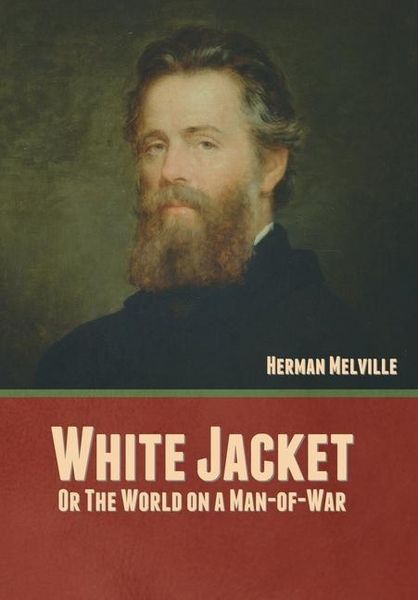
White Jacket; Or, The World on a Man-of-War
-
- Hardcover ausgewählt
- Taschenbuch
- eBook
- Hörbuch
-
Sprache:Englisch
-
Verlag:Bibliotech Pr
36,99 €
inkl. gesetzl. MwSt.,
Lieferung nach Hause
Beschreibung
Produktdetails
Einband
Gebundene Ausgabe
Erscheinungsdatum
09.03.2022
Verlag
Bibliotech PrSeitenzahl
310
Maße (L/B/H)
22,9/15,2/2,4 cm
Gewicht
544 g
Sprache
Englisch
ISBN
978-1-63637-775-9
White-Jacket; or, The World in a Man-of-War is the fifth book by American writer Herman Melville, first published in London in 1850. The book is based on the author's fourteen months' service in the United States Navy, aboard the frigate USS Neversink (actually USS United States).
Based on Melville's experiences as a common seaman aboard the frigate USS United States from 1843 to 1844 and stories that other sailors told him, the novel is severely critical of virtually every aspect of American naval life and thus qualifies as Melville's most politically strident work. At the time, though, the one thing that journalists and politicians focused on in the novel was its graphic descriptions of flogging and the horrors caused by its arbitrary use; in fact, because Harper & Bros. made sure the book got into the hands of every member of Congress, White-Jacket was instrumental in abolishing flogging in the U.S. Navy forever. Melville scholars also acknowledge the huge number of parallels between White-Jacket and Billy Budd and view the former as "a major source for naval matters" in the latter.
The novel takes its title from the outer garment that the eponymous main character fashions for himself on board ship, with materials at hand, being in need of a coat sufficient for the rounding of Cape Horn. Due to a ship-wide rationing of tar, however, White-Jacket is forever denied his wish to tar the exterior of his coat and thus waterproof it. This causes him to have two near-death experiences, once when he is reclining among the canvases in the main-top and, his jacket blending in with the surrounding material, he is nearly unfurled along with the main sail; and once when, having been pitched overboard while reeving the halyards, he has to cut himself free from the coat in order not to drown. He having done so, his shipmates mistake the discarded jacket for a great white shark and harpoon it, sending it to a watery grave.
The symbolism of the color white, introduced in this novel in the form of the narrator's jacket, is more fully expanded upon in Moby-Dick, where it becomes an all-encompassing "blankness". The mixture of journalism, history, and fiction; the presentation of a sequence of striking characters; the metaphor of a sailing ship as the world in miniature, all prefigure Moby-Dick, his next novel. (wikipedia.org)
Kundinnen und Kunden meinen
Verfassen Sie die erste Bewertung zu diesem Artikel
Helfen Sie anderen Kund*innen durch Ihre Meinung
Kurze Frage zu unserer Seite
Vielen Dank für dein Feedback
Wir nutzen dein Feedback, um unsere Produktseiten zu verbessern. Bitte habe Verständnis, dass wir dir keine Rückmeldung geben können. Falls du Kontakt mit uns aufnehmen möchtest, kannst du dich aber gerne an unseren Kund*innenservice wenden.
zum Kundenservice