Gutscheinbedingungen

**Gültig vom 20.07.2026 bis 22.07.2026 | Gültig für nicht preisgebundene fremdsprachige Bücher | Einzelne Artikel können ausgeschlossen sein | Nicht kombinierbar mit anderen Gutscheinen oder Preisaktionen | Nur einmal pro Einkauf einlösbar | Gutschein wird auf max. 500€ Bestellwert angerechnet | Keine Barauszahlung | Nicht gültig für Versandkosten und Services

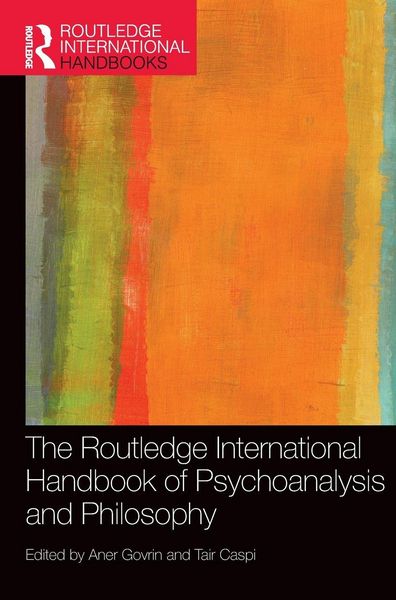
Produktbild: The Routledge International Handbook of Psychoanalysis and Philosophy

The Routledge International Handbook of Psychoanalysis and Philosophy

264,99 €

inkl. gesetzl. MwSt., Versandkostenfrei

Lieferung nach Hause

Beschreibung

Produktdetails

Einband

Gebundene Ausgabe

Erscheinungsdatum

25.11.2022

Abbildungen

schwarz-weiss Illustrationen, Raster, schwarz-weiss, Zeichnungen, schwarz-weiss

Herausgeber

Govrin Aner + weitere

Verlag

Taylor & Francis

Seitenzahl

576

Maße (L/B/H)

25/17,5/3,5 cm

Gewicht

1280 g

Sprache

Englisch

ISBN

978-0-367-27645-4

Beschreibung

Rezension

'From its very beginnings, psychoanalysis has had an uneasy, even mistrustful, relationship to philosophy. Recognizing that they are interested in many overlapping issues, practitioners of both disciplines are dubious of both the methods and the conclusions of the other; the result is that opportunities for cross-fertilization are easily overlooked. In this Handbook, Aner Govrin and Tair Caspi create a conversation that aims to capitalize on the potential for mutual enrichment that is possible when psychoanalysts and philosophers carefully and respectfully address shared concerns. The editors have assembled a distinguished group of authors; some are psychoanalysts, some philosophers, and many are both. The result is a collection that is sure to engage and inform readers interested in deepening their understanding of some of the most foundational themes of both psychoanalysis and philosophy.'

Jay Greenberg, Ph.D., Training and Supervising Analyst, William Alanson White Institute, USA. Former Editor of The Psychoanalytic Quarterly and recipient of the Mary S. Sigourney Award for Outstanding Achievement in Psychoanalysis, 2015.

'Freud always thought that psychoanalysis would take over from the philosophy of mind and make it redundant. He seems to have been wrong because Aner Govrin and Tair Caspi, the editors, have collected a significant team of contemporary philosophers from around the world who are still investigating just how the two disciplines compare, contrast, discount each other or can collaborate together. So, what has psychoanalysis done with philosophy and for philosophy, they ask; and also philosophy for psychoanalysis.

There is a landmark quality about this extensive compendium of these two overlapping and penetrating disciplines. These thirty-three Chapters pick out the interacting schools - both philosophical and psychoanalytic - and the multiple philosophical influences on our confusing dispersion of the psychoanalytic schools. This wide-ranging gathering of knowledgeable philosophers and psychoanalysts will tell us, and if they don't, then they give us much to think about for ourselves. It is for reference, frequent reference.'

Bob Hinshelwood, Professor Emeritus, University of Essex, UK

'Panoramic in scope and scholarly in execution, the Handbook edited by Aner Govrin and Tair Caspi brings together contributions from some of today's leading thinkers across both disciplines, including philosophically-engaged practising psychoanalysts, to present a stimulating overview of contemporary developments. What struck me most about this collection is the multiple ways in which the essays variously bring the old and the established into innovative dialogue with the new and the forward-looking. Traditional giants of philosophy and enduring philosophical themes are here cross-fertilized with traditional giants of post-Freudian and enduring psychoanalytic issues. What emerges is a series of fresh perspectives on important topics on the interface of both disciplines some of these perspectives unfolding in the light of contemporary movements and concerns. There are some real gems amongst these contributions, and I expect that different readers will be rewarded by finding their own different favourites.

I recommend this handbook as a valuable and thought-provoking collection giving a timely snapshot of forward-looking twenty-first-century thinking about the interface between psychoanalysis and philosophy. In my view it will stand the test of time as a significant contribution to demonstrating that psychoanalysis and philosophy simply cannot do without each other.'

Agnes Petocz, PhD, Senior Lecturer, Western Sydney University, Australia. Author of Freud, Psychoanalysis and Symbolism (CUP, 1999)

Produktdetails

Einband

Gebundene Ausgabe

Erscheinungsdatum

25.11.2022

Abbildungen

schwarz-weiss Illustrationen, Raster, schwarz-weiss, Zeichnungen, schwarz-weiss

Herausgeber

Verlag

Taylor & Francis

Seitenzahl

576

Maße (L/B/H)

25/17,5/3,5 cm

Gewicht

1280 g

Sprache

Englisch

ISBN

978-0-367-27645-4

Noch keine Bewertungen vorhanden

Verfassen Sie die erste Bewertung zu diesem Artikel

Helfen Sie anderen Kundinnen und Kunden durch Ihre Meinung.

Kundinnen und Kunden meinen

Bewertungen (0)

Die Leseprobe wird geladen.
  • Produktbild: The Routledge International Handbook of Psychoanalysis and Philosophy
  • Introduction  Part I - Philosophical Traditions and Psychoanalysis  1. Freud's Theory of Freedom: Between Kant's Faith and Schopenhauer's Pessimism  2. Hegel's Contributions to Psychoanalysis: Theory of Mind, Dialectics, and Projective Identification  3. Nietzsche, Psychoanalysis, Nihilism  4. Psychoanalysis Finds a Home: Emotional Phenomenology  5. Bridging Philosophy and Psychoanalysis: A Hermeneutic Pathway Between the Disciplines  6. Wittgenstein: Disciple of Freud?  7. Freud and the Legacy of Sensory Physiology  8. Trauma and Language  Part II - Psychoanalytic Schools  9. Freud and the Unconscious  10. The Foundations of the Psychoanalytic Theories of Freud, Klein and Bion Compared  11. Fairbairn's 'Psychology of Dynamic Structure' and Philosophy  12. From Freud To Winnicott: Aspects of Paradigm Change  13. Kohut's Self Psychology, Ethics, and Modern Society  14. What Is Intersubjectivity: From Phenomenology to Psychoanalysis  15. Subject and Subjecthood: From Philosophy to Psychoanalysis  16. Is Jung a Philosopher of Religion as well as a Psychologist of Religion?  Part III - Psychoanalysis, Epistemology, and Truth  17. The Anxieties of Truth in Psychoanalytic and Philosophic Thought  18. Truth and Psychoanalysis  19. Metaphors and the Question of Truth in Psychoanalytic Language  20. Facts and Sensibilities: What Is a Psychoanalytic Innovation?  21. Psychoanalytic Evidence: The Old and the New  Part IV - Philosophical Debates  22. The Psychoanalytic das Ich: Lost in Translation  23. Subjectivity in Philosophy, Psychoanalysis and Neuroscience - From World-Brain Relation over Neuro-Ecological Self to the Point of View  24. Psychoanalysis, Self-Deception, and the Problem of Teleology  25. A-Rationality: The Views of Freud and Wittgenstein Explored  26. Intersubjectivity and Responsibility in Relational Psychoanalysis and Modern Jewish Philosophy  27. Ethics of Discontent  Part V - Applied Subjects  28. What can Psychoanalysis Tell Us about Cyberspace?  29. Psychoanalysis, Race and Colonialism  30. Narcissism in Religion  31. The Missing Signifier and a Malfunctioning Paternal Law: On the Feminine Third as Vital Portal for Sexual Difference and Emancipatory Democracy  32. Ecopsychoanalysis and Climate Psychology  33. The Evolution of Psychoanalytic Thinking About Aesthetics