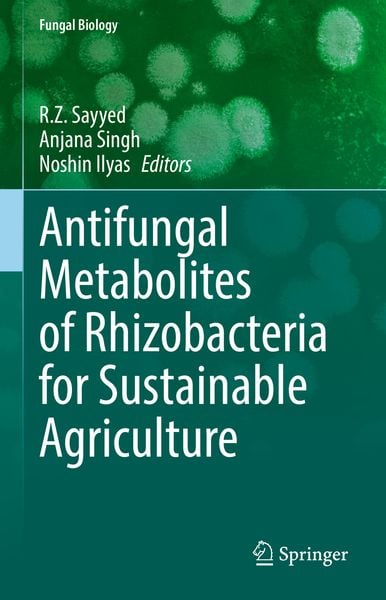
Antifungal Metabolites of Rhizobacteria for Sustainable Agriculture
-
- Hardcover ausgewählt
- Taschenbuch
- eBook
-
Sprache:Englisch
139,99 €
UVP
160,49 €
inkl. gesetzl. MwSt.,
Lieferung nach Hause
Beschreibung
Produktdetails
Einband
Gebundene Ausgabe
Erscheinungsdatum
28.08.2022
Herausgeber
R.Z Sayyed + weitereVerlag
SpringerSeitenzahl
380
Maße (L/B/H)
24,1/16/2,7 cm
Gewicht
764 g
Auflage
1st ed. 2022
Sprache
Englisch
ISBN
978-3-031-04804-3
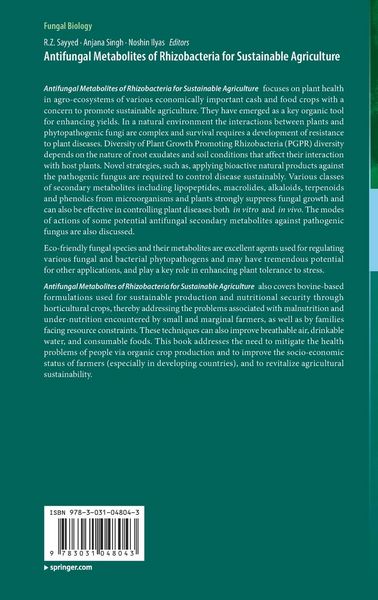
Antifungal Metabolites of Rhizobacteria for Sustainable Agriculture focuses on plant health in agro-ecosystems of various economically important cash and food crops with a concern to promote sustainable agriculture. They have emerged as a key organic tool for enhancing yields. In a natural environment the interactions between plants and phytopathogenic fungi are complex and survival requires a development of resistance to plant diseases. Diversity of Plant Growth Promoting Rhizobacteria (PGPR) diversity depends on the nature of root exudates and soil conditions that affect their interaction with host plants. Novel strategies, such as, applying bioactive natural products against the pathogenic fungus are required to control disease sustainably. Various classes of secondary metabolites including lipopeptides, macrolides, alkaloids, terpenoids and phenolics from microorganisms and plants strongly suppress fungal growth and can also be effective in controlling plant diseases both in vitro and in vivo . The modes of actions of some potential antifungal secondary metabolites against pathogenic fungus are also discussed.
Eco-friendly fungal species and their metabolites are excellent agents used for regulating various fungal and bacterial phytopathogens and may have tremendous potential for other applications, and play a key role in enhancing plant tolerance to stress.
Antifungal Metabolites of Rhizobacteria for Sustainable Agriculture also covers bovine-based formulations used for sustainable production and nutritional security through horticultural crops, thereby addressing the problems associated with malnutrition and under-nutrition encountered by small and marginal farmers, as well as by families facing resource constraints. These techniques can also improve breathable air, drinkable water, and consumable foods. This book addresses the need to mitigate the health problems of peoplevia organic crop production and to improve the socio-economic status of farmers (especially in developing countries), and to revitalize agricultural sustainability.
Kundinnen und Kunden meinen
Verfassen Sie die erste Bewertung zu diesem Artikel
Helfen Sie anderen Kund*innen durch Ihre Meinung
Kurze Frage zu unserer Seite
Vielen Dank für dein Feedback
Wir nutzen dein Feedback, um unsere Produktseiten zu verbessern. Bitte habe Verständnis, dass wir dir keine Rückmeldung geben können. Falls du Kontakt mit uns aufnehmen möchtest, kannst du dich aber gerne an unseren Kund*innenservice wenden.
zum Kundenservice