• Produktbild: Morphosyntax
  • Produktbild: Morphosyntax

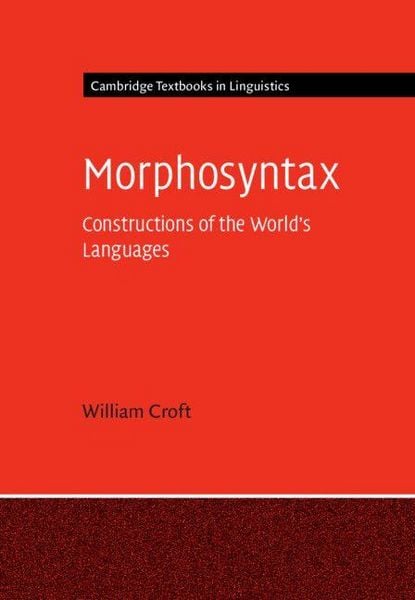
Morphosyntax Constructions of the World's Languages

45,99 €

inkl. gesetzl. MwSt., Versandkostenfrei

Lieferung nach Hause

Beschreibung

Produktdetails

Einband

Taschenbuch

Erscheinungsdatum

04.08.2022

Verlag

Cambridge University Press

Seitenzahl

688

Maße (L/B/H)

24,1/16,6/3,8 cm

Gewicht

1230 g

Sprache

Englisch

ISBN

978-1-107-47461-1

Beschreibung

Produktdetails

Einband

Taschenbuch

Erscheinungsdatum

04.08.2022

Verlag

Cambridge University Press

Seitenzahl

688

Maße (L/B/H)

24,1/16,6/3,8 cm

Gewicht

1230 g

Sprache

Englisch

ISBN

978-1-107-47461-1

Herstelleradresse

Libri GmbH
Europaallee 1
36244 Bad Hersfeld
DE

Email: [email protected]

Kundinnen und Kunden meinen

0 Bewertungen

Informationen zu Bewertungen

Zur Abgabe einer Bewertung ist eine Anmeldung im Konto notwendig. Die Authentizität der Bewertungen wird von uns nicht überprüft. Wir behalten uns vor, Bewertungstexte, die unseren Richtlinien widersprechen, entsprechend zu kürzen oder zu löschen.

Die Bewertungen sind nach Format, Anzahl Sterne und Datum sortiert.

Verfassen Sie die erste Bewertung zu diesem Artikel

Helfen Sie anderen Kund*innen durch Ihre Meinung

Kundinnen und Kunden meinen

0 Bewertungen filtern

Die Leseprobe wird geladen.
  • Produktbild: Morphosyntax
  • Produktbild: Morphosyntax
  • Part I. Introduction: 1. Grammatical Constructions, Semantic Classes and Information Packaging; 2. Propositional Act Constructions: The Skeleton of a Sentence; Part II. Argument Phrase Structure: Reference and Modification: 3. Reference and Referent Expressions; 4. Modification: Semantic Types and Morphosyntactic Strategies; 5. The Structure and Origin of Modification Constructions; Part III. Clause Structure: Predication and Arguments: 6. Event Structure and Argument Coding: Semantics, Transitivity and Alignment; 7. Event Structure and Nonprototypical Argument Coding; 8. Argument Coding and Voice: Discourse Factors; 9. Argument Coding and Voice: Salience of Peripheral Participants; 10. Nonprototypical Predication and Nonpredicational Clauses; 11. Information Packaging in Clauses; 12. Speech Act Constructions; 13. Eventive Complex Predicates and Related Constructions; 14. Stative Complex Predicates, including Manner; Part IV. Complex Sentences: 15. Temporal and Causal Relations Between Events: Coordinate Clause and Adverbial Clause Constructions; 16. Reference-tracking in Coordinate and Adverbial Clause Constructions; 17. Other Semantic Relations Between Events: Comparative, Conditional, and Concessive; 18. Events as Arguments: Complement Clause Constructions; 19. Events as Modifiers: Relative Clause Constructions.