KI-Beratung Beta

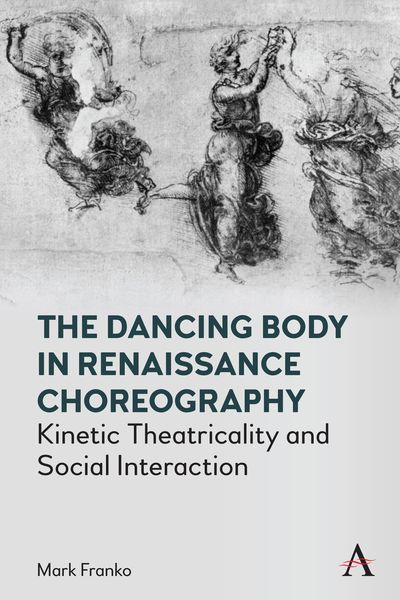
Produktbild: The Dancing Body in Renaissance Choreography

The Dancing Body in Renaissance Choreography Kinetic Theatricality and Social Interaction

41,49 €

inkl. gesetzl. MwSt.

Beschreibung

Renaissance dance treatises claim that the dance is a language but do not explain how or what dancing communicates. Since the body is the instrument of this hypothetical language, The Dancing Body in Renaissance Choreography problematizes the absence of the dancing body in treatises in order to reconstruct...

Beschreibung

Renaissance dance treatises claim that the dance is a language but do not explain how or what dancing communicates. Since the body is the instrument of this hypothetical language, The Dancing Body in Renaissance Choreography problematizes the absence of the dancing body in treatises in order to reconstruct it through a series of intertextual readings triggered by Thoinot Arbeau's definition of dance as a mute rhetoric in Orchesographie. This book shows that the oratorical model for Arbeau's definition of the dance is epideictic and that although one cannot equate dance and oratorical action, the ends of oratorical action are those of dance: persuasion through charm and emotion.

The analysis of the rhetorical intertext opens the way to a sociological one. Through a reading of courtesy books as well as a chapter of Tuccaro's L'Art de Sauter et Voltiger en l'air it is shown that dance and social behavior were not discontinuous in the Renaissance. Instructions for the body can be divided into the categories of the pose and movement. They are examined as a model for the most important and widely practiced dance of the Renaissance: the basse danse. The characteristic motion resides in an opposition as well as an interpenetration of stillness and mobility. This is developed through a reading of fifteenth-century dance theorists' concept of misura and fantasmata. Stefano Guazzo's La Civil Conversazione is used as a textual interpretant to ascertain the strategy of movement and the pose in the interaction between dancer and spectator. 

Produktdetails

Format

ePUB

Kopierschutz

Ja

Family Sharing

Nein

Text-to-Speech

Ja

Produktdetails

Format

ePUB

Format

eBooks im ePUB-Format erlauben eine dynamische Anpassung des Inhalts an die jeweilige Display-Größe des Lesegeräts. Das Format eignet sich daher besonders für das Lesen auf mobilen Geräten, wie z.B. Ihrem tolino, Tablets oder Smartphones.

Kopierschutz

Ja

Kopierschutz

Zum Lesen dieses eBooks auf eReadern außerhalb der tolino Familie sowie am PC benötigen Sie eine Adobe ID. Weitere Hinweise zum Lesen von kopiergeschützten eBooks finden Sie unter Hilfe/Downloads.

Family Sharing

Nein

Family Sharing

Mit Family Sharing können Sie eBooks innerhalb Ihrer Familie (max. sechs Mitglieder im gleichen Haushalt) teilen. Sie entscheiden selbst, welches Buch Sie mit welchem Familienmitglied teilen möchten. Auch das parallele Lesen durch verschiedene Familienmitglieder ist durch Family Sharing möglich. Um eBooks zu teilen oder geteilt zu bekommen, muss jedes Familienmitglied ein Konto bei Thalia oder einem anderen tolino-Buchhändler haben. Weitere Informationen finden Sie unter Hilfe/Family-Sharing.

Text-to-Speech

Ja

Text-to-Speech

Bedeutet Ihnen Stimme mehr als Text? Mit der Funktion Text-to-Speech können Sie sich im tolino webReader und in der aktuellen Thalia – Lesen & Hören App das eBook vorlesen lassen. Weitere Informationen finden Sie unter Hilfe/Text-to-Speech.

Erscheinungsdatum

01.03.2022

Verlag Anthem Press
Seitenzahl

(Printausgabe)

Dateigröße

5284 KB

Sprache

Englisch

EAN

9781785278037

Barrierefreiheit
  • keine Information zur Barrierefreiheit bekannt

Noch keine Bewertungen vorhanden

Verfassen Sie die erste Bewertung zu diesem Artikel

Helfen Sie anderen Kundinnen und Kunden durch Ihre Meinung.

Kundinnen und Kunden meinen

Bewertungen (0)

Weitere Artikel findest du in

Die Leseprobe wird geladen.
  • Produktbild: The Dancing Body in Renaissance Choreography