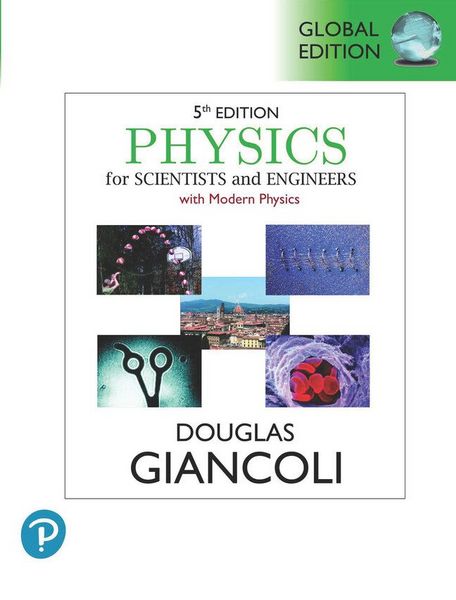
Produktbild: Physics for Scientists & Engineers with Modern Physics, Volume 3 (Chapters 36-44), Global Edition
- 16%

Physics for Scientists & Engineers with Modern Physics, Volume 3 (Chapters 36-44), Global Edition

16% sparen

64,99 € UVP 77,49 €

inkl. gesetzl. MwSt., Versandkostenfrei


Beschreibung

Produktdetails

Einband

Taschenbuch

Erscheinungsdatum

21.08.2023

Verlag

Pearson Education Limited

Seitenzahl

392

Maße (L/B/H)

27,6/21,6/2,2 cm

Gewicht

846 g

Auflage

5

Sprache

Englisch

ISBN

978-1-292-44030-9

Beschreibung

Produktdetails

Einband

Taschenbuch

Erscheinungsdatum

21.08.2023

Verlag

Pearson Education Limited

Seitenzahl

392

Maße (L/B/H)

27,6/21,6/2,2 cm

Gewicht

846 g

Auflage

5

Sprache

Englisch

ISBN

978-1-292-44030-9

Herstelleradresse

Financial Times Prent.
St.-Martin-Straße 82
81541 München
DE

Email: salesde@pearson.com

Noch keine Bewertungen vorhanden

Verfassen Sie die erste Bewertung zu diesem Artikel

Helfen Sie anderen Kundinnen und Kunden durch Ihre Meinung.

Kundinnen und Kunden meinen

Bewertungen (0)

  • Produktbild: Physics for Scientists & Engineers with Modern Physics, Volume 3 (Chapters 36-44), Global Edition


    1. Introduction, Measurement, Estimating


      • How Science Works


      • Models, Theories, and Laws


      • Measurement and Uncertainty; Significant Figures


      • Units, Standards, and the SI System


      • Converting Units


      • Order of Magnitude: Rapid Estimating


      • *Dimensions and Dimensional Analysis


    2. Describing Motion: Kinematics in One Dimension


      • Reference Frames and Displacement


      • Average Velocity


      • Instantaneous Velocity


      • Acceleration


      • Motion at Constant Acceleration


      • Solving Problems


      • Freely Falling Objects


      • *Variable Acceleration; Integral Calculus


    3. Kinematics in Two or Three Dimensions; Vectors


      • Vectors and Scalars


      • Addition of VectorsGraphical Methods


      • Subtraction of Vectors, and Multiplication of a Vector by a Scalar


      • Adding Vectors by Components


      • Unit Vectors


      • Vector Kinematics


      • Solving Problems Involving Projectile Motion


      • Relative Velocity


    4. Dynamics: Newton's Laws of Motion


      • Force


      • Newton's First Law of Motion


      • Mass


      • Newton's Second Law of Motion


      • Newton's Third Law of Motion


      • Weightthe Force of Gravity; and the Normal Force


      • Solving Problems with Newton's Laws: Free-Body Diagrams


      • Problem SolvingA General Approach


    5. Using Newton's Laws: Friction, Circular Motion, Drag Forces


      • Using Newton's Laws with Friction


      • Uniform Circular MotionKinematics


      • Dynamics of Uniform Circular Motion


      • Highway Curves: Banked and Unbanked


      • Nonuniform Circular Motion


      • *Velocity-Dependent Forces: Drag and Terminal Velocity


    6. Gravitation and Newton's Synthesis


      • Newton's Law of Universal Gravitation


      • Vector Form of Newton's Law of Universal Gravitation


      • Gravity Near the Earth's Surface


      • Satellites and "Weightlessness"


      • Planets, Kepler's Laws, and Newton's Synthesis


      • Moon Rises an Hour Later Each Day


      • Types of Forces in Nature


      • *Gravitational Field


      • *Principle of Equivalence; Curvature of Space; Black Holes


    7. Work and Energy


      • Work Done by a Constant Force


      • Scalar Product of Two Vectors


      • Work Done by a Varying Force


      • Kinetic Energy and the Work-Energy Principle


    8. Conservation of Energy


      • Conservative and Nonconservative Forces


      • Potential Energy


      • Mechanical Energy and Its Conservation


      • Problem Solving Using Conservation of Mechanical Energy


      • The Law of Conservation of Energy


      • Energy Conservation with Dissipative Forces: Solving Problems


      • Gravitational Potential Energy and Escape Velocity


      • Power


      • Potential Energy Diagrams; Stable and Unstable Equilibrium


      • *Gravitational Assist (Slingshot)


    9. Linear Momentum


      • Momentum and Its Relation to Force


      • Conservation of Momentum


      • Collisions and Impulse


      • Conservation of Energy and Momentum in Collisions


      • Elastic Collisions in One Dimension


      • Inelastic Collisions


      • Collisions in 2 or 3 Dimensions


      • Center of Mass (cm)


      • Center of Mass and Translational Motion


      • *Systems of Variable Mass; Rocket Propulsion


    10. Rotational Motion


      • Angular Quantities


      • Vector Nature of Angular Quantities


      • Constant Angular Acceleration


      • Torque


      • Rotational Dynamics; Torque and Rotational Inertia


      • Solving Problems in Rotational Dynamics


      • Determining Moments of Inertia


      • Rotational Kinetic Energy


      • Rotational plus Translational Motion; Rolling


      • *Why Does a Rolling Sphere Slow Down?


    11. Angular Momentum; General Rotation


      • Angular MomentumObjects Rotating About a Fixed Axis


      • Vector Cross Product; Torque as a Vector


      • Angular Momentum of a Particle


      • Angular Momentum and Torque for a System of Particles; General Motion


      • Angular Momentum and Torque for a Rigid Object


      • Conservation of Angular Momentum


      • *The Spinning Top and Gyroscope


      • Rotating Frames of Reference; Inertial Forces


      • *The Coriolis Effect


    12. Static Equilibrium; Elasticity and Fracture


      • The Conditions for Equilibrium


      • Solving Statics Problems


      • *Applications to Muscles and Joints


      • Stability and Balance


      • Elasticity; Stress and Strain


      • Fracture


      • Trusses and Bridges


      • Arches and Domes


    13. Fluids


      • Phases of Matter


      • Density and Specific Gravity


      • Pressure in Fluids


      • Atmospheric Pressure and Gauge Pressure


      • Pascal's Principle


      • Measurement of Pressure; Gauges and the Barometer


      • Buoyancy and Archimedes' Principle


      • Fluids in Motion; Flow Rate and the Equation of Continuity


      • Bernoulli's Equation


      • Applications of Bernoulli's Principle: Torricelli, Airplanes, Baseballs,Blood Flow


      • Viscosity


      • *Flow in Tubes: Poiseuille's Equation, Blood Flow


      • *Surface Tension and Capillarity


      • *Pumps, and the Heart


    14. Oscillations


      • Oscillations of a Spring


      • Simple Harmonic Motion


      • Energy in the Simple Harmonic Oscillator


      • Simple Harmonic Motion Related to Uniform Circular Motion


      • The Simple Pendulum


      • *The Physical Pendulum and the Torsion Pendulum


      • Damped Harmonic Motion


      • Forced Oscillations; Resonance


    15. Wave Motion


      • Characteristics of Wave Motion


      • Types of Waves: Transverse and Longitudinal


      • Energy Transported by Waves


      • Mathematical Representation of a Traveling Wave


      • *The Wave Equation


      • The Principle of Superposition


      • Reflection and Transmission


      • Interference


      • Standing Waves; Resonance


      • Refraction


      • Diffraction


    16. Sound


      • Characteristics of Sound


      • Mathematical Representation of Longitudinal Waves


      • Intensity of Sound: Decibels


      • Sources of Sound: Vibrating Strings and Air Columns


      • *Quality of Sound, and Noise; Superposition


      • Interference of Sound Waves; Beats


      • Doppler Effect


      • *Shock Waves and the Sonic Boom


      • *Applications: Sonar, Ultrasound, and Medical Imaging


    17. Temperature, Thermal Expansion, and the Ideal Gas Law


      • Atomic Theory of Matter


      • Temperature and Thermometers


      • Thermal Equilibrium and the Zeroth Law of Thermodynamics


      • Thermal Expansion


      • *Thermal Stresses


      • The Gas Laws and Absolute Temperature


      • The Ideal Gas Law


      • Problem Solving with the Ideal Gas Law


      • Ideal Gas Law in Terms of Molecules: Avogadro's Number


      • *Ideal Gas Temperature Scalea Standard


    18. Kinetic Theory of Gases


      • The Ideal Gas Law and the Molecular Interpretation of Temperature


      • Distribution of Molecular Speeds


      • Real Gases and Changes of Phase


      • Vapor Pressure and Humidity


      • Temperature of Water Decrease with Altitude


      • Van der Waals Equation of State


      • Mean Free Path


      • Diffusion


    19. Heat and the First Law of Thermodynamics


      • Heat as Energy Transfer


      • Internal Energy


      • Specific Heat


      • CalorimetrySolving Problems


      • Latent Heat


      • The First Law of Thermodynamics


      • Thermodynamic Processes and the First Law


      • Molar Specific Heats for Gases, and the Equipartition of Energy


      • Adiabatic Expansion of a Gas


      • Heat Transfer: Conduction, Convection, Radiation


    20. Second Law of Thermodynamics


      • The Second Law of ThermodynamicsIntroduction


      • Heat Engines


      • The Carnot Engine; Reversible and Irreversible Processes


      • Refrigerators, Air Conditioners, and Heat Pumps


      • Entropy


      • Entropy and the Second Law of Thermodynamics


      • Order to Disorder


      • Unavailability of Energy; Heat Death


      • Statistical Interpretation of Entropy and the Second Law


      • Thermodynamic Temperature; Third Law of Thermodynamics


      • *Thermal Pollution, Global Warming, and Energy Resources


    21. Electric Charge and Electric Field


      • Static Electricity; Electric Charge and Its Conservation


      • Electric Charge in the Atom


      • Insulators and Conductors


      • Induced Charge; the Electroscope


      • Coulomb's Law


      • The Electric Field


      • Electric Field Calculations for Continuous Charge Distributions


      • Field Lines


      • Electric Fields and Conductors


      • Motion of a Charged Particle in an Electric Field


      • Electric Dipoles


      • *Electric Forces in Molecular Biology: DNA Structure and Replication


    22. Gauss's Law


      • Electric Flux


      • Gauss's Law


      • Applications of Gauss's Law


      • *Experimental Basis of Gauss's and Coulomb's Laws


    23. Electric Potential


      • Electric Potential Energy and Potential Difference


      • Relation between Electric Potential and Electric Field


      • Electric Potential Due to Point Charges


      • Potential Due to Any Charge Distribution


      • Equipotential Lines and Surfaces


      • Potential Due to Electric Dipole; Dipole Moment


      • EDetermined from V


      • Electrostatic Potential Energy; the Electron Volt


      • Digital; Binary Numbers; Signal Voltage


      • TV and Computer Monitors


      • Electrocardiogram (ECG or EKG)


    24. Capacitance, Dielectrics, Electric Energy Storage


      • Capacitors


      • Determination of Capacitance


      • Capacitors in Series and Parallel


      • Storage of Electric Energy


      • Dielectrics


      • *Molecular Description of Dielectrics


    25. Electric Current and Resistance


      • The Electric Battery


      • Electric Current


      • Ohm's Law: Resistance and Resistors


      • Resistivity


      • Electric Power


      • Power in Household Circuits


      • Alternating Current


      • Microscopic View of Electric Current


      • *Superconductivity


      • *Electrical Conduction in the Human Nervous System


    26. DC Circuits


      • EMF and Terminal Voltage


      • Resistors in Series and in Parallel


      • Kirchhoff's Rules


      • EMFs in Series and in Parallel; Charging a Battery


      • RC CircuitsResistor and Capacitor in Series


      • Electric Hazards and Safety


      • Ammeters and VoltmetersMeasurement Affects Quantity Measured


    27. Magnetism


      • Magnets and Magnetic Fields


      • Electric Currents Produce Magnetic Fields


      • Force on an Electric Current in a Magnetic Field; Definition of B


      • Force on an Electric Charge Moving in a Magnetic Field


      • Torque on a Current Loop; Magnetic Dipole Moment


      • Applications: Motors, Loudspeakers, Galvanometers


      • Discovery and Properties of the Electron


      • The Hall Effect


      • Mass Spectrometer


    28. Sources of Magnetic Field


      • Magnetic Field Due to a Straight Wire


      • Force between Two Parallel Wires


      • Definitions of the Ampere and the Coulomb


      • Ampère's Law


      • Magnetic Field of a Solenoid and a Toroid


      • Biot-Savart Law


      • Magnetic Field Due to a Single Moving Charge


      • Magnetic MaterialsFerromagnetism


      • Electromagnets and SolenoidsApplications


      • Magnetic Fields in Magnetic Materials; Hysteresis


      • *Paramagnetism and Diamagnetism


    29. Electromagnetic Induction and Faraday's Law


      • Induced EMF


      • Faraday's Law of Induction; Lenz's Law


      • EMF Induced in a Moving Conductor


      • Electric Generators


      • Back EMF and Counter Torque; Eddy Currents


      • Transformers and Transmission of Power


      • A Changing Magnetic Flux Produces an Electric Field


      • *Information Storage: Magnetic and Semiconductor


      • *Applications of Induction: Microphone, Seismograph, GFCI


    30. Inductance, Electromagnetic Oscillations, and AC Circuits


      • Mutual Inductance


      • Self-Inductance; Inductors


      • Energy Stored in a Magnetic Field


      • LR Circuits


      • LC Circuits and Electromagnetic Oscillations


      • LC Oscillations with Resistance (LRC Circuit)


      • AC Circuits and Reactance


      • LRC Series AC Circuit; Phasor Diagrams


      • Resonance in AC Circuits


      • Impedance Matching


      • *Three-Phase AC


    31. Maxwell's Equations and Electromagnetic Waves


      • Changing Electric Fields Produce Magnetic Fields; Displacement Current


      • Gauss's Law for Magnetism


      • Maxwell's Equations


      • Production of Electromagnetic Waves


      • Electromagnetic Waves, and Their Speed, Derived from Maxwell's Equations


      • Light as an Electromagnetic Wave and the Electromagnetic Spectrum


      • Measuring the Speed of Light


      • Energy in EM Waves; the Poynting Vector


      • Radiation Pressure


      • Radio and Television; Wireless Communication


    32. Light: Reflection and Refraction


      • The Ray Model of Light


      • Reflection; Image Formation by a Plane Mirror


      • Formation of Images by Spherical Mirrors


      • Seeing Yourself in a Magnifying Mirror (Concave)


      • Convex (Rearview) Mirrors


      • Index of Refraction


      • Refraction: Snell's Law


      • The Visible Spectrum and Dispersion


      • Total Internal Reflection; Fiber Optics


      • *Refraction at a Spherical Surface


    33. Lenses and Optical Instruments


      • Thin Lenses; Ray Tracing and Focal Length


      • The Thin Lens Equation


      • Combinations of Lenses


      • Lensmaker's Equation


      • Cameras: Film and Digital


      • The Human Eye; Corrective Lenses


      • Magnifying Glass


      • Compound Microscope


      • Aberrations of Lenses and Mirrors


    34. The Wave Nature of Light: Interference and Polarization


      • Waves vs. Particles; Huygens' Principle and Diffraction


      • Huygens' Principle and the Law of Refraction


      • Interference--Young's Double-Slit Experiment


      • Intensity in the Double-Slit Interference Pattern


      • Interference in Thin Films


      • Michelson Interferometer


      • Polarization


      • *Liquid Crystal Displays (LCD)


      • *Scattering of Light by the Atmosphere


      • Lumens, Luminous Flux, and Luminous Intensity


      • Efficiency of Lightbulbs


    35. Diffraction


      • Diffraction by a Single Slit or Disk


      • Intensity in Single-Slit Diffraction Pattern


      • Diffraction in the Double-Slit Experiment


      • Interference vs. Diffraction


      • Limits of Resolution; Circular Apertures


      • Resolution of Telescopes and Microscopes; the Limit


      • Resolution of the Human Eye and Useful Magnification


      • Diffraction Grating


      • The Spectrometer and Spectroscopy


      • *Peak Widths and Resolving Power for a Diffraction Grating


      • X-Rays and X-Ray Diffraction


      • *X-Ray Imaging and Computed Tomography (CT Scan)


      • *Specialty Microscopes and Contrast


    36. The Special Theory of Relativity


      • GalileanNewtonian Relativity


      • The MichelsonMorley Experiment


      • Postulates of the Special Theory of Relativity


      • Simultaneity


      • Time Dilation and the Twin Paradox


      • Length Contraction


      • Four-Dimensional Space-Time


      • Galilean and Lorentz Transformations


      • Relativistic Momentum


      • The Ultimate Speed


      • E = mc²; Mass and Energy


      • Doppler Shift for Light


      • The Impact of Special Relativity


    37. Early Quantum Theory and Models of the Atom


      • Blackbody Radiation; Planck's Quantum Hypothesis


      • Photon Theory of Light and the Photoelectric Effect


      • Energy, Mass, and Momentum of a Photon


      • Compton Effect


      • Photon Interactions; Pair Production


      • Wave-Particle Duality; the Principle of Complementarity


      • Wave Nature of Matter


      • Electron Microscopes


      • Early Models of the Atom


      • Atomic Spectra: Key to the Structure of the Atom


      • The Bohr Model


      • de Broglie's Hypothesis Applied to Atoms


    38. Quantum Mechanics


      • Quantum MechanicsA New Theory


      • The Wave Function and Its Interpretation; the Double-Slit Experiment


      • The Heisenberg Uncertainty Principle


      • Philosophic Implications; Probability Versus Determinism


      • The Schrödinger Equation in One Dimension-- Time-Independent Form


      • *Time-Dependent Schrödinger Equation


      • Free Particles; Plane Waves and Wave Packets


      • Particle in an Infinitely Deep Square Well Potential (a Rigid Box)


      • Finite Potential Well


      • Tunneling through a Barrier


    39. Quantum Mechanics of Atoms


      • Quantum-Mechanical View of Atoms


      • Hydrogen Atom: Schrödinger Equation and Quantum Numbers


      • Hydrogen Atom Wave Functions


      • Multielectron Atoms; the Exclusion Principle


      • Periodic Table of Elements


      • X-Ray Spectra and Atomic Number


      • *Magnetic Dipole Moment; Total Angular Momentum


      • Fluorescence and Phosphorescence


      • Lasers


      • *Holography


    40. Molecules and Solids


      • Bonding in Molecules


      • Potential-Energy Diagrams for Molecules


      • Weak (van der Waals) Bonds


      • Molecular Spectra


      • Bonding in Solids


      • Free-Electron Theory of Metals; Fermi Energy


      • Band Theory of Solids


      • Semiconductors and Doping


      • Semiconductor Diodes, LEDs, OLEDs


      • Transistors: Bipolar and MOSFETs


      • Integrated Circuits, 14-nm Technology


    41. Nuclear Physics and Radioactivity


      • Structure and Properties of the Nucleus


      • Binding Energy and Nuclear Forces


      • Radioactivity


      • Alpha Decay


      • Beta Decay


      • Gamma Decay


      • Conservation of Nucleon Number and Other Conservation Laws


      • Half-Life and Rate of Decay


      • Decay Series


      • Radioactive Dating


      • Detection of Particles


    42. Nuclear Energy; Effects and Uses of Radiation


      • Nuclear Reactions and the Transmutation of Elements


      • Cross Section


      • Nuclear Fission; Nuclear Reactors


      • Nuclear Fusion


      • Passage of Radiation Through Matter; Biological Damage


      • Measurement of Radiation Dosimetry


      • *Radiation Therapy


      • *Tracers in Research and Medicine


      • *Emission Tomography: PET and SPECT


      • *Nuclear Magnetic Resonance (NMR); Magnetic Resonance Imaging (MRI)


    43. Elementary Particles


      • High-Energy Particles and Accelerators


      • Beginnings of Elementary Particle PhysicsParticle Exchange


      • Particles and Antiparticles


      • Particle Interactions and Conservation Laws


      • Neutrinos


      • Particle Classification


      • Particle Stability and Resonances


      • Strangeness? Charm? Towards a New Model


      • Quarks


      • The Standard Model: QCD and Electroweak Theory


      • Grand Unified Theories


      • Strings and Supersymmetry


    44. Astrophysics and Cosmology


      • Stars and Galaxies


      • Stellar Evolution: Birth and Death of Stars, Nucleosynthesis


      • Distance Measurements


      • General Relativity: Gravity and the Curvature of Space


      • The Expanding Universe: Redshift and Hubble's Law


      • The Big Bang and the Cosmic Microwave Background


      • The Standard Cosmological Model: Early History of the Universe


      • Inflation: Explaining Flatness, Uniformity, and Structure


      • Dark Matter and Dark Energy


      • Large-Scale Structure of the Universe


      • Gravitational WavesLIGO


      • Finally . . .


    • Appendices


    • A. Mathematical Formulas


    • B. Derivatives and Integrals


    • C. Numerical Integration


    • D. More on Dimensional Analysis


    • E. Gravitational Force Due to a Spherical Mass Distribution


    • F. Differential Form of Maxwell's Equations


    • G. Selected Isotopes