Gutscheinbedingungen

**Gültig vom 21.09. bis 23.09.2026 | Gültig für Schreibwaren und nicht preisgebundene Kalender | Einzelne Artikel können ausgeschlossen sein | Online auf www.bücher.de einlösbar | Click & Collect nur mit Online-Zahlung (Paypal/Kreditkarte) vorab | Nicht kombinierbar mit anderen Gutscheinen oder Preisaktionen | Nur einmal pro Einkauf einlösbar | Gutschein wird auf max. 500€ Bestellwert angerechnet | Keine Barauszahlung | Nicht gültig für Versandkosten und Services

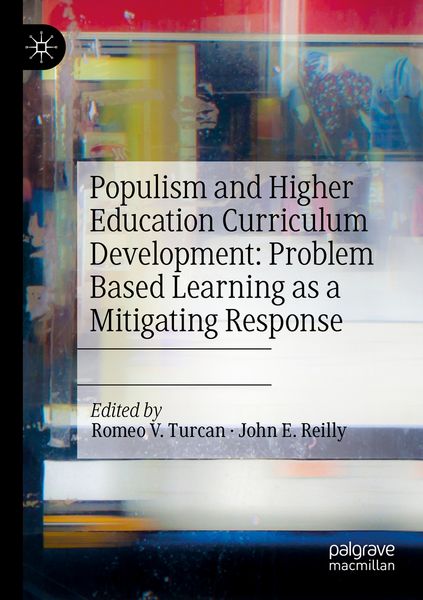
  • Produktbild: Populism and Higher Education Curriculum Development: Problem Based Learning as a Mitigating Response
  • Produktbild: Populism and Higher Education Curriculum Development: Problem Based Learning as a Mitigating Response

Populism and Higher Education Curriculum Development: Problem Based Learning as a Mitigating Response

126,99 €

inkl. gesetzl. MwSt., Versandkostenfrei


Beschreibung

Produktdetails

Einband

Taschenbuch

Erscheinungsdatum

22.11.2021

Abbildungen

XXXVI, 446 p. 16 illus.

Herausgeber

Romeo V. Turcan + weitere

Verlag

Springer

Seitenzahl

446

Maße (L/B/H)

21/14,8/2,7 cm

Gewicht

620 g

Auflage

1st ed. 2020

Sprache

Englisch

ISBN

978-3-030-47378-5

Beschreibung

Portrait


Romeo V. Turcan
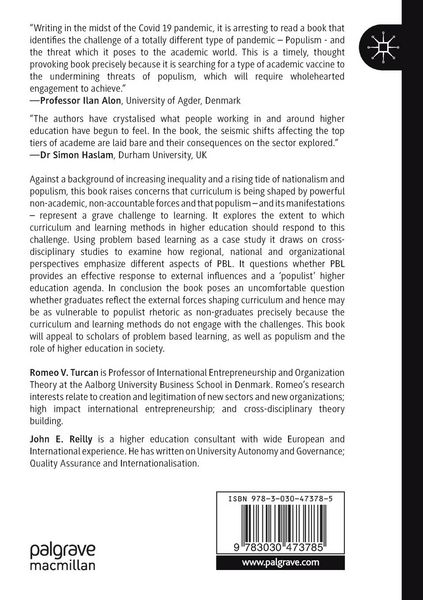
is Professor of International Entrepreneurship and Organization Theory at the Aalborg University Business School in Denmark. Romeo’s research interests relate to creation and legitimation of new sectors and new organizations; high impact international entrepreneurship; and cross-disciplinary theory building.  


John E. Reilly
is a higher education consultant with wide European and international experience. He has written on University Autonomy and Governance;  Quality Assurance; Education Policy on Entrepreneurship; Internationalisation; Erasmus and the Bologna Process; Credit Systems in Higher Education.


Produktdetails

Einband

Taschenbuch

Erscheinungsdatum

22.11.2021

Abbildungen

XXXVI, 446 p. 16 illus.

Herausgeber

Verlag

Springer

Seitenzahl

446

Maße (L/B/H)

21/14,8/2,7 cm

Gewicht

620 g

Auflage

1st ed. 2020

Sprache

Englisch

ISBN

978-3-030-47378-5

Herstelleradresse

Springer-Verlag GmbH
Tiergartenstr. 17
69121 Heidelberg
DE

Email: ProductSafety@springernature.com

Noch keine Bewertungen vorhanden

Verfassen Sie die erste Bewertung zu diesem Artikel

Helfen Sie anderen Kundinnen und Kunden durch Ihre Meinung.

Kundinnen und Kunden meinen

Bewertungen (0)

Weitere Artikel findest du in

  • Produktbild: Populism and Higher Education Curriculum Development: Problem Based Learning as a Mitigating Response
  • Produktbild: Populism and Higher Education Curriculum Development: Problem Based Learning as a Mitigating Response
  • Chapter 1. Politics and Curriculum Content in a Global Perspective: Addressing the Populism Tsunami; John E. Reilly and Romeo V. Turcan.- Chapter 2. Making Sense of Emerging Populist Agendas; Peter Scott.- Chapter 3. Challenges for the University: Recovering Authentic Liberal Culture during Ascendant and Populist Neoliberalism; Nikhilesh Dholakia, A. Fuat Fırat, Aras Ozgun, and Deniz Atik.- Chapter 4. The Origins of the Current ‘Crisis’ facing British Universities: Ideology or Incrementalism; John Baldock.- Chapter 5. The Paradox of Democracy; Samuel Rachlin.- Chapter 6. Modern Border Security; Rt Hon Bruce George, OBE.- Chapter 7. Management , Philosophy and Consciousness in the shaping of PBL; Michael Fast and Woodrow W. Clark II.- Chapter 8. Is University Management Part of the Problem or Part of the Solution for PBL Development and Critical Thinking?; Birgitte Gregersen.- Chapter 9. The Socially Engaged University: The Complexities of Business Relations under the New Political Paradigm; Olav Jull Sørensen.- Chapter 10. Stakeholder Politics and PBL Curriculum: A Learner Perspective; Maria Kriegsbaum and Bernadett Deak.- Chapter 11. Internships: Meeting Stakeholder Demand for Vocational Curriculum? Benefits and Costs of PBL Based Practice-Learning; Jesper Lindgaard Christensen.- Chapter 12. PBL: A Teaching and Learning Concept is Facing Artificial Intelligence; Ralph Dreher and Gesine Haseloff.- Chapter 13. PBL and Social Inclusion; Sofia Daskou and Nikolaos Tzokas.- Chapter 14. Establishing a Link between Meaning and Success via PBL: Rethinking Entrepreneurship and Communication; Kim Malmbak Møller, Mads, Lauridsen, and Jeppe Spedtsberg.- Chapter 15. Storytelling Sustainability in Problem-Based Learning; Kenneth Mølbjerg Jørgensen and David M. Boje.- Chapter 16. Liquid Times - Newness and Uncertainty: An Innovative AAU PBL Response; Romeo V. Turcan.- Chapter 17. In my End is my Beginning; John E. Reilly and Romeo V. Turcan