• Produktbild: Teaching Science Students to Communicate: A Practical Guide
  • Produktbild: Teaching Science Students to Communicate: A Practical Guide
- 12%

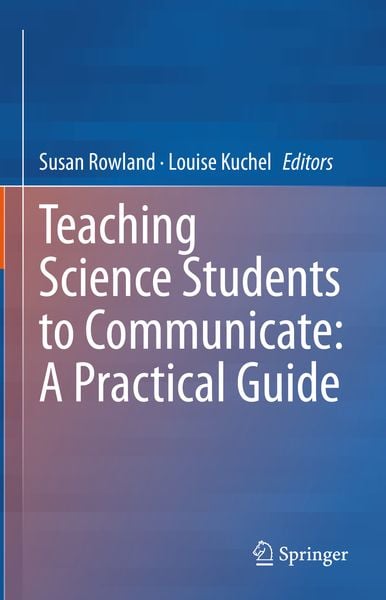
Teaching Science Students to Communicate: A Practical Guide

12% sparen

46,99 € UVP 53,49 €

inkl. gesetzl. MwSt., Versandkostenfrei

Lieferung nach Hause

Beschreibung

Produktdetails

Einband

Gebundene Ausgabe

Erscheinungsdatum

26.04.2023

Herausgeber

Susan Rowland + weitere

Verlag

Springer

Seitenzahl

559

Maße (L/B/H)

24,1/16/3,7 cm

Gewicht

1016 g

Auflage

1st ed. 2023

Sprache

Englisch

ISBN

978-3-030-91627-5

Beschreibung

Produktdetails

Einband

Gebundene Ausgabe

Erscheinungsdatum

26.04.2023

Herausgeber

Verlag

Springer

Seitenzahl

559

Maße (L/B/H)

24,1/16/3,7 cm

Gewicht

1016 g

Auflage

1st ed. 2023

Sprache

Englisch

ISBN

978-3-030-91627-5

Herstelleradresse

Springer-Verlag KG
Sachsenplatz 4-6
1201 Wien
AT

Email: GPSR Kontakt

Kundinnen und Kunden meinen

0 Bewertungen

Informationen zu Bewertungen

Zur Abgabe einer Bewertung ist eine Anmeldung im Konto notwendig. Die Authentizität der Bewertungen wird von uns nicht überprüft. Wir behalten uns vor, Bewertungstexte, die unseren Richtlinien widersprechen, entsprechend zu kürzen oder zu löschen.

Die Bewertungen sind nach Format, Anzahl Sterne und Datum sortiert.

Verfassen Sie die erste Bewertung zu diesem Artikel

Helfen Sie anderen Kund*innen durch Ihre Meinung

Kundinnen und Kunden meinen

0 Bewertungen filtern

  • Produktbild: Teaching Science Students to Communicate: A Practical Guide
  • Produktbild: Teaching Science Students to Communicate: A Practical Guide
  • Part 1. THEORY CHAPTERS.- Chapter 1. The Rhetorical Triangle.- Chapter 2. The social brain and the neuroscience of  storytelling.- Chapter 3. Good Science Communication Considers Audience.- Chapter 4. On establishing trust.- Chapter 5. Intentional and unintentional messaging.- Chapter 6. Science graduates & communication in the workplace.- Chapter 7. Models of group decision-making.- Chapter 8. Data Visualisation.- Chapter 9. Misinformation and how to respond.- Chapter 10. Communicating in a space of conflict.- Chapter 11. Critical appraisal of information.- Chapter 12. Communicating risk and uncertainty.- Part 2. PRACTICE Engaging.- Chapter 13. The 5-box talk template for structuring a presentation to any audience.- Chapter 14. Getting students to express an opinion.- Chapter 15. Understanding your target audience through writing their biography.- Chapter 16. Using active learning techniques to engage audiences in oral presentations.- Part 3. PRACTICE Writing.- Chapter 17. Nominalisations - the battle against -me t, -tion, and -ery.- Chapter 18. Learning to write from the way you read.- Chapter 19. How to deconstruct when reading and construct when writing an abstract.- Chapter 20. Using the de-jargonizer and readability scores to help you write clearly.- Part 4. PRACTICE Distilling.- Chapter 21. Statements of Critical Significance (SOCS) for communicating succinctly.- Chapter 22. Infographics.- Chapter 23. Hooks & Headlines.- Chapter 24. Poetry as a device to distil science.- Chapter 25. Put the slides to one side - replacing static slides with a prop.- Part 5. PRACTICE Speaking.- Chapter 26. The think aloud protocol for obtaining feedback on writing.- Chapter 27. Show and speak to design compelling graphs & diagrams.- Chapter 28. Using Sentence Frames and Question Cards to scaffold verbal discourse - Scaffolded practice for engaging in discourse and argumentation in science.- Chapter 29. The power opening - how to grab your audience at the start of your talk.- Chapter 30. Physical presence - how to use your voice and body to be more dynamic speaker.- Chapter 31. Building powerful presentations through framing and a call to action.- Part 6. PRACTICE Listening.- Chapter 32. Mirror-mirror - learning to listen to your audience.- Chapter 33. See it, speak it, draw it and learn to communicate in simple language.- Chapter 34. Understanding the hidden meanings of words using The Word-Association Game.- Chapter 35. Learning to be part of the conversation through blogging and blog commenting.- Part 7. PRACTICE Investigating.- Chapter 36. Using a KLEWS chart to collect and organize information during investigations.- Chapter 37. The RADAR framework for evaluating sources of information.- Chapter 38. Forming a research question.- Part 8. PRACTICE Storytelling.- Chapter 39. Narrative arc, the hero, the villain, and the goal of a story.- Chapter 40. A practical guide to storytelling frameworks.- Chapter 41. The 5 fact story.- Chapter 42. Using the message triangle to distil complex research into a story.- Chapter 43. One-line stories as connections between slides.- Chapter 44. Iconic stories: learn and practice the principles of storytelling using visual cues with and, but, therefore narrative structures.- Chapter 45. Using art and reflection to do a deep dive into science.- Part 9. PRACTICE Communicating with intent.- Chapter 46. So what? Writing an impact statement.- Chapter 47. The Communicate with Intent Framework.- Chapter 48. The values affirmation exercise.- Chapter 49. Identifying personal beliefs and values through group sense making.- Chapter 50. Finding your authentic voice.- Chapter 51. Communicating for inclusion - using powerful images and language to support diversity in science.- Part 10. PRACTICE Genre.- Chapter 52. The Genre Switch Game.- Chapter 53. Creative Podcasting to Develop Content Knowledge and Communication Skills.- Chapter 54. A step-by-step procedure for developing and testing an effective analogy.- Chapter 55. The Conclusion - how to end a scientific report in style.- Part 11. PRACTICE Joining the conversation.- Chapter 56. Interactive writing - speaking with (not at) your audience.- Chapter 57. The "yes, and..." games and exercises to develop active listening and meaningful conversations.- Chapter 58. Active listening - learning through interviewing.- Chapter 59. The research roleplay: understanding the process of research and the role of research stakeholders.- Chapter 60. Embracing communication failures with joy.- Part 12. PRACTICE Arguing and organising.- Chapter 61. How to construct an evidence-based argument.- Chapter 62. Organising your communication using mind maps.- Chapter 63. Writing a project plan.- Part 13. PRACTICE Working.- Chapter 64. Building your personal pitch using a message framework.- Chapter 65. How to be a functional team member.- Chapter 66. Effective notetaking.- Chapter 67. My favourite no - How to Critique the Reasoning of Others.- Chapter 68. Understanding and articulating your value as a science graduate.- Chapter 69. How to conduct elicitation interviews with clients.