
KI-Beratung Beta

Gutscheinbedingungen

**Gültig vom 05.10.2026 bis 07.10.2026 | Gültig für nicht preisgebundene fremdsprachige Bücher | Einzelne Artikel können ausgeschlossen sein | Online auf www.bücher.de einlösbar | Click & Collect nur mit Online-Zahlung (Paypal/Kreditkarte) vorab | Nicht kombinierbar mit anderen Gutscheinen oder Preisaktionen | Nur einmal pro Einkauf einlösbar | Gutschein wird auf max. 500€ Bestellwert angerechnet | Keine Barauszahlung | Nicht gültig für Versandkosten und Services

  • Produktbild: Handbook of Positive Psychology in Schools
  • Produktbild: Handbook of Positive Psychology in Schools

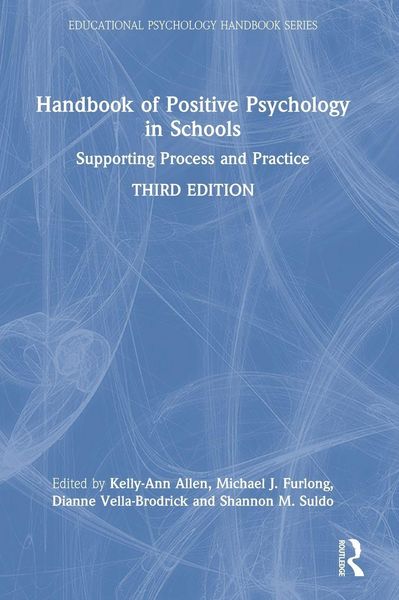
Handbook of Positive Psychology in Schools Supporting Process and Practice

368,99 €

inkl. gesetzl. MwSt., Versandkostenfrei


Beschreibung

Produktdetails

Einband

Gebundene Ausgabe

Erscheinungsdatum

22.03.2022

Abbildungen

35 SW-Abb., 13 SW-Fotos, 22 SW-Zeichn., 34 Tabellen

Herausgeber

Kelly-Ann Allen + weitere

Verlag

Taylor & Francis

Seitenzahl

602

Maße (L/B/H)

26/18,3/3,7 cm

Gewicht

1311 g

Auflage

3. Auflage

Sprache

Englisch

ISBN

978-0-367-42082-6

Beschreibung

Rezension

"An expert team of editors and contributors from around the globe has joined forces to produce a comprehensive, scientific, cross-cultural snapshot of contemporary positive psychology in schools. This book offers a refreshing array of perspectives, processes, and practices that can transform schools into places that intentionally promote wellness and success for students of all ages and levels."

-John J. Murphy, Professor of Psychology at the University of Central Arkansas, USA

"The Handbook of Positive Psychology in Schools, Third Edition, is a major accomplishment and an immense body of knowledge for anyone interested in children's well-being and positive development. Since its initial study by a small group of devoted experts, positive psychology has grown and developed into a scientific movement. These thirty-five chapters, sorted into five sections, presents a thoughtful effort to better understand not only the positive psychology of children, especially in schools, but also how the COVID-19 pandemic has caused significant changes in schools and learning as well as in children's lives."
-Asher Ben-Arieh, Full Professor in the Paul Baerwald School of Social Work and Social Welfare at the Hebrew University of Jerusalem, Israel

Produktdetails

Einband

Gebundene Ausgabe

Erscheinungsdatum

22.03.2022

Abbildungen

35 SW-Abb., 13 SW-Fotos, 22 SW-Zeichn., 34 Tabellen

Herausgeber

Verlag

Taylor & Francis

Seitenzahl

602

Maße (L/B/H)

26/18,3/3,7 cm

Gewicht

1311 g

Auflage

3. Auflage

Sprache

Englisch

ISBN

978-0-367-42082-6

EU-Ansprechpartner

Taylor & Francis Verlag GmbH
Kaufingerstraße 24
80331 München
DE
GPSR@taylorandfrancis.com

Herstelleradresse

Taylor & Francis Group
5 Howick Place
SW1P 1WG London
UK
GPSR@taylorandfrancis.com

Noch keine Bewertungen vorhanden

Verfassen Sie die erste Bewertung zu diesem Artikel

Helfen Sie anderen Kundinnen und Kunden durch Ihre Meinung.

Kundinnen und Kunden meinen

Bewertungen (0)

Die Leseprobe wird geladen.
  • Produktbild: Handbook of Positive Psychology in Schools
  • Produktbild: Handbook of Positive Psychology in Schools
  • SECTION I: CONCEPTUAL AND THEORETICAL FOUNDATIONS 1. A Selected Introduction to the Science and Practice of Positive Psychology in Schools 2. PERMAH: A Useful Model for Focusing on Wellbeing in Schools 3. Capacities and Vulnerabilities in the Classroom: Self-Determination Theory and the Promotion of Proactive Human Nature among Students 4. Covitality: Cultivating Psychosocial Strengths and Well-Being 5. Adapting the Dual-Factor Model for Universal School-Based Mental Health Screening: Bridging the Research to Practice Divide SECTION II: INDIVIDUAL PSYCHOLOGICAL ASSETS 6. Wellbeing Literacy: Language Use as a Way to Contextualize the Process of Positive Education 7. Optimism in the Classroom and Beyond 8. Gratitude in School: Benefits to Students and Schools 9. Cultivating Mindfulness in Schools to Promote Well-Being 10. Social Emotional Learning: What are the Learning Outcomes from a Preschool SEL Program (COPE-Resilience) in Taiwan and Australia 11. Physical Activity and Sport 12. Conceptualizations of Well-being during Middle Childhood: Investigating Developmental Shifts through Visual Narrative Analysis 13. Academic Self-Concept: A Key Construct for Positive Psychology 14. Empathy: A Necessary Ingredient in School-Based Social-Emotional Health and Equity 15. Integrating Assessment into School Environments to Promote Students' Psychological Well-Being 16. Coming Together: A comprehensive Overview of the Transdisciplinary Perspectives of School Belonging 17. Academic Self-Efficacy 18. Flow in Schools Reexamined: Cultivating Engagement in Learning from Classrooms to Educational Games 19. Promoting Students' Growth Motivation: Mastery-Structured Classrooms 20. Students' Growth Orientation: Implications for their Academic Flourishing 21. Achievement Emotions 22. Creativity in the Schools: Creativity Models and New Directions SECTION III: WHOLE SCHOOL CLIMATE AND CULTURE 23. Prosocial Approaches to School Climate Improvement: Definitions, Measurement, and Improvement Strategies for Thriving Schools 24. Positive Psychology and School Discipline 25. Understanding and Promoting School Satisfaction in Children and Adolescents 26. Student Voice: Youth Disrupting Barriers to Achieving the Good Life SECTION IV: POSITIVE EDUCATION IN PRACTICE 27. Using Theory of Change for Fostering Well-being and Engagement in Learning Communities 28. Tracking the Effects of Positive Education around the World 29. Enhancing Well-Being in Youth: Positive Psychology Interventions for Education in Britain 30. Application of Positive Psychology in Chinese School Contexts 31. Applications of Positive Psychology in Spain: Strengths-Based Interventions in Diverse Spanish School Ecosystems 32. Measuring and Promoting Resilience in Youth SECTION V: PERSPECTIVE 33. "Smart" Technology has an Important Role to Play in Making Learning about Well-being in Schools Engaging and Real for Students 34. Using Experience Sampling Methods to Understand How Various Life and School Experiences Affect Student Well-being 35. The Use of Positive Psychology Intervention to Foster Teacher Well-being