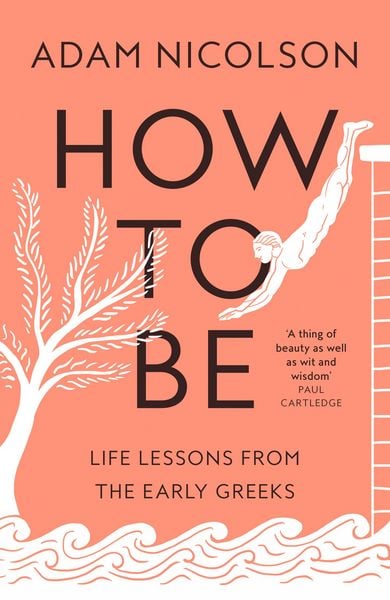
Nicolson, A: How to Be
-
- Taschenbuch ausgewählt
- eBook
-
Sprache:Englisch
-
Verlag:HarperCollins
16,99 €
UVP
22,00 €
inkl. gesetzl. MwSt.,
Beschreibung
Produktdetails
Einband
Taschenbuch
Erscheinungsdatum
09.06.2023
Verlag
HarperCollinsMaße (L/B/H)
23,4/15,3/3 cm
Gewicht
488 g
Sprache
Englisch
ISBN
978-0-00-849079-9
A TIMES BOOK OF THE YEAR
What is the nature of things? Must I think my own way through the world? What is justice? How can I be me? How should we treat each other?
Before the Greeks, the idea of the world was dominated by god-kings and their priests, in a life ruled by imagined metaphysical monsters. 2,500 years ago, in a succession of small eastern Mediterranean harbour-cities, that way of thinking began to change. Men (and some women) decided to cast off mental subservience and apply their own worrying and thinking minds to the conundrums of life.
These great innovators shaped the beginnings of philosophy. Through the questioning voyager Odysseus, Homer explored how we might navigate our way through the world. Heraclitus in Ephesus was the first to consider the interrelatedness of things. Xenophanes of Colophon was the first champion of civility. In Lesbos, the Aegean island of Sappho and Alcaeus, the early lyric poets asked themselves 'How can I be true to myself?' In Samos, Pythagoras imagined an everlasting soul and took his ideas to Italy where they flowered again in surprising and radical forms.
Prize-winning and bestselling writer Adam Nicolson travels through this transforming world and asks what light these ancient thinkers can throw on our deepest preconceptions. Sparkling with maps, photographs and artwork, How to Be is a journey into the origins of Western thought.
Hugely formative ideas emerged in these harbour-cities: fluidity of mind, the search for coherence, a need for the just city, a recognition of the mutability of things, a belief in the reality of the ideal - all became the Greeks' legacy to the world.
Born out of a rough, dynamic-and often cruel- moment in human history, it was the dawn of enquiry, where these fundamental questions about self, city and cosmos, asked for the first time, became, as they remain, the unlikely bedrock of understanding.
Noch keine Bewertungen vorhanden
Verfassen Sie die erste Bewertung zu diesem Artikel
Helfen Sie anderen Kundinnen und Kunden durch Ihre Meinung.
Kurze Frage zu unserer Seite
Vielen Dank für dein Feedback
Wir nutzen dein Feedback, um unsere Produktseiten zu verbessern. Bitte habe Verständnis, dass wir dir keine Rückmeldung geben können. Falls du Kontakt mit uns aufnehmen möchtest, kannst du dich aber gerne an unseren Kund*innenservice wenden.
zum Kundenservice