Gutscheinbedingungen

**Gültig bis 10.06.2026 / Gültig für gebrauchte Bücher / Mindestbestellwert 20,00 € / Einzelne Artikel können ausgeschlossen sein / Online auf www.bücher.de.de / Nicht kombinierbar mit anderen Gutscheinen oder Preisaktionen / Nur einmal pro Einkauf einlösbar / Gutschein wird auf max. 500€ Bestellwert angerechnet / Keine Barauszahlung / Nicht gültig für Versandkosten und Services

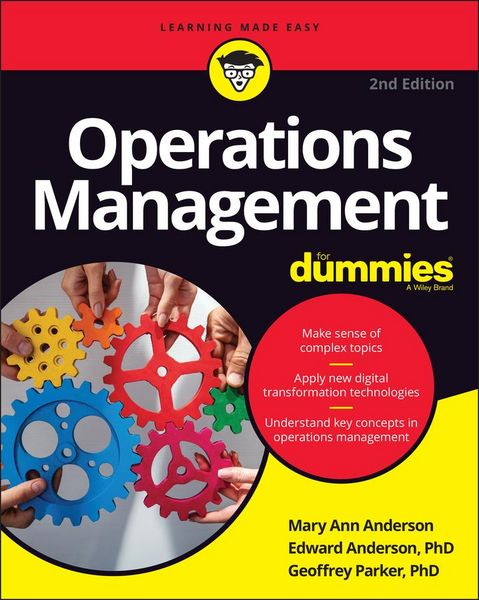
Produktbild: Operations Management For Dummies

Operations Management For Dummies

31,99 €

inkl. gesetzl. MwSt., Versandkostenfrei

Lieferung nach Hause

Beschreibung

Produktdetails

Einband

Taschenbuch

Erscheinungsdatum

24.01.2022

Verlag

John Wiley & Sons

Seitenzahl

416

Maße (L/B/H)

23/19,2/2,5 cm

Gewicht

743 g

Auflage

2. Auflage

Sprache

Englisch

ISBN

978-1-119-84310-8

Beschreibung

Produktdetails

Einband

Taschenbuch

Erscheinungsdatum

24.01.2022

Verlag

John Wiley & Sons

Seitenzahl

416

Maße (L/B/H)

23/19,2/2,5 cm

Gewicht

743 g

Auflage

2. Auflage

Sprache

Englisch

ISBN

978-1-119-84310-8

Herstelleradresse

Libri GmbH
Europaallee 1
36244 Bad Hersfeld
DE

Email: gpsr@libri.de

Kundinnen und Kunden meinen

0 Bewertungen

Informationen zu Bewertungen

Zur Abgabe einer Bewertung ist eine Anmeldung im Konto notwendig. Die Authentizität der Bewertungen wird von uns nicht überprüft. Wir behalten uns vor, Bewertungstexte, die unseren Richtlinien widersprechen, entsprechend zu kürzen oder zu löschen.

Die Bewertungen sind nach Format, Anzahl Sterne und Datum sortiert.

Verfassen Sie die erste Bewertung zu diesem Artikel

Helfen Sie anderen Kund*innen durch Ihre Meinung

Kundinnen und Kunden meinen

0 Bewertungen filtern

Die Leseprobe wird geladen.
  • Produktbild: Operations Management For Dummies
  •  Introduction 1

    About This Book 1

    Conventions Used in This Book 3

    Foolish Assumptions 3

    Icons Used In This Book 4

    Beyond the Book 4

    Where to Go from Here 4

    Part 1: Getting Started with Operations Management 7

    Chapter 1: Discovering the Fundamentals of Operations Management 9

    Defining Operations Management 10

    Getting beyond the smokestack 10

    Seeing the relevance of operations management 11

    Understanding the Process of Operations 12

    Driving the business model 12

    Recognizing the diversity of processes 13

    Managing processes 15

    Handling special situations 17

    Meeting the Challenges 18

    Firefighting 18

    Technology 18

    Complacency 19

    Metrics 19

    Perspective 19

    Outsourcing 20

    Chapter 2: Defining and Evaluating Processes 21

    Mapping Processes 22

    Distinguishing between operations and delays 24

    Identifying waste 24

    Developing a process map 26

    Evaluating the Elements of a System 28

    Checking productivity 28

    Considering capacity 28

    Clocking cycle time 29

    Getting a handle on constraints 29

    Talking thruput and takt time 30

    Going with the flow time 31

    Monitoring utilization 32

    Accounting for variability 35

    Chapter 3: Designing Processes to Meet Goals 37

    Getting Started with Process Improvement 38

    Planning Operations 38

    Considering a serial process 39

    Placing operations in parallel 39

    Improving Processes According to a Goal 42

    Reducing customer flow time 43

    Increasing system capacity 44

    Balancing the line 46

    Utilizing flexible resources 48

    Improving a process that has excess capacity 49

    Managing Bottlenecks 50

    Getting tripped up by overproduction 50

    Increasing process capacity 52

    Chapter 4: Dealing with Shared Resources, Batches, and Rework 55

    Sharing Resources 56

    Assigning a resource to more than one operation 56

    Allocating resources to more than one process 57

    Batching Parts and Setting Up Operations 58

    Working with batches 59

    Maximizing operation batch size 60

    Optimizing transfer batch size 62

    Optimizing batch size with operation setups 65

    Handling Poor Quality 68

    Putting rework back in the process that created it 69

    Pulling rework out of the main process 71

    Chapter 5: Designing Your Process to Match Your Product or Service 73

    Considering Costs, Standardization, Volume, and Flexibility 74

    Balancing operating costs 75

    Blurring the lines: Making standardized stuff customizable 79

    Improving Face-to-Face and Back-Office Operations 80

    Strengthening the customer interface 81

    Improving efficiencies behind the scenes 83

    Fulfilling Customer Demand: Making to Stock or Making to Order 84

    Making to stock 84

    Making to order 85

    A tale of two companies: Making either method work 86

    Getting It to Your Customer 87

    Ordering Online and Pickup in Store or Curbside 87

    Ordering Online with Delivery 88

    Designing for X: Designing Products with Operations in Mind 89

    Part 2: Managing Variability and Risk 91

    Chapter 6: Forecasting Demand 93

    Getting Savvy about Forecasts 94

    Building a Forecast to Predict Demand 95

    Recognizing demand variation 95

    Looking to the past to predict the future 96

    Lacking data: No problem 101

    Acknowledging the Error of Your Ways 103

    Hunting down the source of your error 103

    Measuring how inaccurate you are 105

    Chapter 7: Planning Capacity 107

    Considering Capacity 108

    Matching supply and demand 109

    Timing adjustments just right 110

    Balancing Capacity and Inventory 111

    Producing to match demand 113

    Producing at capacity 113

    Increasing capacity 115

    Addressing Wait Time for Services 116

    Getting the why of waiting 116

    Estimating waiting time with queuing theory 119

    Altering customer perceptions 126

    Chapter 8: Managing Inventory 129

    Dealing with the Business of Inventory 130

    Recognizing inventory's purposes 131

    Measuring the true cost of inventory 132

    Managing Inventory 133

    Continuous review 135

    Periodic review 137

    Single period review 138

    Comparing the options 139

    Getting Baseline Data on Performance 139

    Assessing the inventory management? system 140

    Evaluating the quality of customer service 141

    Reducing Inventory without Sacrificing Customer Service 141

    Multitasking inventory: The commonality approach 142

    Holding on: The postponement strategy 143

    Managing Inventory across the Supply Chain 145

    Keeping track of the pipeline inventory 145

    Setting service levels with multiple suppliers 147

    Chapter 9: Planning for Successful Operations 149

    Planning from the Top Down 150

    Determining corporate strategy 150

    Preparing for success 151

    Executing the plan 153

    Exploring the Components of an Aggregate Plan 153

    Putting together a plan 154

    Creating the master schedule 154

    Considering Materials 156

    Gathering information for the system 156

    Getting system results 157

    Planning for Services 159

    Seeing the difference in services 159

    Establishing the service plan 160

    Applying Information to the Entire Organization 161

    Part 3: Improving Operations 163

    Chapter 10: Becoming Lean 165

    Evolving to Lean 165

    Mastering the craft 166

    Producing in mass 167

    Trimming the Fat 170

    Eliminating the waste 170

    Involving everyone 171

    Leveling production 171

    Embracing your supplier 174

    Focusing on quality 175

    Implementing continuous improvement 176

    Producing Just in Time 176

    Knowing when to work 177

    Differentiating the customer interface 178

    Implementing pull 178

    Knowing when to JIT 180

    Seeking the Silver Bullet 181

    Chapter 11: Proofing against Disruption 183

    Understanding Disruptions 184

    Planning for Disruption 187

    Knowing your supply chain and operations 187

    Using new technology 187

    Planning for scenarios collaboratively 188

    Investing in Relationships 188

    Fattening the Supply Chain 189

    Stockpiling inventory 189

    Maintaining stand-by capacity 190

    Exploiting flexible capacity 190

    Redesigning Your Product and Process 191

    Designing for multiple parts 191

    Designing for multiple processes 191

    Replacing labor with autonomy 191

    Protecting against Cyberhacking 192

    Mixing and Matching Strategies 192

    Chapter 12: Managing Quality 193

    Deciding What Matters 193

    Recognizing the Value of Quality 196

    Assessing the cost of failure 196

    Detecting defects 197

    Getting the perks of high quality 198

    Preventing defects in the first place 199

    Addressing Quality 199

    Considering the customer 200

    Getting all hands on deck 200

    Sticking to the improvement effort 201

    Designing for Quality 202

    Starting with the end in mind 202

    Cascading to production 205

    Measuring Quality 205

    Understanding variation 206

    Measuring "goodness" of a process 207

    Controlling processes 210

    Chapter 13: Creating a Quality Organization 215

    Reaching Beyond Traditional Improvement Programs 216

    Multiplying failures 216

    Raising the bar 218

    Varying skill levels 218

    Adding to the Tool Box 219

    Defining the problem 220

    Measuring the process 221

    Analyzing the problem 221

    Implementing a solution 227

    Maintaining the gain 229

    Overcoming Obstacles 230

    Failing to focus 230

    Prioritizing into paralysis 231

    Avoiding the lure of magical solutions 231

    Lacking employee involvement 232

    Knowing what to do 232

    Learning from the experience 232

    Calling it a program 233

    Giving up 233

    Part 4: Managing the Supply Chain 235

    Chapter 14: Understanding Supply Chain Basics 237

    Seeing the Structure of Supply Chains 238

    Getting through the tiers 239

    Linking in support services 239

    Aligning the Supply Chain with Business Strategy 240

    Defining product demand 241

    Choosing the right supply chain strategy 241

    Exploring the Bullwhip Effect 243

    Finding the bullwhip triggers 244

    Dodging the bullwhip 247

    Improving Supply Chain Management 249

    Communicating better 249

    Outsourcing inventory management 249

    Simplifying the chain by consolidating shipments 250

    Chapter 15: Sourcing Strategically 253

    Seeing the Upsides and Downsides of Outsourcing 253

    Benefiting from the pros 254

    Avoiding the cons 255

    Getting Down to the Basics 257

    Figuring out what to outsource 258

    Choosing the right partner 259

    Developing a lasting relationship 262

    Integrating the product 264

    Chapter 16: Digitalizing the Supply Chain 267

    Navigating the Digital World 268

    Defining the difference between digitizing and digitalizing 268

    Realizing the benefits 268

    Mapping a Digital Strategy 269

    Undergoing a digital transformation 270

    Selecting the best solution 271

    Chapter 17: Scaling throughout the Product Life Cycle 273

    Managing Operations Age-Appropriately 273

    Swooning over the Baby 275

    Keeping capacity flexible to minimize inventory during unpredictable demand 275

    Designing a supply chain for a new product 277

    Defining a market with no competitors 278

    Avoiding failure in incubation 278

    Surviving the Awkward Stage of Quick Growth 279

    Balancing Capacity and inventory for growing demand 279

    Growing your supply chain 281

    Distinguishing your product from competitors' products 281

    Getting Comfortable with Market Maturity 282

    Exploiting capacity and optimizing inventory for steady demand 282

    Balancing a mature supply chain 283

    Preparing for the End 283

    Emerging Anew 284

    Repositioning 284

    Making improvements 285

    Changing the product portfolio 285

    Managing Start-up Operations 286

    Operating on a shoestring 287

    Transitioning to growth 287

    Part 5: Managing Projects 289

    Chapter 18: Leading Successful Projects 291

    Defining Success 292

    Prioritizing criteria 292

    Seeing the interaction of factors 293

    Figuring Out Why Projects Fail 295

    Laying Out the Project Management Life Cycle 296

    Detailing the phases of the cycle 296

    Deciding to go or not to go 298

    Documenting the project 300

    Leading a Project 300

    Developing a project proposal with a team 301

    Communicating with stakeholders 302

    Keeping stakeholders in the loop 303

    Managing the team 303

    Chapter 19: Estimating and Scheduling Projects 307

    Estimating Time and Cost 308

    Compiling a list of tasks 308

    Adding up the project costs 312

    Timing: The critical path 314

    Assigning tasks 319

    Presenting the schedule 320

    Working with Uncertainty 321

    Estimating with ranges 321

    Using historical data 321

    Relying on expert knowledge 326

    Putting It All Together 328

    Avoiding the estimation dance 328

    Accelerating the project 329

    Chapter 20: Becoming Agile 331

    Escaping the Waterfall 332

    Deciding on Agile 333

    Gearing Up for Agile 334

    Sprinting through the Project 335

    Planning the sprint 336

    Standing up with scrum meetings 339

    Rinsing, washing, and repeating 340

    Avoiding Common Agile Mistakes 342

    Starting without planning 343

    Ignoring Waterfall skills 343

    Combining Agile and Waterfall 344

    Chapter 21: Responding to Risks That Threaten Your Project 345

    Tracking Project Progress 346

    Assessing earned value 346

    Earning value over time 349

    Monitoring the metrics: Who's responsible? 351

    Realizing your project's in trouble 351

    Planning Ahead with Risk Registers 354

    Knowing what can go wrong 355

    Prioritizing risks 356

    Developing a contingency plan 358

    Responding Productively to Risk 361

    Staying productive: Parkinson's Law 361

    Recovering from delays: Brook's Law and Homer's Law 362

    Delay the project 364

    Sacrificing functionality 364

    Part 6: The Part of Tens 365

    Chapter 22: Ten Pivotal Operations Management Developments 367

    Logistics 367

    Division of Labor 368

    Interchangeable Parts 368

    Scientific Management and Mass Production 369

    Statistical Quality Control 369

    Lean Manufacturing 370

    Scientific Project Planning 370

    Supply Chain Management 371

    Computerized Supply Chain Coordination 371

    Electronic Commerce 372

    Chapter 23: Ten Mistakes That New Operations Managers Make 373

    Beginning an Improvement Journey without Knowing your Process 373

    Creating Overly Complex Processes 374

    Missing the Real Bottleneck 375

    Managing Based on Utilization 375

    Not Standardizing 375

    Automating Bad Processes 376

    Misdefining Quality 376

    Improving Process through "Big Bangs" rather than Continuous Improvement 377

    Not Doing Enough Project Planning Upfront 377

    Not Focusing on the Customer 378

    Chapter 24: Ten Traits of World-Class Operations 379

    Knowing Thyself 379

    Possessing Profound Knowledge of the Customer 380

    Focusing Intensely on Quality 380

    Adapting to Change 381

    Getting Better All the Time 381

    Appreciating Employees 381

    Paying Constant Attention to Product Offerings 382

    Using Relevant Process Metrics 382

    Balancing Respect and Expectations for the Supply Chain 382

    Avoiding Unnecessary Complexity 383

    Index 385