KI-Beratung Beta

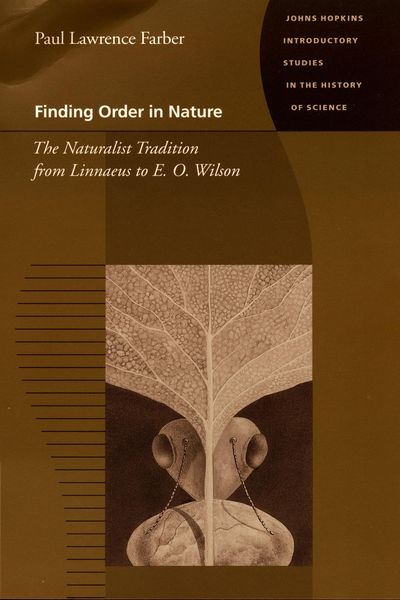
Produktbild: Finding Order in Nature

Finding Order in Nature The Naturalist Tradition from Linnaeus to E. O. Wilson

19,99 €

inkl. gesetzl. MwSt.

Beschreibung

"Engaging ... a concise work that gives the general reader a solid understanding ... an excellent introduction to the history of natural history." - Library Journal Since emerging as a discipline in the middle of the eighteenth century, natural history has been at the heart of the life sciences. It gave...

Beschreibung

"Engaging ... a concise work that gives the general reader a solid understanding ... an excellent introduction to the history of natural history." -
Library Journal
Since emerging as a discipline in the middle of the eighteenth century, natural history has been at the heart of the life sciences. It gave rise to the major organizing theory of life-evolution-and continues to be a vital science with impressive practical value. Central to advanced work in ecology, agriculture, medicine, and environmental science, natural history also attracts enormous popular interest.
In
Finding Order in NaturePaul Farber traces the development of the naturalist tradition since the Enlightenment and considers its relationship to other research areas in the life sciences. Written for the general reader and student alike, the volume explores the adventures of early naturalists, the ideas that lay behind classification systems, the development of museums and zoos, and the range of motives that led collectors to collect. Farber also explores the importance of sociocultural contexts, institutional settings, and government funding in the story of this durable discipline.
"The history of natural history can rarely have been as succinctly told as in Paul Lawrence Farber's 129-page
Finding Order in Nature. From the intellectual revolutions of Linnaeus and Darwin through the Victorian obsessions with classifying and collecting, to the conservationists led by E. O. Wilson, it is an odyssey beautifully told." -
New Scientist
"Farber does an impressive job of demonstrating how practitioners like Linnaeus, Buffon, Saint-Hilaire and Cuvier advanced the field and set the stage for the development of science as we know it today." -
Publishers Weekly

Produktdetails

Format

ePUB

Kopierschutz

Ja

Family Sharing

Ja

Text-to-Speech

Ja

Produktdetails

Format

ePUB

Format

eBooks im ePUB-Format erlauben eine dynamische Anpassung des Inhalts an die jeweilige Display-Größe des Lesegeräts. Das Format eignet sich daher besonders für das Lesen auf mobilen Geräten, wie z.B. Ihrem tolino, Tablets oder Smartphones.

Kopierschutz

Ja

Kopierschutz

Zum Lesen dieses eBooks auf Geräten der tolino Familie sowie auf sonstigen eReadern und am PC benötigen Sie eine Adobe ID. Weitere Hinweise zum Lesen von kopiergeschützten eBooks finden Sie unter Hilfe/Downloads.

Family Sharing

Ja

Family Sharing

Mit Family Sharing können Sie eBooks innerhalb Ihrer Familie (max. sechs Mitglieder im gleichen Haushalt) teilen. Sie entscheiden selbst, welches Buch Sie mit welchem Familienmitglied teilen möchten. Auch das parallele Lesen durch verschiedene Familienmitglieder ist durch Family Sharing möglich. Um eBooks zu teilen oder geteilt zu bekommen, muss jedes Familienmitglied ein Konto bei Thalia oder einem anderen tolino-Buchhändler haben. Weitere Informationen finden Sie unter Hilfe/Family-Sharing.

Text-to-Speech

Ja

Text-to-Speech

Bedeutet Ihnen Stimme mehr als Text? Mit der Funktion Text-to-Speech können Sie sich im tolino webReader und in der aktuellen Thalia – Lesen & Hören App das eBook vorlesen lassen. Weitere Informationen finden Sie unter Hilfe/Text-to-Speech.

Verlag Johns Hopkins University Press
Seitenzahl

(Printausgabe)

Dateigröße

2905 KB

Sprache

Englisch

EAN

9780801873546

Barrierefreiheit
  • keine Information zur Barrierefreiheit bekannt

Noch keine Bewertungen vorhanden

Verfassen Sie die erste Bewertung zu diesem Artikel

Helfen Sie anderen Kundinnen und Kunden durch Ihre Meinung.

Kundinnen und Kunden meinen

Bewertungen (0)

Die Leseprobe wird geladen.
  • Produktbild: Finding Order in Nature