• Produktbild: Private International Law in Nigeria
  • Produktbild: Private International Law in Nigeria

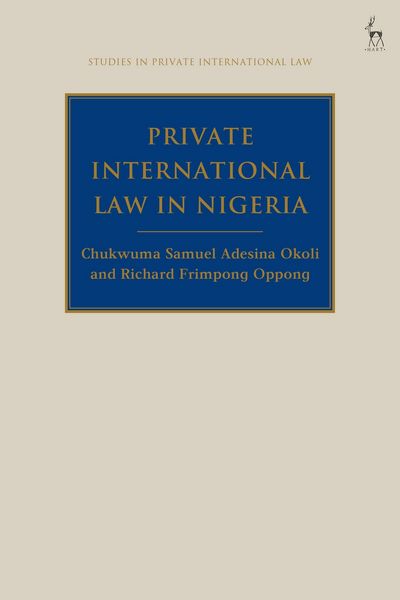
Private International Law in Nigeria

81,99 €

inkl. gesetzl. MwSt., Versandkostenfrei


Beschreibung

Produktdetails

Einband

Taschenbuch

Erscheinungsdatum

09.12.2021

Verlag

Bloomsbury Academic

Seitenzahl

524

Maße (L/B/H)

23,4/15,6/2,7 cm

Gewicht

728 g

Sprache

Englisch

ISBN

978-1-5099-4536-8

Beschreibung

Produktdetails

Einband

Taschenbuch

Erscheinungsdatum

09.12.2021

Verlag

Bloomsbury Academic

Seitenzahl

524

Maße (L/B/H)

23,4/15,6/2,7 cm

Gewicht

728 g

Sprache

Englisch

ISBN

978-1-5099-4536-8

Herstelleradresse

Libri GmbH
Europaallee 1
36244 Bad Hersfeld
DE

Email: GPSR Kontakt

Noch keine Bewertungen vorhanden

Verfassen Sie die erste Bewertung zu diesem Artikel

Helfen Sie anderen Kundinnen und Kunden durch Ihre Meinung.

Kundinnen und Kunden meinen

Bewertungen (0)

  • Produktbild: Private International Law in Nigeria
  • Produktbild: Private International Law in Nigeria
  • PART I
    PRELIMINARY MATTERS
    1. Introduction
    2. Conceptual Issues in Choice of Law
    I. Introduction
    II. Characterisation
    III. Substance and Procedure
    IV. Renvoi
    V. Conclusion
    3. Foreign Law
    I. Nature and Proof of Foreign Law
    II. Nature of Foreign Law in Nigeria
    III. What is Foreign Law in Nigeria?
    IV. Proof of Foreign Law
    V. Exclusion of Foreign Law
    VI. Conclusion
    4. Domicile
    I. Introduction
    II. What Does it Mean to be Domiciled in Nigeria?
    III. Types of Domicile
    IV. Proof of Domicile in Matrimonial Proceedings
    V. Conclusion

    PART II
    JURISDICTION
    5. Bases of Jurisdiction
    I. Introduction
    II. Jurisdiction in Actions in Personam
    III. Choice of Venue, Location of Cause of Action and Territorial Jurisdiction
    IV. Conclusion
    6. Forum Selection Clauses, Forum Non Conveniens and Lis Alibi Pendens
    I. Introduction
    II. Forum Selection Clauses
    III. Foreign Arbitration Clauses
    IV. Forum Non Conveniens
    V. Conclusion
    7. Limitations on Jurisdiction
    I. Introduction
    II. Jurisdictional Immunities
    III. Capacity to Sue
    IV. Conclusion

    PART III
    OBLIGATIONS
    8. Contract
    I. Introduction
    II. Party Autonomy
    III. Modifying the Choice of Law
    IV. Non-State Law
    V. Law Applicable in the Absence of Choice
    VI. Dépeçage
    VII. Severability
    VIII. Validity of a Choice of Law
    IX. Mandatory Rules and Public Policy
    X. Scope of the Chosen Law
    XI. Conclusion
    9. Torts
    I. Introduction
    II. Choice of Law Methodology: Comparative Analysis
    III. Nigerian Case Law on Choice of Law in Torts
    IV. Party Autonomy
    V. Splitting the Applicable Law
    VI. Mandatory Rules
    VII. Public Policy
    VIII. Scope of the Applicable Law
    IX. Conclusion
    10. Foreign Currency Obligations
    I. Introduction
    II. Judicial History of Power to Award Foreign Currency in Nigeria
    III. The Legal Bases for Awarding Foreign Currency Judgments in Nigeria
    IV. Foreign Currency Conversion
    251
    V. Effect of Change in Foreign Currency Status as Legal Tender
    VI. Statutory Limitations on Awarding Foreign Currency Judgment
    VII. Conclusion
    11. Bills of Exchange
    I. Introduction
    II. Formal Validity
    III. Interpretation
    IV. Duties of the Holder
    V. Rate of Exchange and Maturity
    VI. A Call for Reforms

    PART IV
    FAMILY
    12. Marriage
    I. Introduction
    II. Nature of Marriage
    III. Same-Sex Marriage, Same-Sex Unions and Other Same-Sex Relationships
    IV. Conclusion
    13. Matrimonial Causes
    I. Introduction
    II. International Actions
    III. Inter-State Actions
    IV. Conclusion
    14. Children
    I. Introduction
    II. Maintenance and Custody
    III. Legitimacy and Legitimation
    IV. International Surrogacy Agreements
    V. Nigeria and Private International Law Conventions Regarding Children
    VI. Conclusion

    PART V
    PROPERTY, SUCCESSION AND ADMINISTRATION OF ESTATES
    15. Property
    I. Introduction
    II. Nature and Legal Situs of Property
    III. Jurisdiction and Choice of Law
    IV. Conclusion
    16. Succession and Administration of Estates
    I. Introduction
    II. Choice of Law Issues
    III. Jurisdiction Relating to Foreign Property
    IV. Constitutional Law and Human Rights
    V. Conclusion

    PART VI
    FOREIGN JUDGMENTS AND ARBITRATION AWARDS
    17. The Common Law Regime for Enforcing Foreign Judgments
    I. Introduction
    II. What is a Foreign Judgment?
    III. Nature and Theoretical basis of Enforcing Foreign Judgments
    IV. Jurisdiction to Enforce Foreign Judgments
    V. Conditions for Enforcing a Foreign Judgment
    VI. Conclusiveness and Res Judicata Effect of Foreign Judgments
    VII. Defences against the Recognition and Enforcement of Foreign Judgments
    VIII. Judgments in Foreign Currency
    IX. Limitation of Actions
    X. Conclusion
    18. The Statutory Regimes for Enforcing Foreign Judgments
    I. Introduction
    II. Ascertaining the Applicable Statutory Regime
    III. Shortcomings of the Statutory Regime and Suggested Reforms
    IV. Registering Foreign Judgments under the 1922 Ordinance
    V. Enforcement of Foreign Judgments under the 1960 Act
    VI. Conclusion
    19. Recognition and Enforcement of Foreign Arbitration Awards
    I. Introduction
    II. Common Law Regime
    III. Statutory Regime
    IV. Arbitration Awards in Foreign Currency
    V. Limitation of Actions and Arbitration Awards
    VI. Conclusion

    PART VII
    INTERNATIONAL CIVIL PROCEDURE
    20. Remedies Affecting Foreign Judicial and Arbitral Proceedings
    I. Introduction
    II. Anti-Suit Injunction
    III. Anti-Arbitration Injunction
    IV. Mareva or Freezing Injunction
    V. Security for Costs in Support of Foreign Proceedings
    VI. Conclusion
    21. Service of Legal Process and Taking Evidence
    I. Introduction
    II. Service of Legal Process Out of Nigeria
    III. Service of Foreign Legal Process in Nigeria
    IV. Obtaining Evidence Abroad
    V. Obtaining Evidence in Nigeria
    VI. Conclusion