KI-Beratung Beta

Gutscheinbedingungen

**Gültig vom 23.11. bis 30.11.2026 | Gültig für nicht preisgebundene fremdsprachige Bücher | Einzelne Artikel können ausgeschlossen sein | Online auf www.bücher.de einlösbar | Click & Collect nur mit Online-Zahlung (Paypal/Kreditkarte) vorab | Nicht kombinierbar mit anderen Gutscheinen oder Preisaktionen | Nur einmal pro Einkauf einlösbar | Gutschein wird auf max. 500€ Bestellwert angerechnet | Keine Barauszahlung | Nicht gültig für Versandkosten und Services

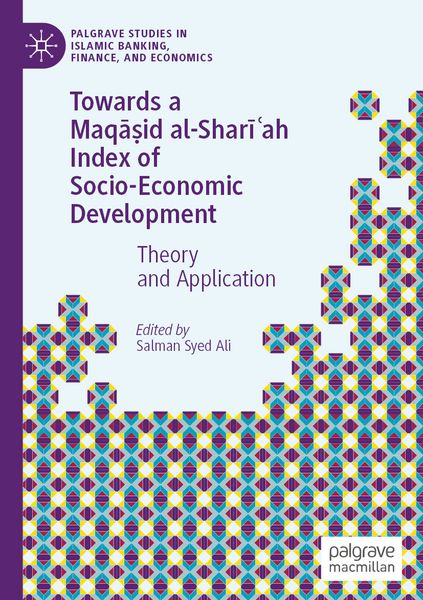
  • Produktbild: Towards a Maqāṣid al-Sharīʿah Index of Socio-Economic Development
  • Produktbild: Towards a Maqāṣid al-Sharīʿah Index of Socio-Economic Development
- 10%

Towards a Maqāṣid al-Sharīʿah Index of Socio-Economic Development Theory and Application

10% sparen

95,99 € UVP 106,99 €

inkl. gesetzl. MwSt., Versandkostenfrei


Beschreibung

Islamic economics, which is a discipline for studying economic behaviour from an Islamic perspective, advocates comprehensive human development defined by advancement and progress in multiple dimensions beyond GDP, income, or standard of living. Not only should socio-economic progress be in all dimensions...

Beschreibung

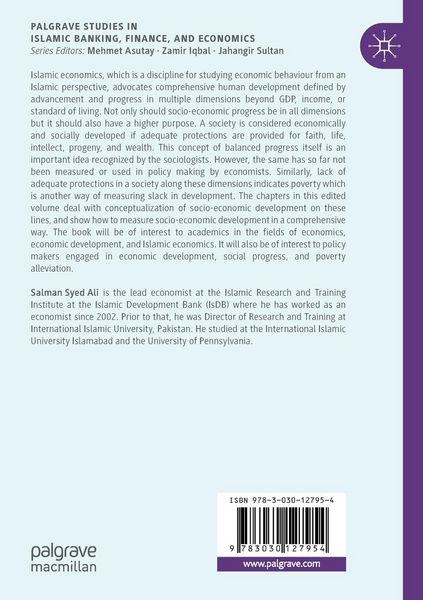
Islamic economics, which is a discipline for studying economic behaviour from an Islamic perspective, advocates comprehensive human development defined by advancement and progress in multiple dimensions beyond GDP, income, or standard of living. Not only should socio-economic progress be in all dimensions but it should also have a higher purpose. A society is considered economically and socially developed if adequate protections are provided for faith, life, intellect, progeny, and wealth. This concept of balanced progress itself is an important idea recognized by the sociologists. However, the same has so far not been measured or used in policy making by economists. Similarly, lack of adequate protections in a society along these dimensions indicates poverty which is another way of measuring slack in development. The chapters in this edited volume deal with conceptualization of socio-economic development on these lines, and show how to measure socio-economic development in a comprehensive way. The book will be of interest to academics in the fields of economics, economic development, and Islamic economics. It will also be of interest to policy makers engaged in economic development, social progress, and poverty alleviation. 

Portrait


Salman Syed Ali
is the lead economist at the Islamic Research and Training Institute at the Islamic Development Bank (IsDB) where he has worked as an economist since 2002. Prior to that, he was Director of Research and Training at International Islamic University, Pakistan. He studied at the International Islamic University Islamabad and the University of Pennsylvania.

Produktdetails

Einband

Taschenbuch

Erscheinungsdatum

20.09.2020

Abbildungen

XXV, 418 p. 54 illus., 27 illus. in color.

Herausgeber Salman Syed Ali

Produktdetails

Einband

Taschenbuch

Erscheinungsdatum

20.09.2020

Abbildungen

XXV, 418 p. 54 illus., 27 illus. in color.

Herausgeber Salman Syed Ali
Verlag Springer
Seitenzahl

418

Maße (L/B/H)

21/14,8/2,4 cm

Gewicht

570 g

Auflage

20001 Auflage 1st ed. 2019

Sprache

Englisch

ISBN

978-3-030-12795-4

Herstelleradresse

Springer-Verlag GmbH
Tiergartenstr. 17
69121 Heidelberg
DE

Email: ProductSafety@springernature.com

Noch keine Bewertungen vorhanden

Verfassen Sie die erste Bewertung zu diesem Artikel

Helfen Sie anderen Kundinnen und Kunden durch Ihre Meinung.

Kundinnen und Kunden meinen

Bewertungen (0)

  • Produktbild: Towards a Maqāṣid al-Sharīʿah Index of Socio-Economic Development
  • Produktbild: Towards a Maqāṣid al-Sharīʿah Index of Socio-Economic Development

  • Chapter 1. Towards Maqāsid al-Sharī’ah Based Index of Socio-Economic Development—An Introduction to the Issues and Literature; Salman Syed Ali.- Chapter 2. Maqasid-Ush-Shariah: Are we Measuring the Immeasurable?; Rafi Amir-ud-Din.- Chapter 3. Shari‘a-based Ethical Performance Measurement Framework and Relevant Data to Measure Development in the Light of Maqasid al-Shariah; Houssem eddine Bedoui.- Chapter 4. Consumer Behavior, Consumption Planning and Objectives of Shari'ah; M Fahim Khan.- Chapter 5. Construction of Maqasid al-Shariah Based Index of Socio-Economic Development: Principles and Issues; Junaidah Abu Seman and Nazam Dzolkarnaini.- Chapter 6. Wealth as an Indicator of Socio-Economic Development: Islamic Views; Asad Zaman, Atiq-ur-Rehman, and Arif Naveed.- Chapter 7. Identification and Classification of Maqasid al-Shariah Terms for Socio-Economic Development Index; Esen, M. Fevzi and Esen, Adem.- Chapter 8. An Index of Well Being Based on of Maqasid Al-Sharî’ah and Fuzzy Set Theory; Moussa Larbani and Ismail Nizam.- Chapter 9. Socio-Economic Philosophy of Conventional and Islamic Economics: Articulating Hayat-e-Tayyaba Index (HTI) on the Basis of Maqasid-al-Shariah; Muhammad Mubashir Mukhtar, Hafiz Muhammad Sarfraz Nihal, Hafiz Abdul Rauf, Waleed Wasti and Muhammad Shahid Qureshi.- Chapter 10. Islamic Inclusive Growth Index (i-IGI): Measurement and Determinants; Reza Ghazal and Muhamad Zulkhibri.- Chapter 11. Paradigmatic and Conceptual Framework for Islamic HDI; Necati Aydin.- Chapter 12. A Structural Model for Human Development, Does Maqasid al-Sharia Matter!; Mehdi Mili.- Chapter 13. Assessing Socio-Economic Development Based on Maqasid al-Shariah Principle: Normative Frameworks, Methods and Pilot Implementation in Indonesia; Rahmatina Kasri and Habib Ahmed.- Chapter 14. Non-Monetary Poverty Measurement In Malaysia: A Maqasid Al-Shariah Approach; Mohamed Saladin Abdul Rasool  and Ariffin Mohd Salleh.- Chapter 15. Maqasid Al-Shariah Based Measurement Index for Socio-Economic Development: A Case Study in North Sumatra Indonesia; Zainul Fuad and Indra Jaya.- Chapter 16. Theory and an Application of Maqasid Al-Shariah Based Measurement Index for Socio-Economic Development: Index Method and Prototype Index; Salman Syed Ali and Hamid Hasan.