• Produktbild: Cybersecurity in Humanities and Social Sciences
  • Produktbild: Cybersecurity in Humanities and Social Sciences

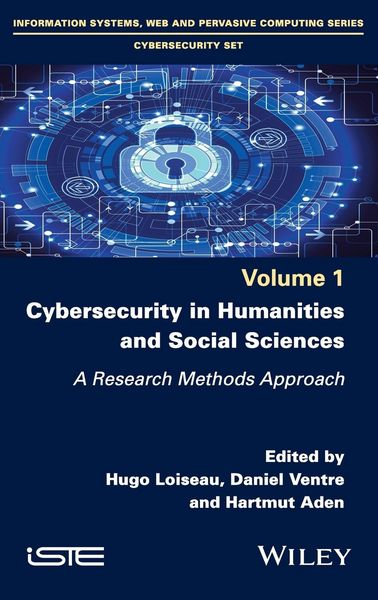
Cybersecurity in Humanities and Social Sciences A Research Methods Approach

197,99 €

inkl. gesetzl. MwSt., Versandkostenfrei


Beschreibung

Produktdetails

Einband

Gebundene Ausgabe

Erscheinungsdatum

27.11.2020

Herausgeber

Daniel Ventre + weitere

Verlag

John Wiley & Sons Inc

Seitenzahl

240

Maße (L/B/H)

24/16,1/1,8 cm

Gewicht

531 g

Auflage

1. Auflage

Sprache

Englisch

ISBN

978-1-78630-539-8

Beschreibung

Produktdetails

Einband

Gebundene Ausgabe

Erscheinungsdatum

27.11.2020

Herausgeber

Verlag

John Wiley & Sons Inc

Seitenzahl

240

Maße (L/B/H)

24/16,1/1,8 cm

Gewicht

531 g

Auflage

1. Auflage

Sprache

Englisch

ISBN

978-1-78630-539-8

Herstelleradresse

Libri GmbH
Europaallee 1
36244 Bad Hersfeld
DE

Email: gpsr@libri.de

Noch keine Bewertungen vorhanden

Verfassen Sie die erste Bewertung zu diesem Artikel

Helfen Sie anderen Kundinnen und Kunden durch Ihre Meinung.

Kundinnen und Kunden meinen

Bewertungen (0)

Die Leseprobe wird geladen.
  • Produktbild: Cybersecurity in Humanities and Social Sciences
  • Produktbild: Cybersecurity in Humanities and Social Sciences
  • Introduction ix
    Daniel VENTRE, Hugo LOISEAU and Hartmut ADEN
     
    Chapter 1 The "Science" of Cybersecurity in the Human and Social Sciences: Issues and Reflections 1
    Hugo LOISEAU
     
    1.1 Introduction 1
     
    1.2 A method? 4
     
    1.3 Data? 11
     
    1.4 One or more definition(s)? 16
     
    1.5 Conclusion 20
     
    1.6 References 21
     
    Chapter 2 Definitions, Typologies, Taxonomies and Ontologies of Cybersecurity 25
    Daniel VENTRE
     
    2.1 Introduction 25
     
    2.2 Definition 27
     
    2.2.1 What is a definition? 27
     
    2.2.2 Usefulness of definitions 29
     
    2.2.3 Rules for constructing definitions 29
     
    2.2.4 Definitions of cybersecurity 32
     
    2.3 Typology 43
     
    2.3.1 What is a typology? 44
     
    2.3.2 Usefulness of typologies 44
     
    2.3.3 Rules for the construction of typologies 45
     
    2.3.4 Cybersecurity typologies 46
     
    2.4 Taxonomy 48
     
    2.4.1 What is a taxonomy? 48
     
    2.4.2 Usefulness of taxonomy 49
     
    2.4.3 Rules for the construction of taxonomies 49
     
    2.4.4 Taxonomies of cybersecurity 50
     
    2.5 Ontologies 51
     
    2.5.1 What is ontology? 52
     
    2.5.2 Usefulness of ontologies 53
     
    2.5.3 Rules for construction of ontologies 53
     
    2.5.4 Cybersecurity ontologies 54
     
    2.6 Conclusion 56
     
    2.7 References 57
     
    Chapter 3 Cybersecurity and Data Protection - Research Strategies and Limitations in a Legal and Public Policy Perspective 67
    Hartmut ADEN
     
    3.1 Introduction 67
     
    3.2 Studying the complex relationship between cybersecurity and data protection: endangering privacy by combating cybercrime? 68
     
    3.2.1 Potential tensions between cybersecurity and data protection 69
     
    3.2.2 Potential synergies between cybersecurity and data protection 72
     
    3.3 Methodological approaches and challenges for the study of cybersecurity - legal and public policy perspectives 74
     
    3.3.1 Legal interpretation and comparison as methodological approaches to the study of cybersecurity 74
     
    3.3.2 Public policy approaches to the study of cybersecurity 77
     
    3.3.3 Transdisciplinary synergies between legal and public policy perspectives 78
     
    3.4 Conclusion and outlook 80
     
    3.5 References 81
     
    Chapter 4 Researching State-sponsored Cyber-espionage 85
    Joseph FITSANAKIS
     
    4.1 Defining cybersecurity and cyber-espionage 85
     
    4.2 Taxonomies of cyber-threats 87
     
    4.3 The structure of this chapter 88
     
    4.4 The significance of state-sponsored cyber-espionage 90
     
    4.5 Research themes in state-sponsored cyber-espionage 94
     
    4.6 Theorizing state-sponsored cyber-espionage in the social sciences 98
     
    4.7 Research methodologies into state-sponsored cyber-espionage 104
     
    4.8 Intellectual precision and objectivity in state-sponsored cyber-espionage research 106
     
    4.9 Detecting state actors in cyber-espionage research 110
     
    4.10 Identifying specific state actors in cyber-espionage research 112
     
    4.11 Conclusion: researching a transformational subject 116
     
    4.12 References 118
     
    Chapter 5 Moving from Uncertainty to Risk: The Case of Cyber Risk 123
    Michel DACOROGNA and Marie KRATZ
     
    5.1 Introduction 123
     
    5.2 The scientific approach to move from uncertainty to risk 124
     
    5.3 Learning about the data: the exploratory phase 126
     
    5.4 Data cleansing 128
     
    5.5 Statistical exploration on the various variables of the dataset 130
     
    5.6 Univariate modeling for the relevant variables 134
     
    5.7 Multivariate and dynamic modeling 139
     
    5.7.1 A fast-chang