• Produktbild: Astroparticle Physics and Cosmology
  • Produktbild: Astroparticle Physics and Cosmology
Band 975 - 11%

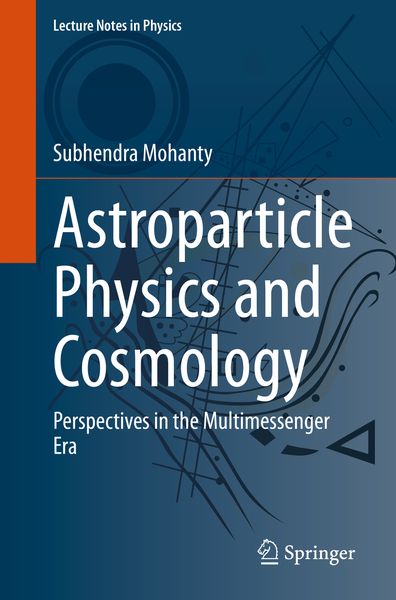
Astroparticle Physics and Cosmology Perspectives in the Multimessenger Era

Aus der Reihe Lecture Notes in Physics
11% sparen

65,99 € UVP 74,89 €

inkl. gesetzl. MwSt., Versandkostenfrei

Lieferung nach Hause

Beschreibung

Produktdetails

Einband

Taschenbuch

Erscheinungsdatum

10.10.2020

Verlag

Springer

Seitenzahl

287

Maße (L/B/H)

23,5/15,5/1,7 cm

Gewicht

470 g

Auflage

1st edition 2020

Sprache

Englisch

ISBN

978-3-030-56200-7

Beschreibung

Produktdetails

Einband

Taschenbuch

Erscheinungsdatum

10.10.2020

Verlag

Springer

Seitenzahl

287

Maße (L/B/H)

23,5/15,5/1,7 cm

Gewicht

470 g

Auflage

1st edition 2020

Sprache

Englisch

ISBN

978-3-030-56200-7

Herstelleradresse

Springer-Verlag KG
Sachsenplatz 4-6
1201 Wien
AT

Email: GPSR Kontakt

Noch keine Bewertungen vorhanden

Verfassen Sie die erste Bewertung zu diesem Artikel

Helfen Sie anderen Kundinnen und Kunden durch Ihre Meinung.

Kundinnen und Kunden meinen

Bewertungen (0)

  • Produktbild: Astroparticle Physics and Cosmology
  • Produktbild: Astroparticle Physics and Cosmology
  • Preface

    1 Effective potential and phase transitions 11.1 Coleman-Weinberg one loop effective potential . . . . . . . . . . 11.1.1 One-loop effective potential of ¸Á4 theory . . . . . . . . 31.1.2 Dimensional regularization . . . . . . . . . . . . . . . . . . 41.1.3 Renormalization scheme independence of the effective potential . . . . . . . . . . . . . . . . . . . . . . . . . . . . . 51.2 Standard model Higgs potential . . . . . . . . . . . . . . . . . . . . 61.3 Higgs vacuumstability . . . . . . . . . . . . . . . . . . . . . . . . . 61.4 Effective potential at finite temperature . . . . . . . . . . . . . . . 61.5 Phase transitions . . . . . . . . . . . . . . . . . . . . . . . . . . . . 6

    2 GravitationalWaves 92.1 Linearised gravity . . . . . . . . . . . . . . . . . . . . . . . . . . . . 92.2 Energy loss by gravitational radiation frombinary neutron stars or black holes . . . . . . . . . . . . . . . . . . . . . . . . . . . . . . . 122.3 Waveformof gravitational waves from binary mergers . . . . . . 152.4 Gravitational waves from phase transitions . . . . . . . . . . . . . 152.5 Gravitational waves andMulti-messenger astronomy . . . . . . . 18

    3 Black Holes 193.0.1 Kerr black hole . . . . . . . . . . . . . . . . . . . . . . . . . 193.0.2 Photon orbit around Kerr black holes . . . . . . . . . . . . 193.0.3 Massive particle orbits around Kerr black holes . . . . . . 193.0.4 Frame dragging and Lens-Thirring precession of gyroscopes 193.0.5 Space-time structure of Kerr black hole . . . . . . . . . . . 193.0.6 Penrose process . . . . . . . . . . . . . . . . . . . . . . . . . 193.0.7 Super-radiance . . . . . . . . . . . . . . . . . . . . . . . . . 19

    4 High energy cosmic rays 214.1 Sources of high energy cosmic rays . . . . . . . . . . . . . . . . . . 214.1.1 High energy positrons from the galaxy . . . . . . . . . . . 214.1.2 High energy gamma ray observations . . . . . . . . . . . . 214.1.3 Ultra-High energy neutrino observations . . . . . . . . . . 21

    5 DarkMatter 235.1 Equilibriumdistribution of collision-less particles . . . . . . . . . 235.1.1 Detection of dark matter . . . . . . . . . . . . . . . . . . . 255.1.2 Interaction of dark matter with standard model particles 255.1.3 Higgs portal . . . . . . . . . . . . . . . . . . . . . . . . . . . 255.1.4 Vector portal . . . . . . . . . . . . . . . . . . . . . . . . . . 255.1.5 Axion portlal . . . . . . . . . . . . . . . . . . . . . . . . . . 255.1.6 Neutrino portal . . . . . . . . . . . . . . . . . . . . . . . . . 255.2 Dark matter signals in high energy photons, positrons and neutrinos observations . . . . . . . . . . . . . . . . . . . . . . . . . . . . . 265.3 Effective DM-nucleon interaction operators . . . . . . . . . . . . 265.3.1 Direct detection experiments . . . . . . . . . . . . . . . . . 275.3.2 Collider searches for dark matter . . . . . . . . . . . . . . 275.4 Dark matter at cosmological scales . . . . . . . . . . . . . . . . . . 275.5 Boltzmann equation . . . . . . . . . . . . . . . . . . . . . . . . . . 275.6 Relic density . . . . . . . . . . . . . . . . . . . . . . . . . . . . . . . 315.6.1 Relic density of Cold DarkMatter by Freeze-Out . . . . . 335.6.2 Cold dark matter relic by Freeze-In . . . . . . . . . . . . . 365.7 Relic density of SIMP dark matter . . . . . . . . . . . . . . . . . . 395.8 Relic density ofWarmdark matter . . . . . . . . . . . . . . . . . . 395.9 Structure formation in cold darkmatter . . . . . . . . . . . . . . . 395.10 Structure formation in warmdarkmatter . . . . . . . . . . . . . . 395.11 Structure formation in SIMP dark matter . . . . . . . . . . . . . . 395.12 Fuzzy dark matter . . . . . . . . . . . . . . . . . . . . . . . . . . . . 395.13 Primordial black holes as dark matter . . . . . . . . . . . . . . . . 39

    6 Axions 436.1 The Strong CP problem . . . . . . . . . . . . . . . . . . . . . . . . . 436.2 Models of axions . . . . . . . . . . . . . . . . . . . . . . . . . . . . . 436.3 Axion darkmatter . . . . . . . . . . . . . . . . . . . . . . . . . . . . 436.4 Direct detection of axions . . . . . . . . . . . . . . . . . . . . . . . 43

    7 Supersymmetry 457.1 Lorentz transformations of fields . . . . . . . . . . . . . . . . . . . 457.1.1 Weyl, Dirac andMajorana fermions . . . . . . . . . . . . . 467.1.2 Dotted and undotted indices . . . . . . . . . . . . . . . . . 487.2 Grassmann variables . . . . . . . . . . . . . . . . . . . . . . . . . . 497.3 Supersymmetric transformations of fields . . . . . . . . . . . . . 507.3.1 Generators of SUSY transformations . . . . . . . . . . . . 527.4 Supersymmetry as translations in superspace . . . . . . . . . . . 537.5 SUSY invariant Lagrangian . . . . . . . . . . . . . . . . . . . . . . . 587.6 SUSY gauge theories . . . . . . . . . . . . . . . . . . . . . . . . . . . 607.6.1 Abelian SUSY gauge theory . . . . . . . . . . . . . . . . . . 607.6.2 Non-abelian SUSY gauge theory . . . . . . . . . . . . . . . 637.7 MSSM . . . . . . . . . . . . . . . . . . . . . . . . . . . . . . . . . . . 677.8 Higgs potential inMSSM . . . . . . . . . . . . . . . . . . . . . . . . 677.8.1 Gauge boson masses . . . . . . . . . . . . . . . . . . . . . . 707.8.2 Higgs masses . . . . . . . . . . . . . . . . . . . . . . . . . . 717.8.3 Higgs couplings . . . . . . . . . . . . . . . . . . . . . . . . . 757.9 Neutralino mass . . . . . . . . . . . . . . . . . . . . . . . . . . . . . 77

    8 Grand Unified Theories 798.1 SU(5) . . . . . . . . . . . . . . . . . . . . . . . . . . . . . . . . . . . . 798.2 SO(10) . . . . . . . . . . . . . . . . . . . . . . . . . . . . . . . . . . . 79

    9 Particle physics models of Inflation 819.1 Starobinsky model . . . . . . . . . . . . . . . . . . . . . . . . . . . . 819.2 Supergravity models . . . . . . . . . . . . . . . . . . . . . . . . . . . 819.3 CosmicMicrowave Background . . . . . . . . . . . . . . . . . . . 819.4 Constraints of InflationModels from CMB . . . . . . . . . . . . . 819.5 Constrains on NeutrinoMass from CMB and LSS . . . . . . . . . 81