KI-Beratung Beta

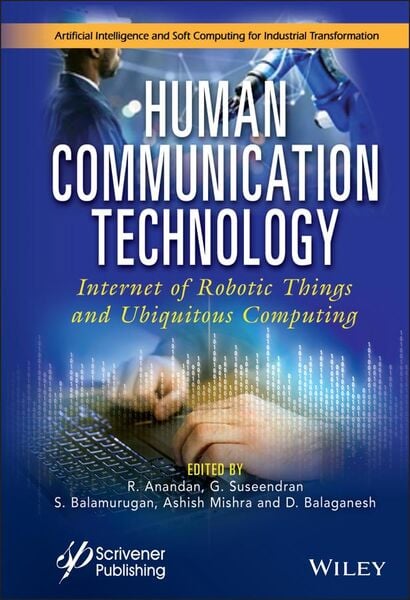
Produktbild: Human Communication Technology

Human Communication Technology Internet-Of-Robotic-Things and Ubiquitous Computing

269,99 €

inkl. gesetzl. MwSt., Versandkostenfrei


Beschreibung

Produktdetails

Einband

Gebundene Ausgabe

Erscheinungsdatum

16.11.2021

Herausgeber

R. Anandan + weitere

Verlag

John Wiley & Sons

Seitenzahl

496

Maße (L/B/H)

23,1/15,5/3 cm

Gewicht

794 g

Auflage

1. Auflage

Sprache

Englisch

ISBN

978-1-119-75059-8

Beschreibung

Produktdetails

Einband

Gebundene Ausgabe

Erscheinungsdatum

16.11.2021

Herausgeber

Verlag

John Wiley & Sons

Seitenzahl

496

Maße (L/B/H)

23,1/15,5/3 cm

Gewicht

794 g

Auflage

1. Auflage

Sprache

Englisch

ISBN

978-1-119-75059-8

Herstelleradresse

Libri GmbH
Europaallee 1
36244 Bad Hersfeld
DE

Email: gpsr@libri.de

Noch keine Bewertungen vorhanden

Verfassen Sie die erste Bewertung zu diesem Artikel

Helfen Sie anderen Kundinnen und Kunden durch Ihre Meinung.

Kundinnen und Kunden meinen

Bewertungen (0)

Die Leseprobe wird geladen.
  • Produktbild: Human Communication Technology
  • Preface xix

    1 Internet of Robotic Things: A New Architecture and Platform 1
    V. Vijayalakshmi, S. Vimal and M. Saravanan

    1.1 Introduction 2

    1.1.1 Architecture 3

    1.1.1.1 Achievability of the Proposed Architecture 6

    1.1.1.2 Qualities of IoRT Architecture 6

    1.1.1.3 Reasonable Existing Robots for IoRT Architecture 8

    1.2 Platforms 9

    1.2.1 Cloud Robotics Platforms 9

    1.2.2 IoRT Platform 10

    1.2.3 Design a Platform 11

    1.2.4 The Main Components of the Proposed Approach 11

    1.2.5 IoRT Platform Design 12

    1.2.6 Interconnection Design 15

    1.2.7 Research Methodology 17

    1.2.8 Advancement Process-Systems Thinking 17

    1.2.8.1 Development Process 17

    1.2.9 Trial Setup-to Confirm the Functionalities 18

    1.3 Conclusion 20

    1.4 Future Work 21

    References 21

    2 Brain-Computer Interface Using Electroencephalographic Signals for the Internet of Robotic Things 27
    R. Raja Sudharsan and J. Deny

    2.1 Introduction 28

    2.2 Electroencephalography Signal Acquisition Methods 30

    2.2.1 Invasive Method 31

    2.2.2 Non-Invasive Method 32

    2.3 Electroencephalography Signal-Based BCI 32

    2.3.1 Prefrontal Cortex in Controlling Concentration Strength 33

    2.3.2 Neurosky Mind-Wave Mobile 34

    2.3.2.1 Electroencephalography Signal Processing Devices 34

    2.3.3 Electromyography Signal Extraction of Features and Its Signal Classifications 37

    2.4 IoRT-Based Hardware for BCI 40

    2.5 Software Setup for IoRT 40

    2.6 Results and Discussions 42

    2.7 Conclusion 47

    References 48

    3 Automated Verification and Validation of IoRT Systems 55
    S.V. Gayetri Devi and C. Nalini

    3.1 Introduction 56

    3.1.1 Automating V&V-An Important Key to Success 58

    3.2 Program Analysis of IoRT Applications 59

    3.2.1 Need for Program Analysis 59

    3.2.2 Aspects to Consider in Program Analysis of IoRT Systems 59

    3.3 Formal Verification of IoRT Systems 61

    3.3.1 Automated Model Checking 61

    3.3.2 The Model Checking Process 62

    3.3.2.1 PRISM 65

    3.3.2.2 UPPAAL 66

    3.3.2.3 SPIN Model Checker 67

    3.3.3 Automated Theorem Prover 69

    3.3.3.1 ALT-ERGO 70

    3.3.4 Static Analysis 71

    3.3.4.1 CODESONAR 72

    3.4 Validation of IoRT Systems 73

    3.4.1 IoRT Testing Methods 79

    3.4.2 Design of IoRT Test 80

    3.5 Automated Validation 80

    3.5.1 Use of Service Visualization 82

    3.5.2 Steps for Automated Validation of IoRT Systems 82

    3.5.3 Choice of Appropriate Tool for Automated Validation 84

    3.5.4 IoRT Systems Open Source Automated Validation Tools 85

    3.5.5 Some of Significant Open Source Test Automation Frameworks 86

    3.5.6 Finally IoRT Security Testing 86

    3.5.7 Prevalent Approaches for Security Validation 87

    3.5.8 IoRT Security Tools 87

    References 88

    4 Light Fidelity (Li-Fi) Technology: The Future Man-Machine-Machine Interaction Medium 91
    J.M. Gnanasekar and T. Veeramakali

    4.1 Introduction 92

    4.1.1 Need for Li-Fi 94

    4.2 Literature Survey 94

    4.2.1 An Overview on Man-to-Machine Interaction System 95

    4.2.2 Review on Machine to Machine (M2M) Interaction 96

    4.2.2.1 System Model 97

    4.3 Light Fidelity Technology 98

    4.3.1 Modulation Techniques Supporting Li-Fi 99

    4.3.1.1 Single Carrier Modulation (SCM) 100

    4.3.1.2 Multi Carrier Modulation 100

    4.3.1.3 Li-Fi Specific Modulation 101

    4.3.2 Components of Li-Fi 102

    4.3.2.1 Light Emitting Diode (LED) 102

    4.3.2.2 Photodiode 103

    4.3.2.3 Transmitter Block 103

    4.3.2.4 Receiver Block 104

    4.4 Li-Fi Applications in Real Word Scenario 105

    4.4.1 Indoor Navigation System for Blind People 105

    <