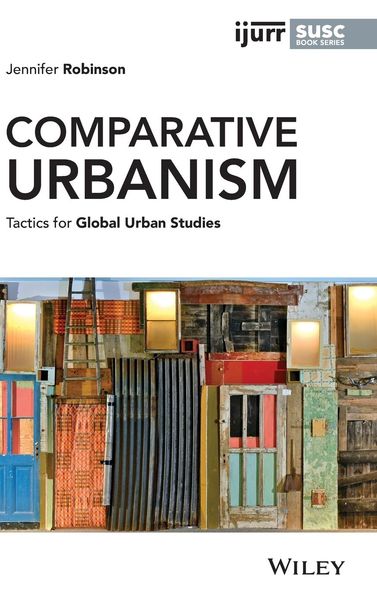
Comparative Urbanism Tactics for Global Urban Studies
-
- Hardcover ausgewählt
- Taschenbuch
- eBook
-
Sprache:Englisch
106,99 €
inkl. gesetzl. MwSt.,
Lieferung nach Hause
Beschreibung
Produktdetails
Einband
Gebundene Ausgabe
Erscheinungsdatum
25.07.2022
Verlag
John Wiley & SonsSeitenzahl
464
Maße (L/B/H)
23,5/15,7/3 cm
Gewicht
780 g
Auflage
1. Auflage
Sprache
Englisch
ISBN
978-1-119-69751-0
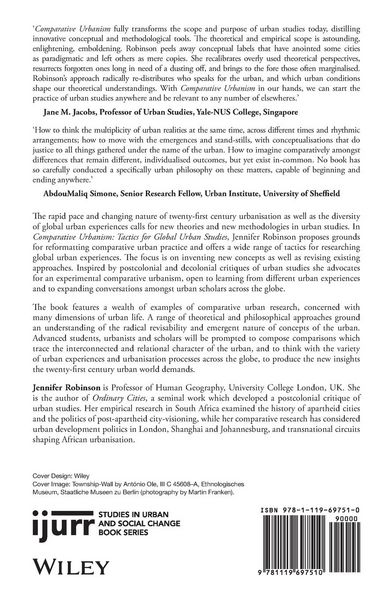
'Comparative Urbanism fully transforms the scope and purpose of urban studies today, distilling innovative conceptual and methodological tools. The theoretical and empirical scope is astounding, enlightening, emboldening. Robinson peels away conceptual labels that have anointed some cities as paradigmatic and left others as mere copies. She recalibrates overly used theoretical perspectives, resurrects forgotten ones long in need of a dusting off, and brings to the fore those often marginalised. Robinson's approach radically re-distributes who speaks for the urban, and which urban conditions shape our theoretical understandings. With Comparative Urbanism in our hands, we can start the practice of urban studies anywhere and be relevant to any number of elsewheres.'
Jane M. Jacobs, Professor of Urban Studies, Yale-NUS College, Singapore
'How to think the multiplicity of urban realities at the same time, across different times and rhythmic arrangements; how to move with the emergences and stand-stills, with conceptualisations that do justice to all things gathered under the name of the urban. How to imagine comparatively amongst differences that remain different, individualised outcomes, but yet exist in-common. No book has so carefully conducted a specifically urban philosophy on these matters, capable of beginning and ending anywhere.'
AbdouMaliq Simone, Senior Research Fellow, Urban Institute, University of Sheffield
The rapid pace and changing nature of twenty-first century urbanisation as well as the diversity of global urban experiences calls for new theories and new methodologies in urban studies. In Comparative Urbanism: Tactics for Global Urban Studies, Jennifer Robinson proposes grounds for reformatting comparative urban practice and offers a wide range of tactics for researching global urban experiences. The focus is on inventing new concepts as well as revising existing approaches. Inspired by postcolonial and decolonial critiques of urban studies she advocates for an experimental comparative urbanism, open to learning from different urban experiences and to expanding conversations amongst urban scholars across the globe.
The book features a wealth of examples of comparative urban research, concerned with many dimensions of urban life. A range of theoretical and philosophical approaches ground an understanding of the radical revisability and emergent nature of concepts of the urban. Advanced students, urbanists and scholars will be prompted to compose comparisons which trace the interconnected and relational character of the urban, and to think with the variety of urban experiences and urbanisation processes across the globe, to produce the new insights the twenty-first century urban world demands.
Noch keine Bewertungen vorhanden
Verfassen Sie die erste Bewertung zu diesem Artikel
Helfen Sie anderen Kundinnen und Kunden durch Ihre Meinung.
Kurze Frage zu unserer Seite
Vielen Dank für dein Feedback
Wir nutzen dein Feedback, um unsere Produktseiten zu verbessern. Bitte habe Verständnis, dass wir dir keine Rückmeldung geben können. Falls du Kontakt mit uns aufnehmen möchtest, kannst du dich aber gerne an unseren Kund*innenservice wenden.
zum Kundenservice