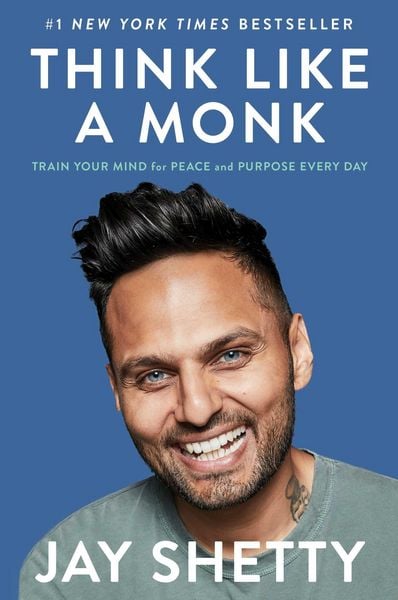
Produktbild: Think Like a Monk

Think Like a Monk Train Your Mind for Peace and Purpose Every Day

10

13,84 €

inkl. gesetzl. MwSt.

Beschreibung

Produktdetails

Format

ePUB

Kopierschutz

Ja

Family Sharing

Ja

Text-to-Speech

Ja

Erscheinungsdatum

08.09.2020

Verlag

Simon + Schuster LLC

Seitenzahl

352 (Printausgabe)

Dateigröße

8369 KB

Sprache

Englisch

EAN

9781982134501

Beschreibung

Produktdetails

Format

ePUB

eBooks im ePUB-Format erlauben eine dynamische Anpassung des Inhalts an die jeweilige Display-Größe des Lesegeräts. Das Format eignet sich daher besonders für das Lesen auf mobilen Geräten, wie z.B. Ihrem tolino, Tablets oder Smartphones.

Kopierschutz

Ja

Zum Lesen dieses eBooks auf Geräten der tolino Familie sowie auf sonstigen eReadern und am PC benötigen Sie eine Adobe ID. Weitere Hinweise zum Lesen von kopiergeschützten eBooks finden Sie unter Hilfe/Downloads.

Family Sharing

Ja

Mit Family Sharing können Sie eBooks innerhalb Ihrer Familie (max. sechs Mitglieder im gleichen Haushalt) teilen. Sie entscheiden selbst, welches Buch Sie mit welchem Familienmitglied teilen möchten. Auch das parallele Lesen durch verschiedene Familienmitglieder ist durch Family Sharing möglich. Um eBooks zu teilen oder geteilt zu bekommen, muss jedes Familienmitglied ein Konto bei Thalia oder einem anderen tolino-Buchhändler haben. Weitere Informationen finden Sie unter Hilfe/Family-Sharing.

Text-to-Speech

Ja

Bedeutet Ihnen Stimme mehr als Text? Mit der Funktion Text-to-Speech können Sie sich im tolino webReader und in der aktuellen Thalia – Lesen & Hören App das eBook vorlesen lassen. Weitere Informationen finden Sie unter Hilfe/Text-to-Speech.

Barrierefreiheit

  • alle zum Verständnis notwendigen Inhalte sind über Screenreader zugänglich
  • navigierbares Inhaltsverzeichnis
  • alle Texte können angepasst werden
  • logische Lesereihenfolge eingehalten
  • ausführliche Alternativtexte (z.B. für Abbildungen) vorhanden
  • kurze Alternativtexte (z.B. für Abbildungen) vorhanden
  • hoher Kontrast zwischen Text und Hintergrund
  • entspricht der Vorgabe Epub Barrierefreiheit 1.1
  • keine Vorlesefunktionen des Lesesystems deaktiviert
  • keine Vorlesefunktionen des Lesesystems deaktiviert
  • navigierbarer Index
  • Seitennummerierung folgt dem gedruckten Werk
  • Navigation über vorher / nachher Elemente
  • ARIA-Rollen vorhanden
  • Landmark-Navigation vorhanden
  • entspricht der Vorgabe WCAG v2.2
  • entspricht der Vorgabe WCAG Level AA

Erscheinungsdatum

08.09.2020

Verlag

Simon + Schuster LLC

Seitenzahl

352 (Printausgabe)

Dateigröße

8369 KB

Sprache

Englisch

EAN

9781982134501

Kundinnen und Kunden meinen

Informationen zu Bewertungen

Zur Abgabe einer Bewertung ist eine Anmeldung im Konto notwendig. Die Authentizität der Bewertungen wird von uns nicht überprüft. Wir behalten uns vor, Bewertungstexte, die unseren Richtlinien widersprechen, entsprechend zu kürzen oder zu löschen.

Die Bewertungen sind nach Format, Anzahl Sterne und Datum sortiert.

  • Bewertung

    5/5

    08.11.2022

    eBook (ePUB)

    Rezension von A. Pühringer

    Das Buch «Think like a Monk” von Jay Shetty deckt ein grosses Spektrum an verschiedenen Themen und Gebiete ab. Einerseits erzählt er von vielen persönlichen positiven aber auch negativen Erfahrungen, andererseits nennt er einige Studien und Experimente sowie Übungen und Empfehlungen, welche man einfach und effizient in den Alltag integrieren kann. Diese Übungen geben dem Leser oder der Leserin die Gelegenheit das Geschriebene auf sich selbst anwenden zu können. Folglich ist das Buch eine Mischung aus schon bekannten Erlebnissen und Weisheiten und persönlichen Erkenntnissen von Jay Shetty. Durch die persönlichen, oft humorvollen Eindrücke von Shetty wird das Buch etwas aufgelockert, die Beispiele sind nachvollziehbarer und zusätzlich bringt er eine lebhafte Note ins Buch. Das Ziel dieses Buches ist es, den Menschen dabei zu helfen, die Denkweisen und Einstellungen eines Mönches auf ihr Leben anzuwenden. Das Buch zeigt auf, wie man eventuelle Barrieren im Leben aus dem Weg räumen kann, um dem eigenen Potenzial Platz zu machen. Dabei ist es wichtig, mit negativen Gedanken umgehen zu können beziehungsweise wie man diese am besten überwinden kann, wie man gezielt in sich selbst hineinhört und zuletzt seine wahre Bestimmung findet. Das ist oft nicht so leicht wie man vielleicht denken könnte und es kann viele Herausforderungen bei dem Versuch mit sich bringen, wenn man die Lehren und Erkenntnisse von Mönchen in den eigenen Alltag einzubauen versucht. Jay Shetty gelingt es jedoch meisterhaft genau hierbei Ratschläge, Tipps, Übungen und Ideen einzubringen, welche beispielsweise helfen, Stress zu reduzieren, Disziplin aufzubauen oder die eigene Konzentration zu verbessern. Shetty schafft es, sich selten zu wiederholen und konstant neue Ideen, Tipps und Ratschläge einzubringen. Das Buch fühlt sich wie eine Reise an, welche uns ein besseres Selbstverständnis und ein gelasseneres Leben näherbringen möchte. Versucht man alle Übungen durchzugehen kann dies durchaus mehrere Monate dauern, jedoch sollte am Ende dieses Leitfadens ein anderer sowie reflektierterer Mensch sein. Ich denke vor allem durch die gesellschaftlichen Entwicklungen in den letzten Jahren macht es besonders zur heutigen Zeit Sinn eine solche Reise zur Selbstfindung und Ruhe anzugehen. Wir leben in einer extrem schnelllebigen Zeit und wir spüren oft einen hohen Leistungsdruck sowie Stress. Das Buch ist meiner Meinung nach für jeden empfehlenswert, der sein Leben bewusster, erfüllter, weniger stressig leben möchte und animiert gewisse Dinge vermehrt zu hinterfragen. Es ist jedoch enorm wichtig, dass man für ein gutes Gelingen solchen Änderungen gegenüber stets offen und positiv ist. Das Buch ist gut strukturiert und folgt von Anfang an einem roten Faden. Es ist in drei Teile gegliedert, welche die Themen «Loslassen», «Wachsen», und «Geben» beinhalten. In den einzelnen Teilen werden äussere sowie innere Einflüsse sowie Ängste behandelt. Shetty geht darauf ein, wie wir Entscheidungen bewusster treffen können und wie wir Dankbarkeit sowie Freude an unser Umfeld weitergeben können. Das Buch ist folglich ein Ratgeber für ein sinnerfülltes Leben. Shetty versucht dem Leser verschiedene Wege aufzuzeigen, welche dem Leser oder der Leserin helfen kann, Erfüllung im Leben zu finden, zwingt dem Leser jedoch nichts auf, sondern beschreibt es äusserst leicht und einladend, was wie zu verändern ist. Es beinhaltet einerseits Kurzgeschichten, andererseits auch viele Zitate und wissenschaftliche Fakten. Der Schreibstil ist angenehm zu lesen, er formuliert seine Texte sehr flüssig und die Aussagen sind gut verständlich. Das Buch ist meiner Meinung nach sehr inspirierend und ich werde definitiv mehr Achtsamkeit in mein Leben integrieren. Man wird an viele Dinge erinnert, welche wir als selbstverständlich sehen und es ist wichtig, dass wir solchen Dingen mehr Wertschätzung schenken. Etwas mehr Demut, Achtsamkeit und Dankbarkeit sind Kernelemente dieses Buches und definitiv wichtige Eigenschaften im Leben.

  • Bewertung

    5/5

    04.11.2022

    eBook (ePUB)

    Bookreview

    “Before judging others, pause for a moment and ask: am I finding fault in order to distract myself or others from my own insecurities? Am I projecting my own weakness onto them? And even if I’m doing neither of those things, am I any better than the person I’m criticizing? I can’t say what the answers to the first two questions will be in every case, but the answer to the third question is always no.” This book has me speechless! It is my personal break through book. I have read at least 20 self-help and self-development books but this one got me real thinking. There are a ton of helpful and realistic takeaways that you can utilize right away. In this book Jay explains values and guides you through exercises that might help you comprehend and pinpoint their origins, which is a crucial activity. He teaches what the O.E.Os are. Peoples opinions, expectations and obligations and he shows how important it is to stop living according to that. It has helped me tremendously to overcome negative thoughts and habits. “Your mind is a muscle, and it can be trained” is my new mantra I live by. Practical DIYs to help readers enjoy life to the fullest are scattered throughout the whole book. So he dives deep on certain topics like: How one can overcome negativity How to stop overthinking Why comparison kills love Why you are not your thoughts How to find your purpose He also gives a breakdown on different types of meditation and breathing techniques. He provides a lot of different stories from his training and time in the ashram, with these stories the difficult topics are much easier to digest and understand. Overall I would definitely recommend this book to others. The message of this book is very clear and informative. This book is helping me actively remember those values and is challenging me to reflect on things I either haven’t considered or haven’t considered in the way presented. Nonetheless it is not a one read-fix all your problems book! None is… But it teaches you to dive deep into your fears, negative thoughts and emotions. It is not a quick read if you really want to improve and change your life. I think each person out there should at least have a look at this book or some chapters. Because of this book I started to: - meditate daily in the morning before I get up and start my day - get in touch with my fears and values and try to understand where they are coming from and how I can reduce them. - I also try to understand why my fears scare me - when I get stressed I focus on my breathing technique -looked and continue to search for my life’s purpose - I started my mindful journal… There I write down everything I am thankful for and try to visualize my life. - find my true reason why and purpose on living Enjoy Reading! Gian-Nico Paganoni

  • Bewertung

    5/5

    11.11.2024

    Buch (Taschenbuch)

    helps you to understand yourself better

    What I like about this book its that it takes old wisdom and reminds you of them and shows you how to implement them. I think very often, the best advice you could get insnt something you have never heard before, but somethings you somehow already know but arent actually following trough with. For example, Jey talks about breathing exercises to calm oneselves down: most people know this would be good, but the fewest of them actually practise this. However, just know that if you have read a lot about self improvement or psychology, don’t expect to hear completely new and never heard ideas from this book. I spotted many similarities from this book with things I learned about at uni. For example, Jey explains how to overcome negative tought patterns by first identifying them, pausing for a moment and ovserving ones own reaction, and then replacing them with another tought. This is a technique that is also present in cognitive behavioral therapy, which is a form of psychotherapy. I think its important not to pathologize having a negative tought here and then, because this is completely normal. But for negative tought patterns that frequently reoccur in similar ways, this technique has been proven to be helpful. On the other hand, related to this, I wonder if there can be too much self awareness. A big part of this book is about self reflection, but Jay also empazises that we must observe ourselves with self compassion, which is very important not to forget. Otherwise we have too high expectations towards ourselfes about “thinking perfectly” and acting in harmony with your values all the time. Also, there are people with problems that cant be solved just by reading self help books and self refelction, and they should get professional psychological help. I also spotted some similarities to things I myself learned from real monks. A few months ago, I was travelling alone trough Thailand and spent a while at a place where you could live with monks and learn about meditation from them. In return, you would help with stuff like cleaning. This time was very valuable and I noticed some similarities to the book. For example, the monks there talked to me about the importance of beeing grateful for the most tiny daily pleasures, like hearing a bird, drinking water or feeling how soft and warm your bed is. Again, this is not something you have never heard before, but I myself noticed how much more conent I beacame when I acutally did it and started paying attention to things like that. The monks there also did vocal excercises (chants), and I didn’t really understand this, but after reading this book I can see how it can be a calming practice. Overall, this book mentions many diffent topics and exercises, from not trying to multitask to strengthening your self worth. You can pick and choose what resonates with you. Im sure most people will find not all but many topics helpful for them. This book can be very valuable, especially for people who notice that they constantly try to get approval and validation from others, feel overly dependant on others and/ or often feel stressed in daily life. This book can help you understand your ego, practise humility, and become more "grounded” and less reactive to everything that is happening around you.

  • Bewertung

    5/5

    05.11.2023

    Buch (Taschenbuch)

    Book Review

    "Think Like a Monk" by Jay Shetty is a transformative book that combines ancient wisdom of monks with a kind of modern philosophy. It’s a guide to living a more purposeful and mindful life. Drawing on Shetty's personal experiences as a former monk, his book is a journey into self-discovery, mindfulness, and meaningful living, filtering out the dust of society’s expectations. The book is divided into three main sections, each designed to help to cultivate a monk-like mindset. The first section, "Let Go," emphasizes the importance of releasing attachments and detaching from the distractions and negative influences that often hold us back. Shetty shares personal experiences and the wisdom he gained during his time as a monk, illustrating the power of letting go to achieve greater peace and focus in our lives. He encourages readers to clear up their minds and make space for what truly matters. The second section, "Grow," is about the cultivation of values, and self-awareness. Shetty discusses the significance of building a strong basis building on principles such as gratitude, compassion, and authenticity. There are also practical exercises and reflective prompts to help readers develop these qualities and increase their personal growth. The third section, "Give," focuses on the importance of contributing to the well-being of others and the world. Shetty discusses the concept of "servant leadership," which is central to the monk's way of life. He shares his experiences working with organizations and individuals committed to making a positive impact on society and emphasizes the satisfaction and fulfillment that come from serving others selflessly. One of the strengths of the book is that Shetty can break down complex spiritual and philosophical concepts into easily digestible, relatable, and actionable advice. He draws on a wide range of sources, from ancient scriptures to modern psychology. Shetty's personal experiences as a monk add a unique dimension to the book. He describes his struggles, triumphs, and moments of enlightenment during his time in the ashram, allowing readers to connect with his narrative on a deep level. His honesty and vulnerability in sharing these experiences make the book both relatable and inspiring. The book also contains practical exercises, journal prompts, and meditation techniques that help readers apply the book's teachings to their own lives. By encouraging active engagement, Shetty empowers readers to take ownership of their personal growth journey. In conclusion, "Think Like a Monk" by Jay Shetty is a valuable resource for individuals seeking to lead more purposeful, mindful lives. Shetty's personal experiences, combined with his in-depth knowledge of spiritual and philosophical traditions, provide a guide to transformation and self-discovery. The book's practical exercises, relatable anecdotes, and accessible language make it a compelling read for a wide range of readers, from those new to self-improvement literature to those on a continuous journey of personal growth. "Think Like a Monk" is an invitation to embark on a transformative journey, helping readers let go of their past, grow into the best version of themselves, and give back to the world with a servant's heart. - Nina Schmidt

  • Bewertung

    5/5

    22.05.2022

    Buch (Gebundene Ausgabe)

    Best guideline for self development

    This book takes you through so many milestones in terms of life questions and why we behave like we do and why do others. It is just great, a book everyone should read at least just once in his life!

Kundinnen und Kunden meinen

5

7

4

3

3

0

2

0

1

0

Bewertungen (10)

  • Produktbild: Think Like a Monk