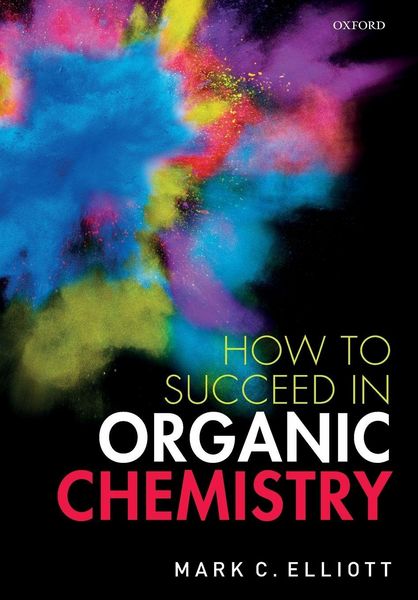
Produktbild: How to Succeed in Organic Chemistry

How to Succeed in Organic Chemistry

109,99 €

inkl. gesetzl. MwSt., Versandkostenfrei


Beschreibung

Produktdetails

Einband

Taschenbuch

Erscheinungsdatum

20.03.2020

Verlag

Oxford Academic

Seitenzahl

516

Maße (L/B/H)

24,4/17/2,8 cm

Gewicht

881 g

Sprache

Englisch

ISBN

978-0-19-885129-5

Beschreibung

Produktdetails

Einband

Taschenbuch

Erscheinungsdatum

20.03.2020

Verlag

Oxford Academic

Seitenzahl

516

Maße (L/B/H)

24,4/17/2,8 cm

Gewicht

881 g

Sprache

Englisch

ISBN

978-0-19-885129-5

Herstelleradresse

Libri GmbH
Europaallee 1
36244 Bad Hersfeld
DE

Email: gpsr@libri.de

Noch keine Bewertungen vorhanden

Verfassen Sie die erste Bewertung zu diesem Artikel

Helfen Sie anderen Kundinnen und Kunden durch Ihre Meinung.

Kundinnen und Kunden meinen

Bewertungen (0)

  • Produktbild: How to Succeed in Organic Chemistry
    • Section 1: Laying the Foundations
    • Basics 1: Structures of Organic Compounds
    • Habit 1: Always Draw Structures with Realistic Geometry
    • Basics 2: Functional Groups and "R" Groups
    • Basics 3: Naming Organic Compounds
    • Practice 1: Drawing Structures from Chemical Names
    • Basics 4: Isomerism in Organic Chemistry - Constitutional Isomers
    • Practice 2: Constitutional Isomers and Chemical Names
    • Habit 2: Identifying When a Formula is Possible
    • Practice 3: Double Bond Equivalents
    • Common Error 1: Formulae, Functional Groups and Double Bond Equivalents
    • Habit 3: Ignore What Doesn't Change
    • Basics 5: Electronegativity, Bond Polarisation and Inductive Effects
    • Practice 4: Bond Polarisation and Electronegativity
    • Basics 6: Bonding in Organic Compounds
    • Practice 5: Hybridisation
    • Basics 7: Bonding and Antibonding Orbitals
    • Basics 8: Introduction to Curly Arrows
    • Fundamental Reaction Type 1: Nucleophilic Substitution at Saturated Carbon
    • Practice 6: Electronegativity in Context
    • Fundamental Reaction Type 2: Elimination Reactions
    • Section 2: Building on the Foundations
    • Basics 9: Breaking Bonds - Linking Curly Arrows and Molecular Orbitals
    • Common Error 2: Curly Arrows
    • Basics 10: Conjugation and Resonance
    • Basics 11: Thermodynamic Definitions
    • Basics 12: Bond Dissociation Energy
    • Basics 13: Calculating Enthalpy of Reaction from Bond Dissociation Energies
    • Perspective 1: A Closer Look at Bond Dissociation Energies
    • Practice 7: Calculating Enthalpy of Reaction from Bond Dissociation Energy
    • Basics 14: Energetics and Reaction Profiles
    • Basics 15: How Fast Are Reactions?
    • Basics 16: Introduction to Carbocations, Carbanions and Free-Radicals
    • Basics 17: Carbocations 2 - More Factors Affecting Stability
    • Basics 18: Carbanions 2 - Stability and pKa
    • Perspective 2: A Scale for Carbocation Stability
    • Common Error 3: Methyl Groups are Electron-Releasing
    • Practice 8: Drawing Resonance Forms for Carbocations and Carbanions
    • Common Error 4: Resonance
    • Basics 19: The Hammond Postulate
    • Basics 20: Conjugation and Stability - The Evidence
    • Common Error 5: Carbocations and Carbanions
    • Basics 21: Reactivity of Conjugated Systems
    • Basics 22: Acid Catalysis in Organic Reactions Part 1
    • Reaction Detail 1: Nucleophilic Substitution at Saturated Carbon
    • Basics 23: What Defines a Transition State?
    • Perspective 3: Bonding Beyond Hybridisation
    • Fundamental Knowledge Recap 1: Bond Lengths and Strengths
    • Fundamental Knowledge Recap 2: pKa
    • Section 3: A Focus on Shape
    • Habit 4: Representing Stereochemistry - Flying Wedge and Newman Projections
    • Basics 23: Isomerism in Organic Chemistry - Configurational Isomers
    • Habit 5: Getting Used to Drawing Stereoisomers
    • Practice 9: Getting Used to Stereoisomers
    • Habit 6: Assignment of Stereochemistry - The Cahn-Ingold-Prelog Rules
    • Practice 10: Assigning Stereochemistry
    • Habit 7: Stereoisomers with Symmetry
    • Basics 25: Properties of Stereoisomers
    • Reaction Detail 2: Stereochemical Aspects of Substitution Reactions
    • Common Error 6: Substitution Reactions
    • Reaction Detail 3: Substitution with Retention of Configuration
    • Common Error 7: Stereochemical Errors
    • Section 4: Types of Selectivity
    • Basics 26: Selectivity in Organic Chemistry - Chemoselectivity
    • Basics 27: Selectivity in Organic Chemistry - Regioselectivity
    • Basics 28: Selectivity in Organic Chemistry - Stereoselectivity
    • Basics 29: Stereochemical Definitions Relating to Reactions
    • Section 5: Bonds Can Rotate
    • Basics 30: Isomerism in Organic Chemistry - Conformational Isomers
    • Practice 11: Conformational Analysis
    • Applications 1: Conformational Isomers 2
    • Applications 2: SN2 Substitution Reactions Forming Three-Membered Rings
    • Basics 31: Introduction to Cyclohexanes
    • Practice 12: Drawing Cyclohexanes
    • Applications 3: Substitution Reactions of Cyclohexanes
    • Basics 32: Quantifying Conformers of Cyclohexanes
    • Basics 33: More Conformers of Cyclohexanes and Related Compounds
    • Practice 13: Drawing More Complex Cyclohexanes
    • Common Error 8: Cyclohexanes
    • Section 6: Eliminating the Learning
    • Reaction Detail 4: Elimination Reactions
    • Perspective 4: A Continuum of Mechanisms
    • Basics 34: More Substituted Alkenes Are More Stable
    • Basics 35: Enthalpy Changes for Reactions Involving Anionic Species
    • Applications 4: Stereochemistry of Elimination Reactions
    • Basics 36: Stereospecificity
    • Applications 5: Elimination Reactions of Cyclohexanes
    • Common Error 9: Elimination Reaction
    • Reaction Detail 5: Allylic Substitution
    • Section 7: Building Skills
    • Worked Problem 1: Curly Arrows and Reaction Profiles
    • Worked Problem 2: Competing SN1 Substitution and E1 Elimination
    • Worked Problem 3: Competing SN2 Substitution and E2 Elimination
    • Worked Problem 4: Acid Catalysis in Organic Reactions Part 2
    • Worked Problem 5: Epoxide Opening Reactions
    • Worked Problem 6: Is cis-Cyclohexane-1,2-diol Really Achiral?
    • Worked Problem 7: The Furst-Plattner Rule
    • Worked Problem 8: SN2' Stereochemistry and Conformations
    • Worked Problem 9: Complex Substitution Stereochemistry
    • Worked Problem 10: Cyclisation Reactions
    • Solution to Problem 1: Curly Arrows and Reaction Profiles
    • Solution to Problem 2: Competing SN1 Substitution and E1 Elimination
    • Solution to Problem 3: Competing SN2 Substitution and E2 Elimination
    • Solution to Problem 4: Acid Catalysis in Organic Reactions Part 2
    • Solution to Problem 5: Epoxide Opening Reactions
    • Solution to Problem 6: Is cis-Cyclohexane-1,2-diol Really Achiral?
    • Solution to Problem 7: The Furst-Plattner Rule
    • Solution to Problem 8: SN2' Stereochemistry and Conformations
    • Solution to Problem 9: Complex Substitution Stereochemistry
    • Solution to Problem 10: Cyclisation Reactions