• Produktbild: Bug Bounty Hunting for Web Security
  • Produktbild: Bug Bounty Hunting for Web Security
- 15%

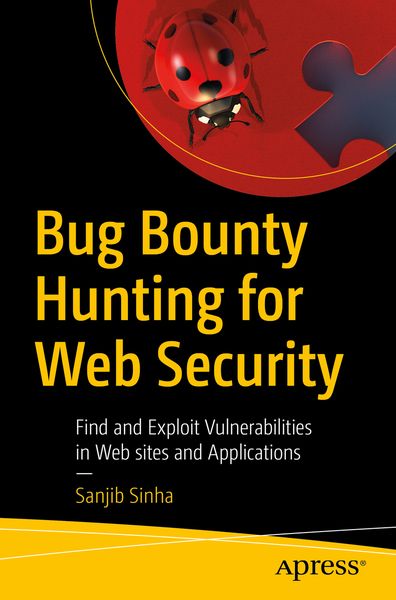
Bug Bounty Hunting for Web Security Find and Exploit Vulnerabilities in Web sites and Applications

15% sparen

49,99 € UVP 58,84 €

inkl. gesetzl. MwSt., Versandkostenfrei

Lieferung nach Hause

Beschreibung

Produktdetails

Einband

Taschenbuch

Erscheinungsdatum

13.11.2019

Verlag

Apress

Seitenzahl

225

Maße (L/B/H)

23,5/15,5/1,4 cm

Gewicht

376 g

Auflage

1st ed.

Sprache

Englisch

ISBN

978-1-4842-5390-8

Beschreibung

Produktdetails

Einband

Taschenbuch

Erscheinungsdatum

13.11.2019

Verlag

Apress

Seitenzahl

225

Maße (L/B/H)

23,5/15,5/1,4 cm

Gewicht

376 g

Auflage

1st ed.

Sprache

Englisch

ISBN

978-1-4842-5390-8

Herstelleradresse

Libri GmbH
Europaallee 1
36244 Bad Hersfeld
DE

Email: gpsr@libri.de

Kundinnen und Kunden meinen

0 Bewertungen

Informationen zu Bewertungen

Zur Abgabe einer Bewertung ist eine Anmeldung im Konto notwendig. Die Authentizität der Bewertungen wird von uns nicht überprüft. Wir behalten uns vor, Bewertungstexte, die unseren Richtlinien widersprechen, entsprechend zu kürzen oder zu löschen.

Die Bewertungen sind nach Format, Anzahl Sterne und Datum sortiert.

Verfassen Sie die erste Bewertung zu diesem Artikel

Helfen Sie anderen Kund*innen durch Ihre Meinung

Kundinnen und Kunden meinen

0 Bewertungen filtern

  • Produktbild: Bug Bounty Hunting for Web Security
  • Produktbild: Bug Bounty Hunting for Web Security
  • Chapter 1: Let the Hunt Begin!Chapter Goal: This chapter will showcase how to implement an offensive approach to hunt bugs. And what type of tools are required?No of pages: 10

    Sub -Topics1. Why hunt bugs?2. Introducing Burp Suite3. Introducing other tools

    Chapter 2: Setting up Your Virtual LabChapter Goal: This chapter will guide readers with the goal to set up the virtual labs.No of pages: 10

    Sub - Topics1. Why we need Virtual Box2. Introduction to Kali Linux – the hacker’s operating system3. What type of tools are available in Kali

    Chapter 3: Injecting Request ForgeryChapter Goal: Readers will learn to create and manage request forgery on any web page.No of pages: 10

    Sub - Topics:1. What is Request Forgery (CSRF)2. Mission Critical Injection of CSRF3. How to discover CSRF on any application

    Chapter 4: Cross Site Scripting (XSS) ExploitationChapter Goal: This chapter will talk, comprehensively, about one of the most challenging tasks of any web application – to resist Cross Site Scripting or XSS Attacks.No of pages: 15

    Sub - Topics:1. What is XSS2. How we can exploit through XSS3. How we can discover any XSS attack

    Chapter 5: Header Injection and URL RedirectionChapter Goal: This chapter will discuss header injection, cache poisoning, and URL redirection.No of pages: 15

    Sub - Topics:1. What is header injection and how it is related to URL redirection2. How Cross Site Scripting is done through Header Injection3. How to discover header has been injected4. How to find URL redirection vulnerabilities

    Chapter 6: Uploading Malicious FilesChapter Goal: Readers will learn about malicious file uploading and take forward bug bounty hunting.No of pages: 10

    Sub - Topics:1. How to upload malicious files to own a system2. What is defacement?3. How to automate this attack?

    Chapter 7: Poisoning Sender Policy Framework (SPF)Chapter Goal: This chapter will cover basic and advanced technique to test SPF and exploit it.No of pages: 10

    Sub - Topics:1. Is there insufficient SPF records2. How to exploit SPF3. How to find the vulnerabilities and test it

    Chapter 8: Injecting Unintended XMLChapter Goal: Readers will learn about injecting unintended XML into any application.No of pages: 10

    Sub - Topics:1. What is XML injection2. How to perform XML injection in Virtual Lab3. How to fetch System Configuration Files

    Chapter 9: Command InjectionChapter Goal: Readers will learn how an operating system falls prey to injected command and how attackers feed on those vulnerabilities.No of pages: 10

    Sub - Topics:1. What is command injection2. How to inject malicious commands3. How to exploit command injection

    Chapter 10: Exploiting HTML and SQL InjectionChapter Goal: This chapter will teach readers the different attack vectors used to exploit HTML and SQL injection.No of pages: 20

    Sub - Topics:1. What are HTML and SQL injection2. How to find and exploit HTML injection3. What are the header and cookie-based SQL injection4. How to bypass authentication by SQLI5. How to automate SQLI

    Appendix: Further ReadingChapter Goal: This section will show readers additional new features of bug hunting and how to exploit them.No of pages: 10

    Sub - Topics:1. What tools can be used alongside Burp Suite2. How source code disclosure helps information gathering3. What could be the next challenges to hunt bugs