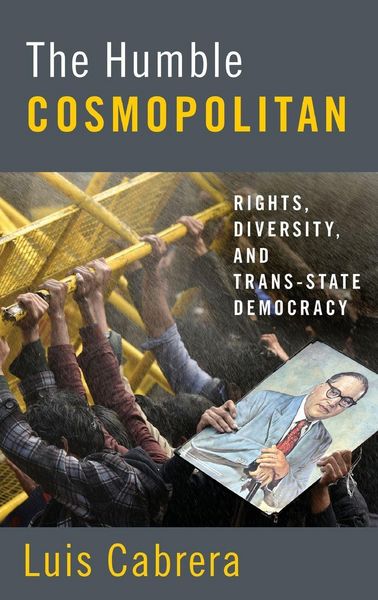
The Humble Cosmopolitan Rights, Diversity, and Trans-state Democracy
-
- Hardcover ausgewählt
- Taschenbuch
- eBook
-
Sprache:Englisch
192,99 €
inkl. gesetzl. MwSt.,
Lieferung nach Hause
Beschreibung
Produktdetails
Einband
Gebundene Ausgabe
Erscheinungsdatum
17.07.2009
Verlag
Oxford AcademicSeitenzahl
362
Maße (L/B/H)
24/16,1/2,4 cm
Gewicht
630 g
Sprache
Englisch
ISBN
978-0-19-086950-2
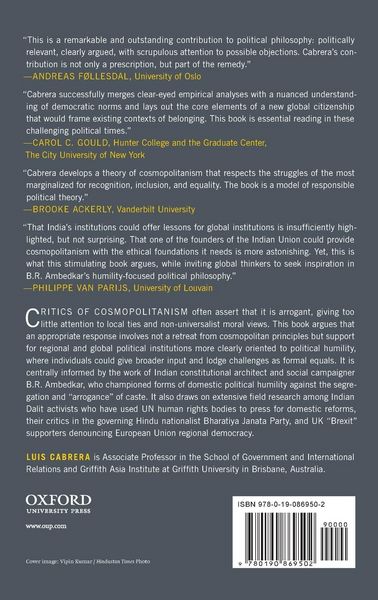
Is a strong cosmopolitan stance irretrievably arrogant? Cosmopolitanism, which affirms universal moral principles and grants no fundamental moral significance to the state, has become increasingly central to normative political theory. Yet, it has faced persistent claims that it disdains local attachments and cultures, while also seeking the neo-imperialistic imposition of Western moral views on all persons. The critique is said to apply with even greater force to institutional cosmopolitan approaches, which seek the development of global political institutions capable of promoting global aims for human rights, democracy, etc.
This book works to address such objections through developing a novel theory of cosmopolitan political humility. It draws on the work of Indian constitutional architect and social activist B.R. Ambedkar, who cited universal principles of equality and rights in confronting domestic exclusions and the "arrogance" of caste. He sought to advance forms of political humility, or the recognition of equal standing, and openness to input and challenge within political institutions. This book explores how an "institutional global citizenship" approach to cosmopolitanism could similarly promote political humility globally, by supporting the development of democratic input and challenge mechanisms beyond the state. Such developments would challenge an essential political arrogance identified in the current system, where sovereign states are empowered to simply dismiss rights-based challenges from outsiders or their own populations--even as they serve as the designated guarantors of human rights.
The book employs an innovative grounded normative theory method, where extensive original field research informs the development of moral claims. Insights are taken from Dalit activists reaching out to United Nations human rights bodies for support in challenging caste discrimination, and from their critics in the governing Bharatiya Janata Party. Further insights are drawn from Turkish protestors confronting a rising domestic authoritarianism, and from UK Independence Party members demanding "Brexit" from the European Union--in part because predominantly Muslim Turkey could eventually join. Overall, it is shown, an institutional global citizenship approach can inform the development of a global framework which would orient fundamentally to political humility rather than arrogance, and which could significantly advance global rights protections.
Kundinnen und Kunden meinen
Verfassen Sie die erste Bewertung zu diesem Artikel
Helfen Sie anderen Kund*innen durch Ihre Meinung
Kurze Frage zu unserer Seite
Vielen Dank für dein Feedback
Wir nutzen dein Feedback, um unsere Produktseiten zu verbessern. Bitte habe Verständnis, dass wir dir keine Rückmeldung geben können. Falls du Kontakt mit uns aufnehmen möchtest, kannst du dich aber gerne an unseren Kund*innenservice wenden.
zum Kundenservice