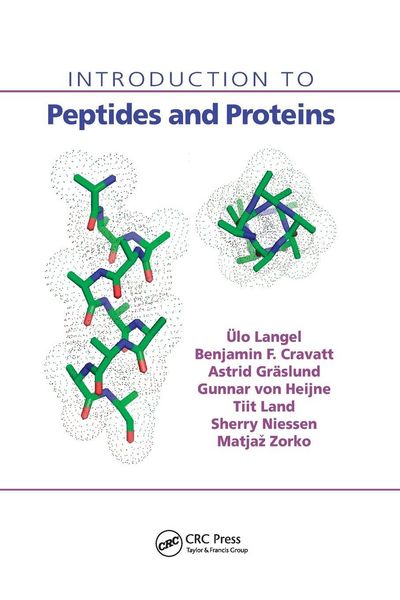
Introduction to Peptides and Proteins
-
- Hardcover
- Taschenbuch ausgewählt
- eBook
-
Sprache:Englisch
109,99 €
inkl. gesetzl. MwSt.,
Lieferung nach Hause
Beschreibung
Produktdetails
Einband
Taschenbuch
Erscheinungsdatum
19.09.2019
Verlag
Taylor & FrancisSeitenzahl
420
Maße (L/B/H)
23,4/15,6/2,4 cm
Gewicht
453 g
Sprache
Englisch
ISBN
978-0-367-38487-6
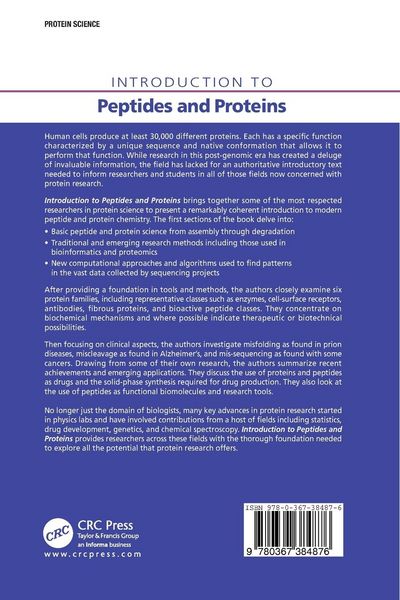
Human cells produce at least 30,000 different proteins. Each has a specific function characterized by a unique sequence and native conformation that allows it to perform that function. While research in this post-genomic era has created a deluge of invaluable information, the field has lacked for an authoritative introductory text needed to inform researchers and students in all of those fields now concerned with protein research.
Introduction to Peptides and Proteins brings together some of the most respected researchers in protein science to present a remarkably coherent introduction to modern peptide and protein chemistry. The first sections of the book delve into –
- Basic peptide and protein science from assembly through degradation
- Traditional and emerging research methods including those used in bioinformatics and proteomics
- New computational approaches and algorithms used to find patterns in the vast data collected by sequencing projects
After providing a foundation in tools and methods, the authors closely examine six protein families, including representative classes such as enzymes, cell-surface receptors, antibodies, fibrous proteins, and bioactive peptide classes. They concentrate on biochemical mechanisms and where possible indicate therapeutic or biotechnical possibilities.
Then focusing on clinical aspects, the authors investigate misfolding as found in prion diseases, miscleavage as found in Alzheimer’s, and mis-sequencing as found with some cancers. Drawing from some of their own research, the authors summarize recent achievements and emerging applications. They discuss the use of proteins and peptides as drugs and the solid-phase synthesis required for drug production. They also look at the use of peptides as functional biomolecules and research tools.
No longer just th
Noch keine Bewertungen vorhanden
Verfassen Sie die erste Bewertung zu diesem Artikel
Helfen Sie anderen Kundinnen und Kunden durch Ihre Meinung.
Kurze Frage zu unserer Seite
Vielen Dank für dein Feedback
Wir nutzen dein Feedback, um unsere Produktseiten zu verbessern. Bitte habe Verständnis, dass wir dir keine Rückmeldung geben können. Falls du Kontakt mit uns aufnehmen möchtest, kannst du dich aber gerne an unseren Kund*innenservice wenden.
zum Kundenservice