KI-Beratung Beta

  • Produktbild: Translation, Brains and the Computer
  • Produktbild: Translation, Brains and the Computer
Band 2

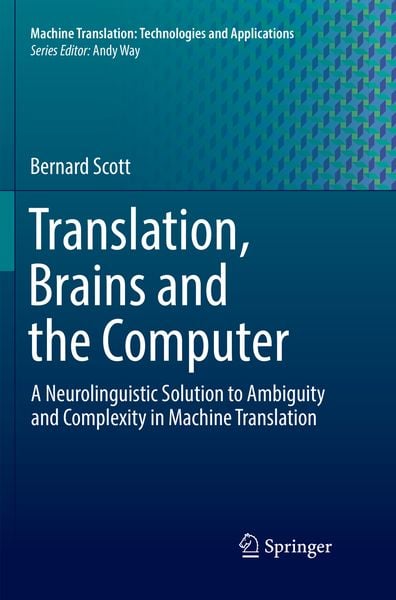
Translation, Brains and the Computer A Neurolinguistic Solution to Ambiguity and Complexity in Machine Translation

135,99 €

inkl. gesetzl. MwSt., Versandkostenfrei


Beschreibung

This book is about machine translation (MT) and the classic problems associated with this language technology. It examines the causes of these problems and, for linguistic, rule-based systems, attributes the cause to language’s ambiguity and complexity and their interplay in logic-driven processes. For...

Beschreibung

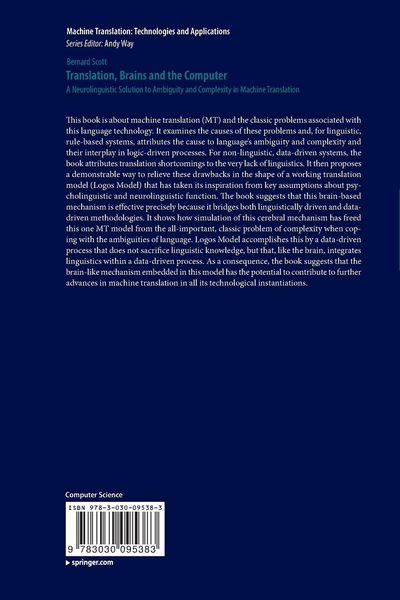
This book is about machine translation (MT) and the classic problems associated with this language technology. It examines the causes of these problems and, for linguistic, rule-based systems, attributes the cause to language’s ambiguity and complexity and their interplay in logic-driven processes. For non-linguistic, data-driven systems, the book attributes translation shortcomings to the very lack of linguistics. It then proposes a demonstrable way to relieve these drawbacks in the shape of a working translation model (Logos Model) that has taken its inspiration from key assumptions about psycholinguistic and neurolinguistic function. The book suggests that this brain-based mechanism is effective precisely because it bridges both linguistically driven and data-driven methodologies. It shows how simulation of this cerebral mechanism has freed this one MT model from the all-important, classic problem of complexity when coping with the ambiguities of language. Logos Model accomplishes this by a data-driven process that does not sacrifice linguistic knowledge, but that, like the brain, integrates linguistics within a data-driven process. As a consequence, the book suggests that the brain-like mechanism embedded in this model has the potential to contribute to further advances in machine translation in all its technological instantiations.

Rezension

“Natural language processing is one of the most rapidly evolving areas of artificial intelligence, and is the subject of this excellent book. … One of the important contributions of this valuable resource is its presentation and comparison of many current state-of-the-art machine translation systems available to the general public. Summing Up: Recommended. Advanced undergraduates through faculty and professionals.” (J. Brzezinski, Choice, Vol. 56 (6), February, 2019)


Produktdetails

Einband

Taschenbuch

Erscheinungsdatum

28.12.2018

Abbildungen

XVI, 241 p. 55 illus.

Verlag Springer

Produktdetails

Einband

Taschenbuch

Erscheinungsdatum

28.12.2018

Abbildungen

XVI, 241 p. 55 illus.

Verlag Springer
Seitenzahl

241

Maße (L/B/H)

23,5/15,5/1,5 cm

Gewicht

400 g

Auflage

1oftcover reprint of the original 1st ed. 2018

Sprache

Englisch

ISBN

978-3-030-09538-3

Herstelleradresse

Springer-Verlag KG
Sachsenplatz 4-6
1201 Wien
AT

Email: ProductSafety@springernature.com

Noch keine Bewertungen vorhanden

Verfassen Sie die erste Bewertung zu diesem Artikel

Helfen Sie anderen Kundinnen und Kunden durch Ihre Meinung.

Kundinnen und Kunden meinen

Bewertungen (0)

  • Produktbild: Translation, Brains and the Computer
  • Produktbild: Translation, Brains and the Computer

  • 1 Introduction.-  2  Background.- Logos Model Beginnings.- Advent of Statistical MT.- Overview of Logos Model Translation Process.- Psycholinguistic and Neurolinguistic Assumptions.- On Language and Grammar.- Conclusion.- 3 – Language and Ambiguity:  Psycholinguistic Perspectives.- Levels of Ambiguity.- Language Acquisition and Translation.- Psycholinguistic Bases of Language Skills.- Practical Implications for Machine Translation.- Psycholinguistics in a Machine.- Conclusion.- 4– Language and Complexity:  Neurolinguistic Perspectives .- Cognitive Complexity.- A Role for Semantic Abstraction.- Connectionism and Brain Simulation.- Logos Model as a Neural Network.- Language Processing in the Brain.- MT Performance and Underlying Competence.- Conclusion.- 5 – Syntax and Semantics:  Dichotomy or Integration? .- Syntax versus Semantics: Is There a Third, Semantico- Syntactic Perspective?.- Recent Views of the Cerebral Process.- Syntax and Semantics: How Do They Relate?.- Conclusion.- 6 –Logos Model:  Design and Performance.- The Translation Problem.- How Do You Represent Natural Language?.- How Do You Store Linguistic Knowledge?.- How Do You Apply Stored Knowledge To The Input Stream?.- How do you Effect Target Transfer and Generation?.- How Do You Deal with Complexity Issues?.- Conclusion.- 7 – Some limits on Translation Quality.- First Example.- Second Example.- Other Translation Examples.- Balancing the Picture.- Conclusion.- 8 – Deep Learning MT and Logos Model.- Points of Similarity and Differences.- Deep Learning, Logos Model and the Brain.- On Learning.- The Hippocampus Again.- Conclusion.- Part II.- The SAL Representation  Language.- SAL Nouns.- SAL Verbs.- SAL Adjectives.- SAL Adverbs.