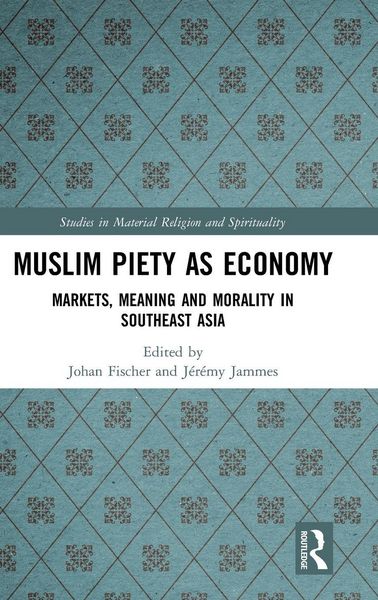

Muslim Piety as Economy Markets, Meaning and Morality in Southeast Asia
-
- Hardcover ausgewählt
- Taschenbuch
- eBook
-
Sprache:Englisch
232,99 €
inkl. gesetzl. MwSt.,
Lieferung nach Hause
Beschreibung
Produktdetails
Einband
Gebundene Ausgabe
Erscheinungsdatum
28.10.2019
Abbildungen
schwarz-weiss Illustrationen, Raster, schwarz-weiss, Zeichnungen, schwarz-weiss, Tabellen, schwarz-weiss
Herausgeber
Fischer Johan + weitereVerlag
Taylor & FrancisSeitenzahl
238
Maße (L/B/H)
24/16,1/1,9 cm
Gewicht
496 g
Sprache
Englisch
ISBN
978-0-367-33668-4
Drawing on studies from Southeast Asia, this is the first volume to explore Muslim piety as a form of economy, examining specific forms of production, trade, regulation, consumption, entrepreneurship and science that condition ¿ and are themselves conditioned by ¿ Islamic values, logics and politics.
Noch keine Bewertungen vorhanden
Verfassen Sie die erste Bewertung zu diesem Artikel
Helfen Sie anderen Kundinnen und Kunden durch Ihre Meinung.
Kurze Frage zu unserer Seite
Vielen Dank für dein Feedback
Wir nutzen dein Feedback, um unsere Produktseiten zu verbessern. Bitte habe Verständnis, dass wir dir keine Rückmeldung geben können. Falls du Kontakt mit uns aufnehmen möchtest, kannst du dich aber gerne an unseren Kund*innenservice wenden.
zum Kundenservice