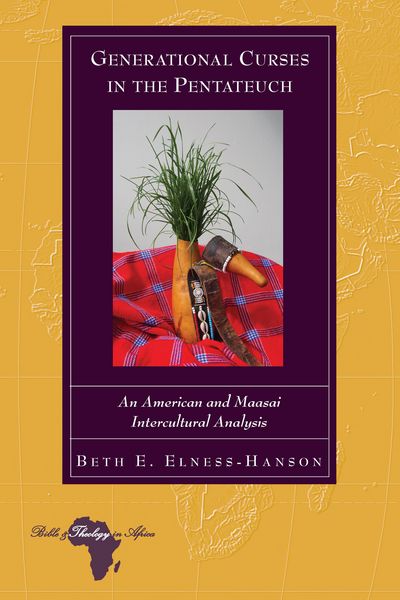
Generational Curses in the Pentateuch An American and Maasai Intercultural Analysis
-
Form:Einzelkauf Download
-
Sprache:Englisch
-
eBook Format:PDF
- PDF 112,99 € ausgewählt
- ePUB 112,99 €
112,99 €
inkl. gesetzl. MwSt.Beschreibung
Produktdetails
Format
Kopierschutz
Ja
Family Sharing
Nein
Text-to-Speech
Nein
Erscheinungsdatum
04.10.2017
Verlag
Peter Lang Inc., International Academic PublishersSeitenzahl
310 (Printausgabe)
Dateigröße
2445 KB
Auflage
1. Auflage
Sprache
Englisch
EAN
9781433141225
Although the demographics of World Christianity demonstrate a population shift to the Global South, especially in Sub-Saharan Africa, the preponderance of biblical scholarship continues to be dominated by Western scholars in pursuit of their contextual questions that are influenced by an Enlightenment-oriented worldview. Unfortunately, nascent methodologies used to bridge this chasm often continue to marginalize indigenous voices. In contradistinction, Beth E. Elness-Hanson's research challenges biblical scholars to engage stronger methods for dialogue with global voices, as well as encourages Majority World scholars to share their perspectives with the West.
Elness-Hanson's fundamental question is: How do we more fully understand the "generational curses" in the Pentateuch? The phrase, "visiting the iniquity of the fathers on the children to the third and the fourth generation," appears four times in the Pentateuch: Exod 20:4-6; Exod 34:6-7; Num 14:18; and Deut 5:8-10. While generational curses remain prevalent within the Maasai worldview in East Africa, an Enlightenment-influenced worldview diminishes curses as a phenomenon. However, fuller understandings develop as we listen and learn from each other.
This research develops a theoretical framework from Hans-Georg Gadamer's "fusion of horizons" and applies it through Ellen Herda's anthropological protocol of "participatory inquiry." The resulting dialogue with Maasai theologians in Tanzania, builds bridges of understanding across cultures. Elness-Hanson's intercultural analysis of American and Maasai interpretations of the Pentateuchal texts on the generational curses demonstrates that intercultural dialogues increase understandings, which otherwise are limited by one worldview.
Kundinnen und Kunden meinen
Verfassen Sie die erste Bewertung zu diesem Artikel
Helfen Sie anderen Kund*innen durch Ihre Meinung
Kurze Frage zu unserer Seite
Vielen Dank für dein Feedback
Wir nutzen dein Feedback, um unsere Produktseiten zu verbessern. Bitte habe Verständnis, dass wir dir keine Rückmeldung geben können. Falls du Kontakt mit uns aufnehmen möchtest, kannst du dich aber gerne an unseren Kund*innenservice wenden.
zum Kundenservice