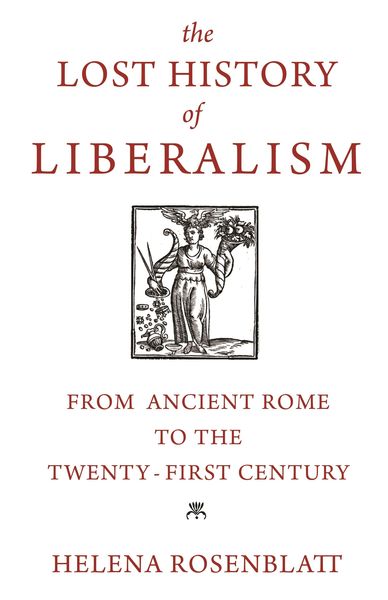
The Lost History of Liberalism From Ancient Rome to the Twenty-First Century
-
- Taschenbuch
- eBook ausgewählt
-
Form:Einzelkauf Download
-
Sprache:Englisch
2,99 €
inkl. gesetzl. MwSt.Beschreibung
Produktdetails
Format
ePUB
Kopierschutz
Nein
Family Sharing
Nein
Text-to-Speech
Ja
Erscheinungsdatum
11.09.2018
Verlag
United Methodist Publishing HouseSeitenzahl
368 (Printausgabe)
Dateigröße
974 KB
Sprache
Englisch
EAN
9780691184135
The changing face of the liberal creed from the ancient world to today
The Lost History of Liberalism challenges our most basic assumptions about a political creed that has become a rallying cry-and a term of derision-in today's increasingly divided public square. Taking readers from ancient Rome to today, Helena Rosenblatt traces the evolution of the words "liberal" and "liberalism," revealing the heated debates that have taken place over their meaning.
In this timely and provocative book, Rosenblatt debunks the popular myth of liberalism as a uniquely Anglo-American tradition centered on individual rights. She shows that it was the French Revolution that gave birth to liberalism and Germans who transformed it. Only in the mid-twentieth century did the concept become widely known in the United States-and then, as now, its meaning was hotly debated. Liberals were originally moralists at heart. They believed in the power of religion to reform society, emphasized the sanctity of the family, and never spoke of rights without speaking of duties. It was only during the Cold War and America's growing world hegemony that liberalism was refashioned into an American ideology focused so strongly on individual freedoms.
Today, we still can't seem to agree on liberalism's meaning. In the United States, a "liberal" is someone who advocates big government, while in France, big government is contrary to "liberalism." Political debates become befuddled because of semantic and conceptual confusion. The Lost History of Liberalism sets the record straight on a core tenet of today's political conversation and lays the foundations for a more constructive discussion about the future of liberal democracy.
Kundinnen und Kunden meinen
Verfassen Sie die erste Bewertung zu diesem Artikel
Helfen Sie anderen Kund*innen durch Ihre Meinung
Kurze Frage zu unserer Seite
Vielen Dank für dein Feedback
Wir nutzen dein Feedback, um unsere Produktseiten zu verbessern. Bitte habe Verständnis, dass wir dir keine Rückmeldung geben können. Falls du Kontakt mit uns aufnehmen möchtest, kannst du dich aber gerne an unseren Kund*innenservice wenden.
zum Kundenservice