KI-Beratung Beta

Produktbild: Shakespeare and Contemporary Irish Literature

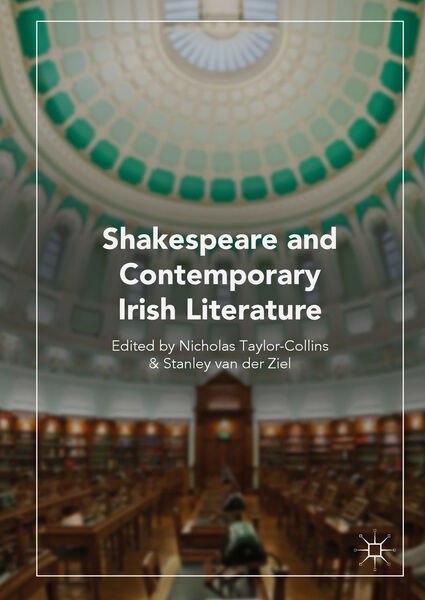
Shakespeare and Contemporary Irish Literature

97,99 €

inkl. gesetzl. MwSt., Versandkostenfrei


Beschreibung

This book shows that Shakespeare continues to influence contemporary Irish literature, through postcolonial, dramaturgical, epistemological and narratological means. International critics examine a range of contemporary writers including Eavan Boland, Marina Carr, Brian Friel, Seamus Heaney, John McGahern,...

Beschreibung

This book shows that Shakespeare continues to influence contemporary Irish literature, through postcolonial, dramaturgical, epistemological and narratological means. International critics examine a range of contemporary writers including Eavan Boland, Marina Carr, Brian Friel, Seamus Heaney, John McGahern, Frank McGuinness, Derek Mahon and Paul Muldoon, and explore Shakespeare’s tragedies, histories and comedies, as well as his sonnets. Together, the chapters demonstrate that Shakespeare continues to exert a pressure on Irish writing into the twenty-first century, sometimes because of and sometimes in spite of the fact that his writing is inextricably tied to the Elizabethan and Jacobean colonization of Ireland. Contemporary Irish writers appropriate, adopt, adapt and strategize through their engagements with Shakespeare, and indeed through his own engagement with the world around him four hundred years ago.

Portrait


Nicholas Taylor-Collins
is Lecturer in English Literature at Swansea University, UK, where he teaches on early modern, twentieth- and twenty-first literature. He received his PhD from the University of Warwick, having also studied at The University of Manchester. His research focuses widely both on early modern English literature, and modern and contemporary Irish literature, with publications on Shakespeare, James Joyce and John McGahern.
Stanley van der Ziel
is Lecturer in English at Maynooth University, Ireland, where he teaches twentieth- and twenty-first-century British and Irish literature. His publications include numerous articles on Irish authors, from Yeats to Joseph O’Neill. He is the author of
John McGahern and the Imagination of Tradition
(2016), and the editor of two editions of McGahern’s works:
Love of the World: Essays
(2009) and
The Rockingham Shoot and Other Dramatic Writings
(2018).

Produktdetails

Einband

Gebundene Ausgabe

Erscheinungsdatum

28.09.2018

Abbildungen

XIII, 258 p.

Herausgeber Nicholas Taylor-Collins + weitere

Produktdetails

Einband

Gebundene Ausgabe

Erscheinungsdatum

28.09.2018

Abbildungen

XIII, 258 p.

Herausgeber
Verlag Springer
Seitenzahl

258

Maße (L/B/H)

21,6/15,3/2 cm

Gewicht

429 g

Auflage

1st ed. 2018

Sprache

Englisch

ISBN

978-3-319-95923-8

Herstelleradresse

Springer-Verlag GmbH
Europaplatz 3
69115 Heidelberg
DE

Email: ProductSafety@springernature.com

Noch keine Bewertungen vorhanden

Verfassen Sie die erste Bewertung zu diesem Artikel

Helfen Sie anderen Kundinnen und Kunden durch Ihre Meinung.

Kundinnen und Kunden meinen

Bewertungen (0)

  • Produktbild: Shakespeare and Contemporary Irish Literature

  • 1. Introduction: Shakespeare, Ireland and the Contemporary; Nicholas Taylor-Collins and Stanley van der Ziel.- 2. ‘memory like mitigation’: Heaney, Shakespeare and Ireland; Rui Carvalho Homem.- 3. ‘an inconstant stay’: Paul Muldoon, Seamus Heaney and the Ends of Shakespeare’s Sonnets; Tom Walker.- 4. Moving the Statue: Myths of Motherhood in Eavan Boland, Shakespeare and Early Modern Culture; Nicholas Taylor-Collins.- 5. ‘This rough magic’: Late Derek Mahon and Late Shakespeare; Sarah Bennett.- 6. What Ish My language? The Politics of Translation in Brian Friel’s
    Translations
    and Shakespeare’s Henry Plays; Anthony Roche.- 7. Conjuring Ghosts: Shakespeare, Dramaturgy and the Plays of Frank McGuinness; Anne Fogarty.- 8. ‘Filial ingratitude’: Marina Carr’s Bond with Shakespeare; Willy Maley and Stanley van der Ziel.- 9. McGahern’s
    Lear
    , or: Tragedy in the Barracks; Stanley van derZiel.- 10. Performing Prospero: Intertextual Strategies in John Banville’s
    Ghosts
    ; Elke D’hoker.