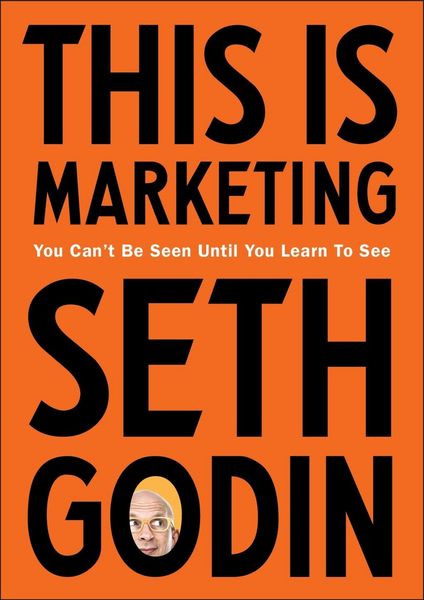
Produktbild: This is Marketing

This is Marketing You Can't Be Seen Until You Learn To See

3

14,99 €

inkl. gesetzl. MwSt.

Beschreibung

Produktdetails

Format

ePUB

Kopierschutz

Ja

Family Sharing

Nein

Text-to-Speech

Ja

Verkaufsrang

71677

Erscheinungsdatum

13.11.2018

Verlag

Penguin Books Ltd

Seitenzahl

288 (Printausgabe)

Dateigröße

1825 KB

Sprache

Englisch

EAN

9780241370155

Beschreibung

Rezension

Seth Godin is a superstar in the marketing world. This is Marketing is interesting and useful for anyone who wants an insight into how, and why, we buy things or change our habits in any way

Produktdetails

Format

ePUB

eBooks im ePUB-Format erlauben eine dynamische Anpassung des Inhalts an die jeweilige Display-Größe des Lesegeräts. Das Format eignet sich daher besonders für das Lesen auf mobilen Geräten, wie z.B. Ihrem tolino, Tablets oder Smartphones.

Kopierschutz

Ja

Zum Lesen dieses eBooks auf Geräten der tolino Familie sowie auf sonstigen eReadern und am PC benötigen Sie eine Adobe ID. Weitere Hinweise zum Lesen von kopiergeschützten eBooks finden Sie unter Hilfe/Downloads.

Family Sharing

Nein

Mit Family Sharing können Sie eBooks innerhalb Ihrer Familie (max. sechs Mitglieder im gleichen Haushalt) teilen. Sie entscheiden selbst, welches Buch Sie mit welchem Familienmitglied teilen möchten. Auch das parallele Lesen durch verschiedene Familienmitglieder ist durch Family Sharing möglich. Um eBooks zu teilen oder geteilt zu bekommen, muss jedes Familienmitglied ein Konto bei Thalia oder einem anderen tolino-Buchhändler haben. Weitere Informationen finden Sie unter Hilfe/Family-Sharing.

Text-to-Speech

Ja

Bedeutet Ihnen Stimme mehr als Text? Mit der Funktion Text-to-Speech können Sie sich im tolino webReader und in der aktuellen Thalia – Lesen & Hören App das eBook vorlesen lassen. Weitere Informationen finden Sie unter Hilfe/Text-to-Speech.

Barrierefreiheit

  • navigierbares Inhaltsverzeichnis
  • alle Texte können angepasst werden
  • logische Lesereihenfolge eingehalten
  • hoher Kontrast zwischen Text und Hintergrund
  • keine Vorlesefunktionen des Lesesystems deaktiviert

Verkaufsrang

71677

Erscheinungsdatum

13.11.2018

Verlag

Penguin Books Ltd

Seitenzahl

288 (Printausgabe)

Dateigröße

1825 KB

Sprache

Englisch

EAN

9780241370155

Kundinnen und Kunden meinen

3 Bewertungen

Informationen zu Bewertungen

Zur Abgabe einer Bewertung ist eine Anmeldung im Konto notwendig. Die Authentizität der Bewertungen wird von uns nicht überprüft. Wir behalten uns vor, Bewertungstexte, die unseren Richtlinien widersprechen, entsprechend zu kürzen oder zu löschen.

Die Bewertungen sind nach Format, Anzahl Sterne und Datum sortiert.

5 Sterne

4 Sterne

(0)

3 Sterne

(0)

2 Sterne

(0)

1 Sterne

(0)

Book Review

Sineha S. aus Zürich am 11.12.2025

Bewertungsnummer: 2675578

Bewertet: Buch (Taschenbuch)

Seth Godin’s This Is Marketing is a book that approaches marketing less as a set of techniques and more as a way of understanding people. Reading it as a student in personal branding and digital marketing, I noticed right away that Godin is not interested in quick hacks or flashy tactics. Instead, he argues that effective marketing begins with empathy and the willingness to truly see the audience you want to serve. This mindset feels refreshing, especially in a digital environment that often prioritizes algorithms and performance metrics over genuine human connection. At the same time, the book’s philosophical tone sometimes leaves readers wanting more concrete guidance, which can be frustrating for students who are still learning how to apply these ideas in practice. Godin’s central point is that marketing is not about persuading everyone but about finding the smallest viable audience and creating meaningful change for them. For personal branding, this idea matters more than many students realize. It suggests that building a strong professional presence is not about appealing to the entire internet but about showing up for the specific group that actually benefits from what you offer. Godin encourages readers to ask better questions about what people need, how they feel and why they might choose one brand over another. This approach makes marketing feel less like self promotion and more like a service, which is a helpful shift for students who may be uncomfortable with the performative side of branding. Still, while Godin’s ideas are inspiring, they sometimes feel removed from the messy realities of digital platforms. He describes marketing as a long term effort based on trust and relevance, yet many online environments reward speed, visibility and constant content creation. Students learning digital marketing quickly notice that trends and algorithms can overshadow thoughtful strategy. Godin acknowledges these tensions, but he does not always offer clear ways to navigate them. In this sense, the book can seem idealistic. His emphasis on storytelling, belonging and emotional resonance is meaningful, but it does not fully address the competitive pressure young professionals face when trying to stand out in saturated spaces. Another aspect worth reflecting on is Godin’s focus on internal transformation. He repeatedly argues that marketers must shift their mindset before they can influence others. This can be empowering because it encourages readers to think deeply about their values and the impact they want to have. However, similar to James Clear’s approach in Atomic Habits, the emphasis on personal responsibility sometimes downplays external barriers. Students building a personal brand may be committed to authenticity and audience understanding, yet still struggle with limited visibility or lack of resources. Godin’s framework offers a strong ethical compass, but it does not always provide enough tactical direction for overcoming practical obstacles. Even with these limitations, the book contains several ideas that feel directly useful for students. The concept of tension, for instance, helps explain why people make decisions, reminding marketers that change only happens when someone feels motivated to move from where they are to where they want to be. His discussions about signals, status and cultural meaning also connect closely to how people behave on social media. These insights help students think more strategically about positioning themselves and crafting messages that resonate rather than simply reach. In conclusion, This Is Marketing is a thoughtful and provocative book that challenges traditional assumptions about what marketing is supposed to be. For students in personal branding and digital marketing, it provides a valuable reminder that understanding people matters more than chasing attention. While the book is at times abstract and occasionally too idealistic for the fast paced digital world, its core message that marketing begins with empathy, clarity and purpose is both relevant and inspiring. It encourages readers to approach branding as a long term relationship rather than a short term performance, offering a meaningful foundation even if some of its practical applications require further interpretation.

Book Review

Sineha S. aus Zürich am 11.12.2025
Bewertungsnummer: 2675578
Bewertet: Buch (Taschenbuch)

Seth Godin’s This Is Marketing is a book that approaches marketing less as a set of techniques and more as a way of understanding people. Reading it as a student in personal branding and digital marketing, I noticed right away that Godin is not interested in quick hacks or flashy tactics. Instead, he argues that effective marketing begins with empathy and the willingness to truly see the audience you want to serve. This mindset feels refreshing, especially in a digital environment that often prioritizes algorithms and performance metrics over genuine human connection. At the same time, the book’s philosophical tone sometimes leaves readers wanting more concrete guidance, which can be frustrating for students who are still learning how to apply these ideas in practice. Godin’s central point is that marketing is not about persuading everyone but about finding the smallest viable audience and creating meaningful change for them. For personal branding, this idea matters more than many students realize. It suggests that building a strong professional presence is not about appealing to the entire internet but about showing up for the specific group that actually benefits from what you offer. Godin encourages readers to ask better questions about what people need, how they feel and why they might choose one brand over another. This approach makes marketing feel less like self promotion and more like a service, which is a helpful shift for students who may be uncomfortable with the performative side of branding. Still, while Godin’s ideas are inspiring, they sometimes feel removed from the messy realities of digital platforms. He describes marketing as a long term effort based on trust and relevance, yet many online environments reward speed, visibility and constant content creation. Students learning digital marketing quickly notice that trends and algorithms can overshadow thoughtful strategy. Godin acknowledges these tensions, but he does not always offer clear ways to navigate them. In this sense, the book can seem idealistic. His emphasis on storytelling, belonging and emotional resonance is meaningful, but it does not fully address the competitive pressure young professionals face when trying to stand out in saturated spaces. Another aspect worth reflecting on is Godin’s focus on internal transformation. He repeatedly argues that marketers must shift their mindset before they can influence others. This can be empowering because it encourages readers to think deeply about their values and the impact they want to have. However, similar to James Clear’s approach in Atomic Habits, the emphasis on personal responsibility sometimes downplays external barriers. Students building a personal brand may be committed to authenticity and audience understanding, yet still struggle with limited visibility or lack of resources. Godin’s framework offers a strong ethical compass, but it does not always provide enough tactical direction for overcoming practical obstacles. Even with these limitations, the book contains several ideas that feel directly useful for students. The concept of tension, for instance, helps explain why people make decisions, reminding marketers that change only happens when someone feels motivated to move from where they are to where they want to be. His discussions about signals, status and cultural meaning also connect closely to how people behave on social media. These insights help students think more strategically about positioning themselves and crafting messages that resonate rather than simply reach. In conclusion, This Is Marketing is a thoughtful and provocative book that challenges traditional assumptions about what marketing is supposed to be. For students in personal branding and digital marketing, it provides a valuable reminder that understanding people matters more than chasing attention. While the book is at times abstract and occasionally too idealistic for the fast paced digital world, its core message that marketing begins with empathy, clarity and purpose is both relevant and inspiring. It encourages readers to approach branding as a long term relationship rather than a short term performance, offering a meaningful foundation even if some of its practical applications require further interpretation.

It is about helping people - D.S.

Bewertung am 10.11.2025

Bewertungsnummer: 2650764

Bewertet: Buch (Taschenbuch)

Seth Godin’s This Is Marketing is a book about how to make real change through communication, empathy, and understanding people. It is not a typical marketing manual about advertising or selling. Instead, Godin explains that marketing means helping people and creating something valuable for a small group that truly cares. He contends that successful marketing focuses on serving a narrow group deeply rather than reaching everyone superficially. The book encourages readers to see marketing as a «generous» act rather than a way to manipulate customers. The main idea is that marketers should focus on what Godin calls the “smallest viable audience.” This means finding a small group of people who share similar values or needs and serving them deeply. Instead of trying to please everyone, the goal is to make something meaningful for a few people and let them spread the message. Godin also talks about how belonging and identity influence our choices. He says that people act based on what people “like us” do. This means successful marketing is about connecting with people’s beliefs and emotions, not just showing features or prices. Another important topic in the book is the role of trust. Godin argues that good marketing takes time. When we earn people’s permission to talk to them—through respect, honesty, and consistency—they start to listen. He calls this “permission marketing.” He also emphasizes the power of storytelling. A good story helps people see themselves differently and feel part of something larger. For Godin, marketing is not about shouting the loudest but about making meaningful connections. One of the best things about This Is Marketing is its moral and human tone. It asks important questions about responsibility, empathy, and authenticity in business. It shows that marketing can be a positive force if it is done with care. However, the book sometimes feels abstract. It does not give detailed steps or data, so readers looking for technical marketing strategies might find it too philosophical. In this sense, This Is Marketing functions more as an inspiring manifesto than a manual. Still, its ideas are very relevant today, especially in a world full of fake news and aggressive advertising. This perspective resonates strongly with modern digital culture, where authenticity and trust outweigh polished advertising. Personally, I liked how the book changed the way I think about communication. It made me realize that good marketing is not about being popular but about being useful. It also showed me that it is better to speak deeply to a small group than to try to talk to everyone. However, I notice that many advertisements in Switzerland are still very impersonal and try to appeal to everyone. I feel that in the end, they reach no one, because they are too general and lack real meaning. We could learn something from the UK, who often make funny and bold advertisements that really stand out!

It is about helping people - D.S.

Bewertung am 10.11.2025
Bewertungsnummer: 2650764
Bewertet: Buch (Taschenbuch)

Seth Godin’s This Is Marketing is a book about how to make real change through communication, empathy, and understanding people. It is not a typical marketing manual about advertising or selling. Instead, Godin explains that marketing means helping people and creating something valuable for a small group that truly cares. He contends that successful marketing focuses on serving a narrow group deeply rather than reaching everyone superficially. The book encourages readers to see marketing as a «generous» act rather than a way to manipulate customers. The main idea is that marketers should focus on what Godin calls the “smallest viable audience.” This means finding a small group of people who share similar values or needs and serving them deeply. Instead of trying to please everyone, the goal is to make something meaningful for a few people and let them spread the message. Godin also talks about how belonging and identity influence our choices. He says that people act based on what people “like us” do. This means successful marketing is about connecting with people’s beliefs and emotions, not just showing features or prices. Another important topic in the book is the role of trust. Godin argues that good marketing takes time. When we earn people’s permission to talk to them—through respect, honesty, and consistency—they start to listen. He calls this “permission marketing.” He also emphasizes the power of storytelling. A good story helps people see themselves differently and feel part of something larger. For Godin, marketing is not about shouting the loudest but about making meaningful connections. One of the best things about This Is Marketing is its moral and human tone. It asks important questions about responsibility, empathy, and authenticity in business. It shows that marketing can be a positive force if it is done with care. However, the book sometimes feels abstract. It does not give detailed steps or data, so readers looking for technical marketing strategies might find it too philosophical. In this sense, This Is Marketing functions more as an inspiring manifesto than a manual. Still, its ideas are very relevant today, especially in a world full of fake news and aggressive advertising. This perspective resonates strongly with modern digital culture, where authenticity and trust outweigh polished advertising. Personally, I liked how the book changed the way I think about communication. It made me realize that good marketing is not about being popular but about being useful. It also showed me that it is better to speak deeply to a small group than to try to talk to everyone. However, I notice that many advertisements in Switzerland are still very impersonal and try to appeal to everyone. I feel that in the end, they reach no one, because they are too general and lack real meaning. We could learn something from the UK, who often make funny and bold advertisements that really stand out!

Kundinnen und Kunden meinen

This is Marketing

von Seth Godin

0 Bewertungen filtern

Weitere Artikel findest du in

Die Leseprobe wird geladen.
  • Produktbild: This is Marketing