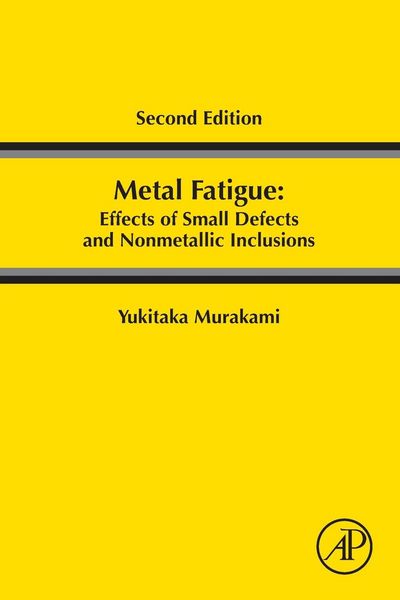
Metal Fatigue Effects of Small Defects and Nonmetallic Inclusions
-
- Hardcover
- Taschenbuch ausgewählt
- eBook
-
Sprache:Englisch
229,99 €
inkl. gesetzl. MwSt.,
Beschreibung
Produktdetails
Einband
Taschenbuch
Erscheinungsdatum
18.06.2019
Verlag
Elsevier Science & TechnologySeitenzahl
760
Maße (L/B/H)
22,8/15,3/4 cm
Gewicht
1197 g
Auflage
2. Auflage
Sprache
Englisch
ISBN
978-0-12-813876-2
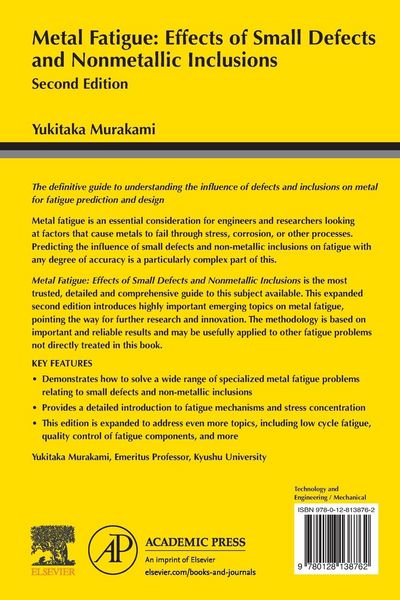
Metal fatigue is an essential consideration for engineers and researchers looking at factors that cause metals to fail through stress, corrosion, or other processes. Predicting the influence of small defects and non-metallic inclusions on fatigue with any degree of accuracy is a particularly complex part of this.
Metal Fatigue: Effects of Small Defects and Nonmetallic Inclusions is the most trusted, detailed and comprehensive guide to this subject available. This expanded second edition introduces highly important emerging topics on metal fatigue, pointing the way for further research and innovation. The methodology is based on important and reliable results and may be usefully applied to other fatigue problems not directly treated in this book.
Noch keine Bewertungen vorhanden
Verfassen Sie die erste Bewertung zu diesem Artikel
Helfen Sie anderen Kundinnen und Kunden durch Ihre Meinung.
Kurze Frage zu unserer Seite
Vielen Dank für dein Feedback
Wir nutzen dein Feedback, um unsere Produktseiten zu verbessern. Bitte habe Verständnis, dass wir dir keine Rückmeldung geben können. Falls du Kontakt mit uns aufnehmen möchtest, kannst du dich aber gerne an unseren Kund*innenservice wenden.
zum Kundenservice