Beschreibung
Produktdetails
Einband
Gebundene Ausgabe
Erscheinungsdatum
10.01.2019
Verlag
Oxford University PressSeitenzahl
372
Maße (L/B/H)
24/16,1/2,5 cm
Gewicht
712 g
Sprache
Englisch
ISBN
978-0-19-882942-3
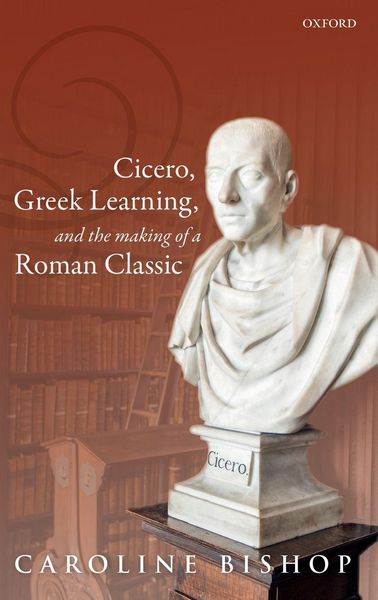
The Roman statesman, orator, and author Marcus Tullius Cicero is the embodiment of a classic: his works have been read continuously from antiquity to the present, his style is considered the model for classical Latin, and his influence on Western ideas about the value of humanistic pursuits is both deep and profound. However, despite the significance of subsequent reception in ensuring his canonical status, Cicero, Greek Learning, and the Making of a Roman Classic demonstrates that no one is more responsible for Cicero's transformation into a classic than Cicero himself, and that in his literary works he laid the groundwork for the ways in which he is still remembered today.
The volume presents a new way of understanding Cicero's career as an author by situating his textual production within the context of the growth of Greek classicism: the movement had begun to flourish shortly before his lifetime and he clearly grasped its benefits both for himself and for Roman literature more broadly. By strategically adapting classic texts from the Greek world, and incorporating into his adaptations the interpretations of the Hellenistic philosophers, poets, rhetoricians, and scientists who had helped enshrine those works as classics, he could envision and create texts with classical authority for a parallel Roman canon.
Ranging across a variety of genres - including philosophy, rhetoric, oratory, poetry, and letters - this close study of Cicero's literary works moves from his early translation of Aratus' poetry (and its later reappearance through self-quotation) to Platonizing philosophy, Aristotelian rhetoric, Demosthenic oratory, and even a planned Greek-style letter collection. Juxtaposing incisive analysis of how Cicero consciously adopted classical Greek writers as models and predecessors with detailed accounts of the reception of those figures by Greek scholars of the Hellenistic period, the volume not only offers ground-breaking new insights into Cicero's ascension to canonical status, but also a salutary new account of Greek intellectual life and its effect on Roman literature.
The volume presents a new way of understanding Cicero's career as an author by situating his textual production within the context of the growth of Greek classicism: the movement had begun to flourish shortly before his lifetime and he clearly grasped its benefits both for himself and for Roman literature more broadly. By strategically adapting classic texts from the Greek world, and incorporating into his adaptations the interpretations of the Hellenistic philosophers, poets, rhetoricians, and scientists who had helped enshrine those works as classics, he could envision and create texts with classical authority for a parallel Roman canon.
Ranging across a variety of genres - including philosophy, rhetoric, oratory, poetry, and letters - this close study of Cicero's literary works moves from his early translation of Aratus' poetry (and its later reappearance through self-quotation) to Platonizing philosophy, Aristotelian rhetoric, Demosthenic oratory, and even a planned Greek-style letter collection. Juxtaposing incisive analysis of how Cicero consciously adopted classical Greek writers as models and predecessors with detailed accounts of the reception of those figures by Greek scholars of the Hellenistic period, the volume not only offers ground-breaking new insights into Cicero's ascension to canonical status, but also a salutary new account of Greek intellectual life and its effect on Roman literature.
Noch keine Bewertungen vorhanden
Verfassen Sie die erste Bewertung zu diesem Artikel
Helfen Sie anderen Kundinnen und Kunden durch Ihre Meinung.
Kurze Frage zu unserer Seite
Vielen Dank für dein Feedback
Wir nutzen dein Feedback, um unsere Produktseiten zu verbessern. Bitte habe Verständnis, dass wir dir keine Rückmeldung geben können. Falls du Kontakt mit uns aufnehmen möchtest, kannst du dich aber gerne an unseren Kund*innenservice wenden.
zum Kundenservice