KI-Beratung Beta

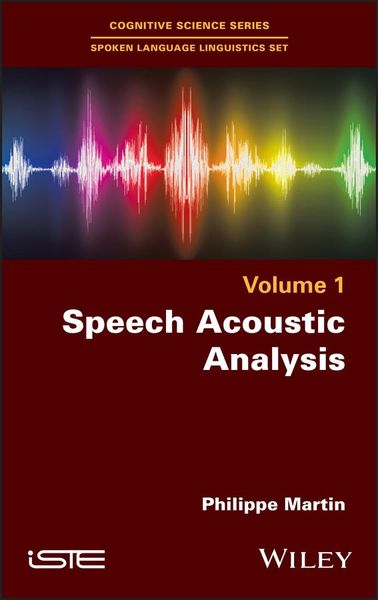
Produktbild: Speech Acoustic Analysis

Speech Acoustic Analysis

168,99 €

inkl. gesetzl. MwSt., Versandkostenfrei


Beschreibung

The text sets out in simple and accessible terms the various methods of acoustic analysis of speech, placing them in their historical context, allowing a better understanding of the mathematical and technical solutions adopted today in phonetics and experimental phonology.

Without mathematical complications,...

Beschreibung

The text sets out in simple and accessible terms the various methods of acoustic analysis of speech, placing them in their historical context, allowing a better understanding of the mathematical and technical solutions adopted today in phonetics and experimental phonology.

Without mathematical complications, the operating bases of the many speech analysis software currently available are exposed so that everyone can understand the limits and avoid errors and misinterpretations in their implementation.

Produktdetails

Einband

Gebundene Ausgabe

Erscheinungsdatum

17.02.2021

Verlag ISTE Ltd and John Wiley & Sons Inc
Seitenzahl

208

Produktdetails

Einband

Gebundene Ausgabe

Erscheinungsdatum

17.02.2021

Verlag ISTE Ltd and John Wiley & Sons Inc
Seitenzahl

208

Maße (L/B/H)

24,1/16/1,8 cm

Gewicht

499 g

Sprache

Englisch

ISBN

978-1-78630-319-6

Herstelleradresse

Libri GmbH
Europaallee 1
36244 Bad Hersfeld
DE

Email: gpsr@libri.de

Noch keine Bewertungen vorhanden

Verfassen Sie die erste Bewertung zu diesem Artikel

Helfen Sie anderen Kundinnen und Kunden durch Ihre Meinung.

Kundinnen und Kunden meinen

Bewertungen (0)

Die Leseprobe wird geladen.
  • Produktbild: Speech Acoustic Analysis
  • 1. The sound

    2. Pure sound and real

    3. In the good old days

    4. From the mechanism of phonation to the speech signal

    5. Fourier has arrived: the harmonic representation

    6. Prony has also arrived: the source-filter model

    7. Fourier, Prony and speech analysis

    8. Wavelet analysis

    9. Laryngeal frequency and fundamental frequency

    10. Return to sources: from the speech signal to phonation

    11. Articulatory models

    12. Reading spectrograms

    13. Morphing prosodic

    14. Automatic alignment

    15. Synthesis of speech

    16. Machines and algorithms

    17. Practical work

    18. Appendices