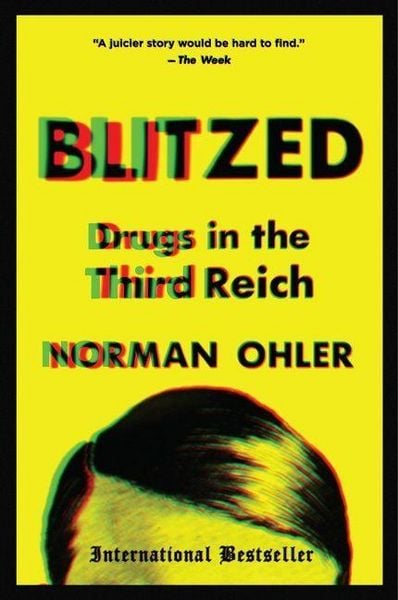
Blitzed Drugs in the Third Reich
-
- Taschenbuch ausgewählt
- eBook
-
Sprache:Englisch
-
Verlag:Harper Collins (US)
19,99 €
UVP
22,50 €
inkl. gesetzl. MwSt.,
Beschreibung
Produktdetails
Einband
Taschenbuch
Erscheinungsdatum
01.03.2018
Abbildungen
46 b/w images throughout
Verlag
Harper Collins (US)Seitenzahl
304
Maße (L/B/H)
20,5/13,6/2,3 cm
Gewicht
305 g
Sprache
Englisch
ISBN
978-1-328-91534-4
A New York Times bestseller, Norman Ohler's Blitzed is a "fascinating, engrossing, often dark history of drug use in the Third Reich" (Washington Post).
The Nazi regime preached an ideology of physical, mental, and moral purity. Yet as Norman Ohler reveals in this gripping history, the Third Reich was saturated with drugs: cocaine, opiates, and, most of all, methamphetamines, which were consumed by everyone from factory workers to housewives to German soldiers.
In fact, troops were encouraged, and in some cases ordered, to take rations of a form of crystal meth?the elevated energy and feelings of invincibility associated with the high even help to account for the breakneck invasion that sealed the fall of France in 1940, as well as other German military victories. Hitler himself became increasingly dependent on injections of a cocktail of drugs?ultimately including Eukodal, a cousin of heroin?administered by his personal doctor.
Thoroughly researched and rivetingly readable, Blitzed throws light on a history that, until now, has remained in the shadows.
"Delightfully nuts."?The New Yorker
Noch keine Bewertungen vorhanden
Verfassen Sie die erste Bewertung zu diesem Artikel
Helfen Sie anderen Kundinnen und Kunden durch Ihre Meinung.
Kurze Frage zu unserer Seite
Vielen Dank für dein Feedback
Wir nutzen dein Feedback, um unsere Produktseiten zu verbessern. Bitte habe Verständnis, dass wir dir keine Rückmeldung geben können. Falls du Kontakt mit uns aufnehmen möchtest, kannst du dich aber gerne an unseren Kund*innenservice wenden.
zum Kundenservice