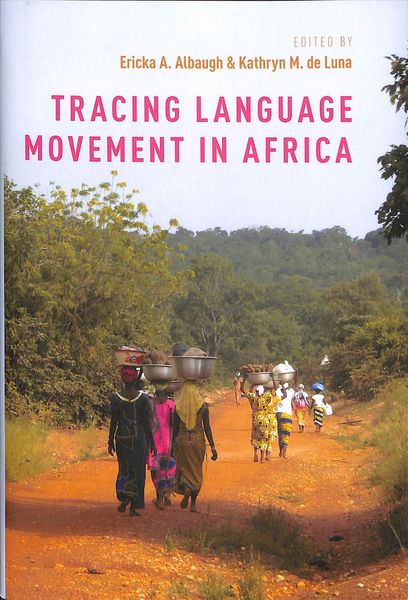
Tracing Language Movement in Africa
207,99 €
inkl. gesetzl. MwSt.,
Beschreibung
Produktdetails
Einband
Gebundene Ausgabe
Erscheinungsdatum
07.02.2018
Herausgeber
Albaugh Ericka A. + weitereVerlag
Oxford AcademicSeitenzahl
444
Maße (L/B/H)
24/16,1/2,8 cm
Gewicht
828 g
Sprache
Englisch
ISBN
978-0-19-065754-3
The great diversity of ethnicities and languages in Africa encourages a vision of Africa as a fragmented continent, with language maps only perpetuating this vision by drawing discrete language groups. In reality, however, most people can communicate with most others within and across linguistic boundaries, even if not in languages taught or learned in schools. Many disciplines have looked carefully at language movement and change on the continent, but their lack of interaction has prevented the emergence of a cohesive picture of African languages. Tracing Language Movement in Africa gathers eighteen scholars together to offer a truly multidisciplinary representation of language in Africa, combining insights from history, archaeology, religion, linguistics, political science, and philosophy. The resulting volume illuminates commonalities and distinctions in these disciplines' understanding of language change and movement in Africa. The volume is empirical -- aiming to represent language more accurately on the continent -- as well as theoretical. It identifies the theories that each discipline uses to make sense of language movement in Africa in plain terms and highlights the themes that cut across all disciplines: how scholars use data, understand boundaries, represent change, and conceptualize power. The volume is organized to reflect differing conceptions of language that arise from its discipline-specific contributions: that is, tendencies to study changes that consolidate language or those that splinter it, viewing languages as whole or in part. Each contribution includes a short explanation of a discipline's theoretical and methodological approaches to language movement and change to ensure that the chapters are accessible to non-specialists, followed by an illustrative empirical case study. This volume will inspire multidisciplinary conversations around the study of language change in Africa, opening new interdisciplinary dialogue and spurring scholars to adapt the questions, data, and method of other disciplines to the problems that animate their own fields.
Noch keine Bewertungen vorhanden
Verfassen Sie die erste Bewertung zu diesem Artikel
Helfen Sie anderen Kundinnen und Kunden durch Ihre Meinung.
Kurze Frage zu unserer Seite
Vielen Dank für dein Feedback
Wir nutzen dein Feedback, um unsere Produktseiten zu verbessern. Bitte habe Verständnis, dass wir dir keine Rückmeldung geben können. Falls du Kontakt mit uns aufnehmen möchtest, kannst du dich aber gerne an unseren Kund*innenservice wenden.
zum Kundenservice