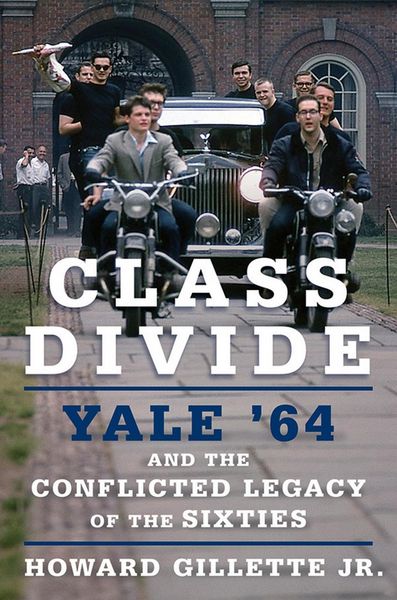
Class Divide Yale '64 and the Conflicted Legacy of the Sixties
-
Form:Einzelkauf Download
-
Sprache:Englisch
-
eBook Format:ePUB
- PDF 165,95 €
- ePUB 14,49 € ausgewählt
14,49 €
inkl. gesetzl. MwSt.Beschreibung
Produktdetails
Format
ePUB
Kopierschutz
Nein
Family Sharing
Nein
Text-to-Speech
Ja
Erscheinungsdatum
21.05.2015
Verlag
Cornell University PressSeitenzahl
312 (Printausgabe)
Dateigröße
2504 KB
Sprache
Englisch
EAN
9780801456114
Members of the Yale College class of 1964-the first class to matriculate in the 1960s-were poised to take up the positions of leadership that typically followed an Ivy League education. Their mission gained special urgency from the inspiration of John F. Kennedy's presidency and the civil rights movement as it moved north. Ultimately these men proved successful in traditional terms-in the professions, in politics, and in philanthropy-and yet something was different. Challenged by the issues that would define a new era, their lives took a number of unexpected turns. Instead of confirming the triumphal perspective they grew up with in the years after World War II, they embraced new and often conflicting ideas. In the process the group splintered.In Class Divide, Howard Gillette Jr. draws particularly on more than one hundred interviews with representative members of the Yale class of '64 to examine how they were challenged by the issues that would define the 1960s: civil rights, the power of the state at home and abroad, sexual mores and personal liberty, religious faith, and social responsibility. Among those whose life courses Gillette follows from their formative years in college through the years after graduation are the politicians Joe Lieberman and John Ashcroft, the Harvard humanities professor Stephen Greenblatt, the environmental leader Gus Speth, and the civil rights activist Stephen Bingham.Although their Ivy League education gave them access to positions in the national elite, the members of Yale '64 nonetheless were too divided to be part of a unified leadership class. Try as they might, they found it impossible to shape a new consensus to replace the one that was undone in their college years and early adulthood.
Kundinnen und Kunden meinen
Verfassen Sie die erste Bewertung zu diesem Artikel
Helfen Sie anderen Kund*innen durch Ihre Meinung
Kurze Frage zu unserer Seite
Vielen Dank für dein Feedback
Wir nutzen dein Feedback, um unsere Produktseiten zu verbessern. Bitte habe Verständnis, dass wir dir keine Rückmeldung geben können. Falls du Kontakt mit uns aufnehmen möchtest, kannst du dich aber gerne an unseren Kund*innenservice wenden.
zum Kundenservice