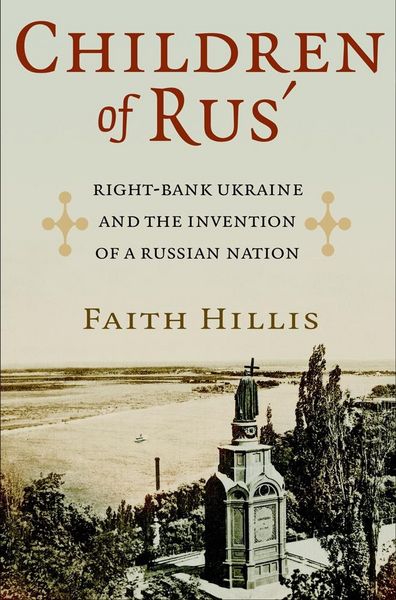
Children of Rus' Right-Bank Ukraine and the Invention of a Russian Nation
-
- Einzelkauf Download ausgewählt
-
Sprache:Englisch
-
eBook Format:ePUB
- PDF 165,95 €
- ePUB 23,99 € ausgewählt
23,99 €
inkl. gesetzl. MwSt.Beschreibung
Produktdetails
Format
ePUB
Kopierschutz
Nein
Family Sharing
Nein
Text-to-Speech
Ja
Erscheinungsdatum
27.11.2013
Verlag
Cornell University PressSeitenzahl
348 (Printausgabe)
Dateigröße
5454 KB
Sprache
Englisch
EAN
9780801469251
In Children of Rus', Faith Hillis recovers an all but forgotten chapter in the history of the tsarist empire and its southwestern borderlands. The right bank, or west side, of the Dnieper River-which today is located at the heart of the independent state of Ukraine-was one of the Russian empire's last territorial acquisitions, annexed only in the late eighteenth century. Yet over the course of the long nineteenth century, this newly acquired region nearly a thousand miles from Moscow and St. Petersburg generated a powerful Russian nationalist movement. Claiming to restore the ancient customs of the East Slavs, the southwest's Russian nationalists sought to empower the ordinary Orthodox residents of the borderlands and to diminish the influence of their non-Orthodox minorities.Right-bank Ukraine would seem unlikely terrain to nourish a Russian nationalist imagination. It was among the empire's most diverse corners, with few of its residents speaking Russian as their native language or identifying with the culture of the Great Russian interior. Nevertheless, as Hillis shows, by the late nineteenth century, Russian nationalists had established a strong foothold in the southwest's culture and educated society; in the first decade of the twentieth, they secured a leading role in local mass politics. By 1910, with help from sympathetic officials in St. Petersburg, right-bank activists expanded their sights beyond the borderlands, hoping to spread their nationalizing agenda across the empire.Exploring why and how the empire's southwestern borderlands produced its most organized and politically successful Russian nationalist movement, Hillis puts forth a bold new interpretation of state-society relations under tsarism as she reconstructs the role that a peripheral region played in attempting to define the essential characteristics of the Russian people and their state.
Noch keine Bewertungen vorhanden
Verfassen Sie die erste Bewertung zu diesem Artikel
Helfen Sie anderen Kundinnen und Kunden durch Ihre Meinung.
Kurze Frage zu unserer Seite
Vielen Dank für dein Feedback
Wir nutzen dein Feedback, um unsere Produktseiten zu verbessern. Bitte habe Verständnis, dass wir dir keine Rückmeldung geben können. Falls du Kontakt mit uns aufnehmen möchtest, kannst du dich aber gerne an unseren Kund*innenservice wenden.
zum Kundenservice