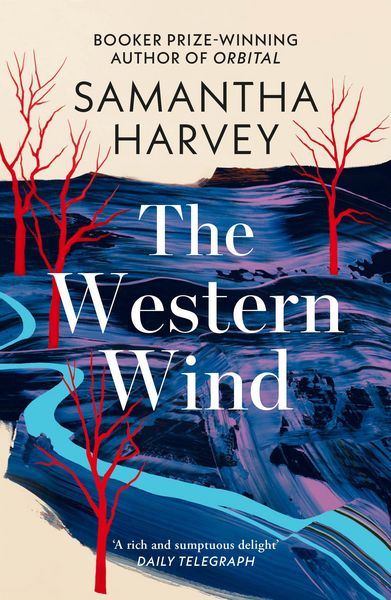
Produktbild: The Western Wind

The Western Wind A Medieval Murder Mystery from the Booker Prize winner

2

8,99 €

inkl. gesetzl. MwSt.

Beschreibung

Produktdetails

Format

ePUB

Kopierschutz

Ja

Family Sharing

Nein

Text-to-Speech

Ja

Erscheinungsdatum

01.03.2018

Verlag

Vermilion

Seitenzahl

304 (Printausgabe)

Dateigröße

5206 KB

Sprache

Englisch

EAN

9781473553590

Beschreibung

Rezension

" A rich and sumptuous delight . . . Even the most glowing reviews of [Samantha Harvey's] work have tended to be accompanied by a rueful acknowledgement of how underrated she is. The Western Wind will surely mean that she’s not underrated anymore."

Produktdetails

Format

ePUB

eBooks im ePUB-Format erlauben eine dynamische Anpassung des Inhalts an die jeweilige Display-Größe des Lesegeräts. Das Format eignet sich daher besonders für das Lesen auf mobilen Geräten, wie z.B. Ihrem tolino, Tablets oder Smartphones.

Kopierschutz

Ja

Zum Lesen dieses eBooks auf Geräten der tolino Familie sowie auf sonstigen eReadern und am PC benötigen Sie eine Adobe ID. Weitere Hinweise zum Lesen von kopiergeschützten eBooks finden Sie unter Hilfe/Downloads.

Family Sharing

Nein

Mit Family Sharing können Sie eBooks innerhalb Ihrer Familie (max. sechs Mitglieder im gleichen Haushalt) teilen. Sie entscheiden selbst, welches Buch Sie mit welchem Familienmitglied teilen möchten. Auch das parallele Lesen durch verschiedene Familienmitglieder ist durch Family Sharing möglich. Um eBooks zu teilen oder geteilt zu bekommen, muss jedes Familienmitglied ein Konto bei Thalia oder einem anderen tolino-Buchhändler haben. Weitere Informationen finden Sie unter Hilfe/Family-Sharing.

Text-to-Speech

Ja

Bedeutet Ihnen Stimme mehr als Text? Mit der Funktion Text-to-Speech können Sie sich im tolino webReader und in der aktuellen Thalia – Lesen & Hören App das eBook vorlesen lassen. Weitere Informationen finden Sie unter Hilfe/Text-to-Speech.

Barrierefreiheit

  • navigierbares Inhaltsverzeichnis
  • alle Texte können angepasst werden
  • logische Lesereihenfolge eingehalten
  • hoher Kontrast zwischen Text und Hintergrund
  • keine Vorlesefunktionen des Lesesystems deaktiviert

Erscheinungsdatum

01.03.2018

Verlag

Vermilion

Seitenzahl

304 (Printausgabe)

Dateigröße

5206 KB

Sprache

Englisch

EAN

9781473553590

Kundinnen und Kunden meinen

1 Bewertungen

Informationen zu Bewertungen

Zur Abgabe einer Bewertung ist eine Anmeldung im Konto notwendig. Die Authentizität der Bewertungen wird von uns nicht überprüft. Wir behalten uns vor, Bewertungstexte, die unseren Richtlinien widersprechen, entsprechend zu kürzen oder zu löschen.

Die Bewertungen sind nach Format, Anzahl Sterne und Datum sortiert.

5 Sterne

(1)

4 Sterne

(0)

3 Sterne

(0)

2 Sterne

(0)

1 Sterne

(0)

Portrait of a Medieval Priest and His Parish: "It's our nature to deny what frightens us"

Bewertung am 16.04.2020

Bewertungsnummer: 328788

Bewertet: Buch (Taschenbuch)

“Lent” - whoever may still observe it in our day and age - has not long passed, and besides, Easter this year could be called quite anti-climactic and not much of a cause for relief after a period of fasting and forgoing, as we’re all still feeling rather lent-like, in a way. But it’s still a good point of reference for reminding readers of this marvelous novel (possibly overlooked, and if so, sadly), which was published a little more than year ago. /// Lent in the middle ages must have been a time of great ordeal almost to the point of starvation at the end of winter (“Envy the man who’s fat in autumn, and distrust the one who’s fat in spring”). People feared it, and the village priest feared for his flock. Samantha Harvey has worked wonders in bringing to life a medieval village and a parish of most rounded characters. John Reve, the priest, is the first person and sole narrator, and a wonderfully complex character. This is a highly philosophical tale. Reve's religious philosophies, his struggle with belief and doubt, are tightly woven into a whodunit, with a touch of contradiction between the secular and spiritual worlds faintly reminiscent of Brother Cadfael. The story starts on Shrove (or Pancake) Tuesday and will cover 5 days, but will never reach Ash Wednesday. That itself is a small riddle I’m leaving here. It’s done brilliantly and very cleverly. Rarely have I found the urge to re-read a book at once, right away, but in reverse, “like kicking against a current, away from the rock against which you’ve washed up and out to the open waters, the waves the intentions that carried you in…” Again, we have a river. /// “Carnival, carne levare: farewell to the flesh.” There seems to have been so little joy in life in those days, and if there was any, it was very small. “Egg-rolling, mud-throwing, clothes-swapping – a man in his wife’s tunic, a woman in her husband’s belt and boots. Let them run lose and untormented for a while…” Or kicking “a lifeless, reluctant bag of pig bladder”, primer to the soccer ball. Urged to confess their sins at that time ("I overslept"), there are frequent church services before the last of the celebrations: “Then they moved restless to the door, and against their motion the dean progressed salmon-ish upstream.” (Such a great visual!) “’They need more than hope,’ he said, watching the retreating huddle of hemp and jute and matted hair. They need a miracle. And a wash.” /// Harvey’s intellect and skill in sophisticated storytelling are absolutely admirable. Yes, it’s all doom and gloom. But her language is riveting and mesmerizing; it’s beautiful through and through. While we may be facing another year of bad drought, the parish is suffering badly from ceaseless rain, causing “sludge of soil, spines snapping in toil, collapsing furrows.” But plenty of their predicaments are valid today. --- “The river of time, isn’t that what they call it? But it’s no river at all. Time comes back on itself always new.” --- “When the Lord tests us he doesn’t give warning – no, he throws the ball to see how you catch.” --- “The man who’s an animal always tries to make an animal of his wife.” --- “’What shall I do, Father?’ ‘Declare what you’re grateful for, every day for seven days declare it to an image of Mary and, when you don’t have an image of Mary to hand, declare it, if only to the air.’” --- “The Lord, through Moses, blows away the plague of the locusts with a wind; ventum ab occidente, a wind from the west. Vehementissimum, strong, strongest. The strongest west wind, to blow away the locusts. I looked up at the white, sheepish fog through the window. The air was so thickly flocked and spirituous. A thin-capped mushroom had found life in the sawn crevice across my table. Amazing audacity; I picked it out.”

Portrait of a Medieval Priest and His Parish: "It's our nature to deny what frightens us"

Bewertung am 16.04.2020
Bewertungsnummer: 328788
Bewertet: Buch (Taschenbuch)

“Lent” - whoever may still observe it in our day and age - has not long passed, and besides, Easter this year could be called quite anti-climactic and not much of a cause for relief after a period of fasting and forgoing, as we’re all still feeling rather lent-like, in a way. But it’s still a good point of reference for reminding readers of this marvelous novel (possibly overlooked, and if so, sadly), which was published a little more than year ago. /// Lent in the middle ages must have been a time of great ordeal almost to the point of starvation at the end of winter (“Envy the man who’s fat in autumn, and distrust the one who’s fat in spring”). People feared it, and the village priest feared for his flock. Samantha Harvey has worked wonders in bringing to life a medieval village and a parish of most rounded characters. John Reve, the priest, is the first person and sole narrator, and a wonderfully complex character. This is a highly philosophical tale. Reve's religious philosophies, his struggle with belief and doubt, are tightly woven into a whodunit, with a touch of contradiction between the secular and spiritual worlds faintly reminiscent of Brother Cadfael. The story starts on Shrove (or Pancake) Tuesday and will cover 5 days, but will never reach Ash Wednesday. That itself is a small riddle I’m leaving here. It’s done brilliantly and very cleverly. Rarely have I found the urge to re-read a book at once, right away, but in reverse, “like kicking against a current, away from the rock against which you’ve washed up and out to the open waters, the waves the intentions that carried you in…” Again, we have a river. /// “Carnival, carne levare: farewell to the flesh.” There seems to have been so little joy in life in those days, and if there was any, it was very small. “Egg-rolling, mud-throwing, clothes-swapping – a man in his wife’s tunic, a woman in her husband’s belt and boots. Let them run lose and untormented for a while…” Or kicking “a lifeless, reluctant bag of pig bladder”, primer to the soccer ball. Urged to confess their sins at that time ("I overslept"), there are frequent church services before the last of the celebrations: “Then they moved restless to the door, and against their motion the dean progressed salmon-ish upstream.” (Such a great visual!) “’They need more than hope,’ he said, watching the retreating huddle of hemp and jute and matted hair. They need a miracle. And a wash.” /// Harvey’s intellect and skill in sophisticated storytelling are absolutely admirable. Yes, it’s all doom and gloom. But her language is riveting and mesmerizing; it’s beautiful through and through. While we may be facing another year of bad drought, the parish is suffering badly from ceaseless rain, causing “sludge of soil, spines snapping in toil, collapsing furrows.” But plenty of their predicaments are valid today. --- “The river of time, isn’t that what they call it? But it’s no river at all. Time comes back on itself always new.” --- “When the Lord tests us he doesn’t give warning – no, he throws the ball to see how you catch.” --- “The man who’s an animal always tries to make an animal of his wife.” --- “’What shall I do, Father?’ ‘Declare what you’re grateful for, every day for seven days declare it to an image of Mary and, when you don’t have an image of Mary to hand, declare it, if only to the air.’” --- “The Lord, through Moses, blows away the plague of the locusts with a wind; ventum ab occidente, a wind from the west. Vehementissimum, strong, strongest. The strongest west wind, to blow away the locusts. I looked up at the white, sheepish fog through the window. The air was so thickly flocked and spirituous. A thin-capped mushroom had found life in the sawn crevice across my table. Amazing audacity; I picked it out.”

Kundinnen und Kunden meinen

The Western Wind

von Samantha Harvey

0 Bewertungen filtern

Die Leseprobe wird geladen.
  • Produktbild: The Western Wind